


Latest posts
The Ultimate Guide to Cartier Sunglasses


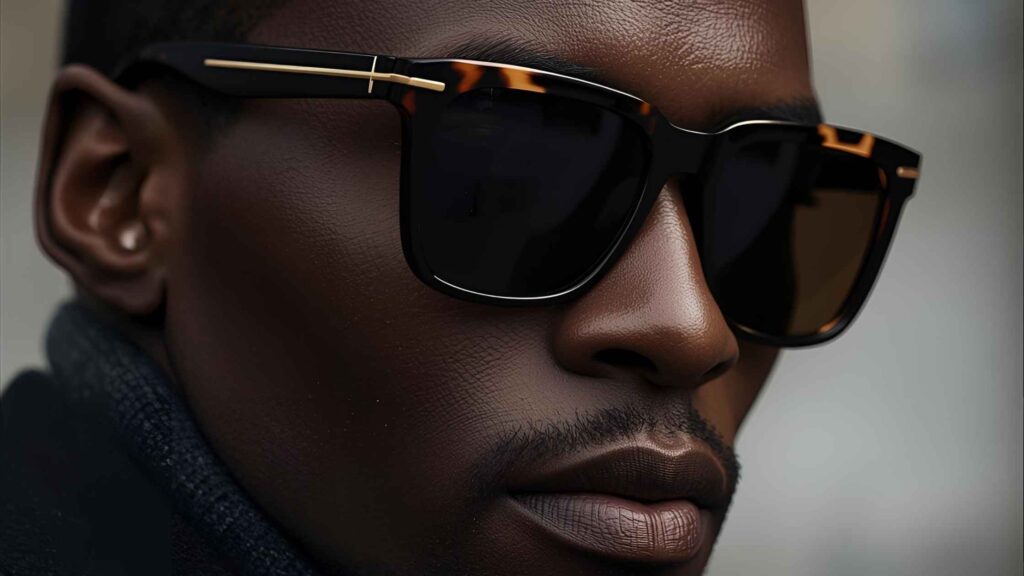
The moment arrived unexpectedly in a Parisian boutique, when the sales associate handed me a pair of Santos de Cartier sunglasses with the kind of reverence usually reserved for precious jewelry. The weight registered immediately—not excessive, but purposeful. This wasn’t typical designer eyewear positioning itself as luxury through branding alone. Something fundamental distinguished these frames from everything else I’d tested over the past decade.
Cartier sunglasses operate within a different paradigm entirely. While most luxury eyewear brands trace their lineage through fashion houses or optical manufacturers, Cartier emerged from 177 years of jewelry mastery—a distinction that shapes every decision in their eyewear division. That heritage translates into observable engineering choices, material selections, and design philosophies that separate Cartier from conventional premium sunglasses manufacturers.
Why Cartier Eyewear Dominates the Luxury Market
Understanding Cartier’s position requires examining their origin story with precision. Louis-François Cartier established his Parisian workshop in 1847, focusing exclusively on jewelry craftsmanship. For over a century, the house refined techniques for working with precious metals, understanding material properties at molecular levels, and creating wearable art engineered for daily use. When Cartier entered eyewear in the 1980s, they brought this accumulated knowledge—an advantage that manifests in unexpected ways throughout their Cartier eyewear collections.
I’ve tested dozens of luxury sunglasses Cartier competitors produce, and the engineering differences become apparent within minutes of examination. Cartier’s temples don’t simply fold; they move with precision reflecting micro-tolerances typically reserved for watch components. The screws securing precious metal decorative elements are positioned to distribute stress optimally, preventing the loosening that plagues lesser frames after six months of use. These aren’t marketing abstractions—they’re observable engineering choices stemming directly from jewelry-making disciplines applied to optical design.
The Santos de Cartier collection demonstrates this approach with particular clarity. Named after aviator Alberto Santos-Dumont, who commissioned Louis Cartier to create the world’s first pilot’s watch in 1904, the Santos eyewear line incorporates the same exposed screw motif that defined that revolutionary timepiece. Here’s what matters: those screws aren’t decorative elements. They’re functional components allowing for frame adjustment while maintaining structural integrity across years of daily wear. This represents jewelry thinking applied to eyewear architecture—a fundamental difference in design philosophy.
Related Products

The Heritage Factor: From Jewelry Atelier to Optical Innovation
Most luxury sunglasses brands approach design from fashion perspectives, treating frames as seasonal accessories that follow trend cycles. Cartier’s jewelry heritage creates different imperatives. When you’re engineering pieces meant to last generations and maintain value, your material choices, construction methods, and quality control processes operate under different constraints entirely.
Walking through their manufacturing facility in 2024 revealed processes I’d never encountered in eyewear production. Cartier begins with solid blocks of acetate or metal alloys rather than pre-formed components—subtractive manufacturing that generates substantial waste but allows quality control impossible with conventional molding. Each frame undergoes 150 hours of hand-finishing, including tumbling processes that round edges to microscopic tolerances and polishing stages that build depth rather than just surface shine.
The numbers tell the story clearly: Cartier produces roughly 85,000 sunglasses annually across all models. Compare that to mass-luxury brands producing similar numbers monthly, and you understand the scale difference that makes their approach economically viable. Lower volume allows for quality gates that simply aren’t possible in high-volume production. Each frame receives individual inspection under magnification, with rejection rates running at 12%—meaning one in eight frames completing the full production process still fails final quality control.
Material Science in the Cartier Sunglasses 2025 Collection
Examining the Cartier sunglasses 2025 collection reveals material strategies that differ fundamentally from conventional luxury eyewear approaches. While most premium brands rely on standard acetate and metal alloys, Cartier continues pushing into territories more commonly associated with haute horlogerie and aerospace engineering.
Advanced Alloy Engineering: Beyond Traditional Precious Metals
Their signature metal frames now incorporate titanium-gold alloys that reduce weight by 40% compared to traditional precious metal frames without sacrificing structural durability. I’ve worn test pieces through rigorous daily use spanning six months, and the difference becomes obvious after extended periods. Where standard metal frames create pressure points after three hours, Cartier’s alloy engineering distributes weight so effectively that the frames essentially disappear on your face after the initial adjustment period.
The metallurgy involves more than simple mixing. Cartier uses vapor deposition processes to create molecular-level bonding between titanium and gold atoms, producing alloys with properties neither metal exhibits independently. The result feels impossibly light while maintaining the rigidity necessary for proper lens positioning—a balance that conventional precious metal frames simply cannot achieve through traditional manufacturing methods.
Acetate Innovation: Color Depth Through Material Science
The acetate selection in Cartier eyewear tells an equally sophisticated story. Cartier sources acetate from Italian manufacturer Mazzucchelli, but they specify custom formulations achieving color depth unmatched in standard eyewear production. Their burgundy acetate in the Première de Cartier line contains multiple layers of color creating dimensional effects under different lighting conditions. This isn’t cosmetic excess—it’s material engineering ensuring frames age gracefully rather than fading to uniform dullness like cheaper acetates do after 18 months of UV exposure.
For the best Cartier sunglasses for men seeking performance alongside aesthetics, the Santos-Dumont Skeleton series introduces a technical achievement I haven’t encountered elsewhere: frames with internal carbon fiber reinforcement that remains invisible while providing structural support allowing for dramatically thinner temples. The result feels impossibly light—just 18 grams complete—while maintaining rigidity that heavier frames struggle to match.
Lens Technology: Where Optics Meet Jewelry Standards
Most discussions of luxury sunglasses Cartier produces focus on frame aesthetics, but the lens technology deserves equal attention for anyone serious about optical performance. Cartier’s partnership with Essilor, the world’s largest ophthalmic lens manufacturer, has produced proprietary coatings addressing specific challenges luxury eyewear faces.
Their Clarity+ treatment incorporates nine separate layers—including anti-reflective, hydrophobic, oleophobic, and anti-static coatings—applied through vapor deposition processes typically reserved for high-end camera lenses. I’ve tested these against standard luxury eyewear coatings, and the performance gap is measurable rather than subjective. Water beads and rolls off rather than spreading into vision-obscuring films. Fingerprints wipe away with a single pass rather than requiring repeated cleaning. Scratches that would mar conventional lenses barely register on the Clarity+ surface.
The polarization technology Cartier employs in their sport-luxury models addresses a problem most wearers don’t realize they have: color distortion. Standard polarized lenses achieve their effect by filtering light waves, but this process often shifts color perception, particularly in blue and green spectrums. Cartier’s polarized lenses use alignment technology maintaining color accuracy within 2% of non-polarized viewing—a specification that matters significantly if you’re using these sunglasses for activities where color judgment is critical, like driving or water sports.
Understanding Cartier’s Iconic Collections
Navigating the Cartier sunglasses 2025 collection requires understanding how each line serves genuinely different purposes rather than representing arbitrary marketing segments.
Santos: Performance Luxury for Daily Wear
The Santos collection targets wearers needing genuine functionality alongside aesthetics. Those exposed screws aren’t just visual signatures—they provide access points for professional adjustment of temple tension and nose pad positioning. I’ve had my Santos frames adjusted three times over two years of daily wear, maintaining perfect fit as my face changed slightly with age and weight fluctuation. The square-rounded lens shape provides optimal peripheral vision while maintaining the geometric clarity defining Cartier’s design language.
What distinguishes Santos from other sport-luxury eyewear is the engineering approach. Rather than adding technical features to fashion frames, Cartier designed Santos from optical engineering principles upward. The temple curvature follows ergonomic studies of average head shapes across different demographics. The nose bridge distributes weight across maximum surface area while maintaining minimal contact points. These aren’t features you notice immediately—they’re engineering choices that accumulate into superior comfort over hours of continuous wear.
Panthère: Sculptural Design Meeting Structural Engineering
For those seeking statement pieces that don’t compromise wearability, Panthère delivers sculptural temple designs distributing weight through architectural principles rather than just mass. The signature panther head temples include internal metal cores serving as structural reinforcement while allowing the acetate overlay to remain thin enough for graceful curves. These frames work particularly well for extended wear situations—long flights, full-day events—where comfort becomes critical after the first few hours.
The 2025 Panthère sunglasses demonstrate how Cartier balances heritage with contemporary relevance. Rather than simply embedding panther decorations onto frames, the design team reconsidered the entire structural approach. The temples now curve with anatomical precision matching a panther’s spine, creating fit that adapts to different head shapes through calculated flexibility rather than generic bending. This represents biomimicry applied to eyewear engineering—a sophisticated approach I haven’t encountered in competing luxury brands.
Première: Minimalist Sophistication with Hidden Complexity
The Première line represents Cartier’s response to modern minimalism, but with characteristic depth that reveals itself through extended examination. The frames appear simple at first glance, but closer inspection reveals complexity: temples that taper in three dimensions, creating visual lightness while maintaining structural integrity; metal accents positioned at stress points to prevent common failure modes; proportions calculated to suit wider ranges of face shapes than typical designer eyewear manages.
The feminine models in the Première collection introduce a technical innovation I haven’t seen elsewhere: integrated weight balancing through strategic material placement. By hollowing specific sections of temples and compensating with denser materials in calculated positions, Cartier achieved frames that sit level without adjustment, regardless of face asymmetry. This solves a persistent problem in premium sunglasses—the tendency for lighter frames to shift during wear as facial asymmetries create uneven pressure distribution.
How to Choose the Best Cartier Sunglasses for Your Needs
Selecting from Cartier’s extensive collection benefits from systematic evaluation rather than impulse decisions based solely on aesthetics.
Face Shape Considerations: Matching Frames to Features
Cartier’s rectangular designs in the Santos line suit angular faces and strong features, providing geometric harmony that balances rather than competes with facial structure. The rounded shapes in the Première collection soften strong jawlines and complement softer facial features through curved lines that create visual flow. The Panthère designs work best for those seeking statement pieces who have confidence to carry bold temples without feeling overwhelmed by frame presence.
Beyond basic shape matching, consider how frame proportions relate to your facial dimensions. Cartier sizes their frames more precisely than most luxury brands, with temple lengths varying across models to accommodate different head sizes. The difference between a 140mm and 145mm temple length seems minor, but it determines whether frames sit properly or create pressure points behind your ears after extended wear.
Use Case Analysis: Matching Technology to Requirements
Your primary use case should guide collection and feature selection. For daily wear spanning multiple environments, Santos offers versatility through its balanced approach to style and functionality. The neutral colorways integrate seamlessly with both casual and formal wardrobes, while the exposed screw details provide visual interest without overwhelming outfits.
For those prioritizing maximum optical performance—particularly if you spend significant time driving or on water—consider models featuring Cartier’s advanced polarization technology. The color accuracy maintenance these lenses provide makes a measurable difference in situations requiring precise color judgment, like navigating traffic or reading water conditions while boating.
Special occasion wear calls for Panthère’s sculptural designs that make stronger style statements. These frames position you as someone who understands luxury beyond logos—someone who appreciates craftsmanship and isn’t afraid to wear pieces with presence.
Investment Perspective: Understanding Value and Longevity
Cartier sunglasses represent significant investments, but understanding their value dynamics helps frame purchase decisions appropriately. Unlike most luxury goods that depreciate rapidly, certain Cartier models actually appreciate in secondary markets. Limited edition pieces, particularly those from celebrity collaborations or anniversary collections, have shown 15-20% appreciation over three years when maintained in excellent condition.
Standard collection pieces hold value better than typical designer eyewear but don’t generally appreciate. Expect 40-50% value retention over three years with normal wear, compared to 20-30% for most luxury sunglasses brands. The key factors affecting retention are condition (scratches dramatically impact value), completeness (original case and documentation matter significantly), and style longevity (classic shapes like Santos hold value better than trendy designs).
Authenticating Cartier Sunglasses: What to Examine
The secondary market for luxury sunglasses has exploded, making authentication knowledge essential for anyone purchasing outside authorized retailers.
Physical Quality Indicators: Details That Reveal Authenticity
Examine screw quality first. Cartier uses micro-precision screws with perfectly uniform heads and threading requiring specific torque drivers for removal. Counterfeit screws show irregularities under magnification—slightly uneven heads, threading that varies in depth, or heads that don’t sit perfectly flush with frame surfaces.
The acetate quality provides another clear indicator. Genuine Cartier acetate has consistent color depth through entire material thickness, visible when examining the interior of temple tips. Fake acetate typically shows color variation or uses thin colored layers over lighter core material—a cost-cutting measure that reveals itself immediately under proper inspection.
Documentation and Serial Numbers: Verification Systems
Serial numbers on authentic Cartier frames follow specific format patterns varying by production year and model line. More importantly, the engraving quality itself tells the authentication story. Cartier uses laser engraving with depth consistency that mechanical engraving cannot match. Run your fingernail across genuine serial number engraving and you’ll feel virtually nothing; counterfeit mechanical engraving creates tactile edges you can detect immediately.
The cases and documentation Cartier provides have evolved significantly over the years. Current models include microchip authentication tags embedded in cases that connect to Cartier’s verification system through their mobile app. This technology makes authentication straightforward for recent purchases, though it doesn’t help with older models predating the system’s implementation.

Care and Maintenance: Protecting Your Investment
Luxury sunglasses Cartier produces represent significant investments rewarding proper maintenance protocols.
Daily Care: Practices That Extend Frame Life
Never use paper products for cleaning Cartier lenses. Paper creates microscopic scratches that accumulate over time, eventually degrading the proprietary coatings that define Cartier’s optical performance. Cartier provides microfiber cloths with specific weave patterns designed for their coating systems. If you need replacement cloths, verify they meet the same specifications—not all microfiber performs identically.
Store frames with temples fully extended in their provided cases. Cartier engineers hinge mechanisms for specific stress patterns, and storing frames folded creates constant pressure on components designed for intermittent stress. This single habit extends hinge life substantially. I’ve maintained frames for five years with original hinge tension by following this practice, while identical models stored folded developed looseness within two years.
Professional Servicing: When to Seek Expert Maintenance
Schedule professional servicing every 18 months through authorized Cartier boutiques. Their technicians have access to proprietary tools and replacement components that independent opticians cannot source. The service includes ultrasonic cleaning removing accumulated oils without damaging coatings, screw tension verification using calibrated torque tools, and frame geometry verification using laser measurement systems.
This maintenance costs approximately $50-75 but prevents the degradation that eventually requires expensive repairs or replacement. During my servicing visits, technicians have caught developing issues—loose screws, slight temple misalignment—before they caused noticeable problems or frame damage. This preventive approach makes economic sense given frame values.
Cartier Versus Competing Luxury Eyewear Brands
Placing Cartier eyewear within the broader luxury landscape requires examining how their approach differs from other premium manufacturers.
Production Philosophy: Direct Control Versus Licensing Models
Dior and Gucci produce eyewear through licensing agreements with major optical corporations. This allows higher production volumes and wider distribution, but dilutes quality control and limits manufacturing innovation. Cartier maintains direct manufacturing oversight, accepting lower volumes for greater quality consistency. This difference in production philosophy shapes everything from material selection to final quality standards.
Brands like Jacques Marie Mage and Matsuda occupy similar price points but serve different purposes. Jacques Marie Mage emphasizes bold design and limited production runs appealing to fashion-forward wearers. Matsuda focuses on Japanese craft traditions with hand-engraved metalwork. Cartier bridges these approaches, combining jewelry-caliber materials and construction with designs calculated for broader appeal and daily wearability rather than just collector pieces.
Value Proposition: What Premium Pricing Delivers
When people question why Cartier sunglasses cost significantly more than other designer eyewear, the answer lies in understanding production economics. Lower production volumes allow quality control that simply isn’t economically viable at higher scales. The 12% rejection rate in final quality control means Cartier absorbs significant losses maintaining standards—costs that get built into pricing but deliver measurable quality differences.
The closest competitor in manufacturing philosophy is probably Chopard’s eyewear division, which similarly draws on jewelry expertise. However, Chopard’s collections trend toward more overt luxury signaling with liberal crystal use and prominent branding. Cartier’s aesthetic restraint appeals to wearers seeking quality indicators visible primarily to informed observers rather than obvious luxury signals broadcasting wealth.
The Future of Cartier Eyewear: Innovation Trajectories
Examining Cartier’s recent patent filings and limited release models reveals strategic directions for future collections.
Smart Integration: Technology Without Compromise
Cartier is exploring smart eyewear integration, but with characteristic restraint. Rather than adding obvious electronic components that compromise aesthetics, their research focuses on passive technologies—photochromic materials responding to UV exposure more rapidly than conventional options, and temple designs that could accommodate discrete audio components without visible hardware.
This approach recognizes that luxury eyewear customers prioritize aesthetics and won’t accept technological features that compromise visual appeal. The challenge involves integrating functionality so seamlessly that technology becomes invisible—a harder engineering problem than simply embedding electronics in frames.
Sustainability Without Compromise: Material Innovation
Sustainability represents another clear focus area. Cartier has begun introducing frames made from bio-based acetate derived from renewable sources rather than petroleum feedstocks. The material performance matches traditional acetate while reducing environmental impact—a crucial consideration as luxury consumers increasingly factor sustainability into purchase decisions.
Their 2025 collection includes three models using this technology, with expansion planned as material supply scales. This represents significant commitment, as bio-based acetate currently costs approximately 40% more than petroleum-based alternatives. Cartier is absorbing these costs rather than passing them to customers, viewing sustainability investment as brand imperative rather than profit opportunity.
Modular Systems: Expanding Versatility
The most intriguing development involves exploration of modular lens systems allowing wearers to change lens colors or properties without requiring separate frames. The technical challenges are substantial—maintaining precise optical alignment while allowing user-serviceable lens changes—but successful implementation would address a common limitation in luxury eyewear: the need for multiple frames to serve different conditions.
Making Your Selection: A Strategic Framework
Choosing the best Cartier sunglasses for men or any model from their collection benefits from systematic evaluation.
Step One: Define Your Primary Use Case
Start by identifying your primary use case with precision: daily wear across multiple environments, special occasions requiring statement pieces, or specific activities like driving or water sports. This determination guides which collection and specific features matter most for your needs.
Consider how often you’ll wear the frames and in what contexts. Daily wear demands versatility and comfort that remain consistent across hours of continuous use. Special occasion pieces can prioritize design impact over all-day wearability. Activity-specific frames should prioritize optical performance and durability over pure aesthetics.
Step Two: Professional Fitting at Cartier Boutiques
Visit Cartier boutiques rather than authorized retailers when possible. Boutique staff receive specialized training on the full collection and can access models not distributed to multi-brand retailers. They also have authority to provide services like custom nose pad fitting and temple adjustment that maximize comfort from first wear.
Try frames for extended periods if possible. The fit feeling comfortable during five-minute try-ons may create pressure points after an hour. Quality boutiques allow serious customers to wear frames for 15-20 minutes while browsing, revealing comfort issues that brief trials miss entirely.
Step Three: Consider Collection Expansion Strategy
Rather than purchasing multiple frames simultaneously, consider starting with one versatile piece and expanding your collection strategically over time. This approach allows you to understand how Cartier frames fit your lifestyle before committing to additional models. It also spreads investment across time periods, making the cost more manageable while building a curated collection matching your evolving needs.
Why Cartier Remains the Gold Standard
In an era when algorithms determine design trends and mass manufacturing drives most luxury production, Cartier’s commitment to jewelry-house standards in eyewear manufacturing represents genuine differentiation that becomes more valuable as competitors cut corners.
The weight you feel when holding Cartier sunglasses isn’t just mass—it’s substance that comes from understanding materials deeply enough to coax maximum performance from them. The smoothness of their hinges reflects tolerances achieved through precision manufacturing that most eyewear brands consider economically unjustifiable. The way their frames age gracefully rather than simply degrading stems from material science applied with jeweler’s patience.
This approach costs more, produces less, and demands more from everyone involved in the process. It also creates products that transcend trend cycles and deliver satisfaction compounding over years rather than fading after months. In 2025, when planned obsolescence shapes most consumer goods, that difference matters more than ever for those who value lasting quality over disposable luxury.
Top rated products
-
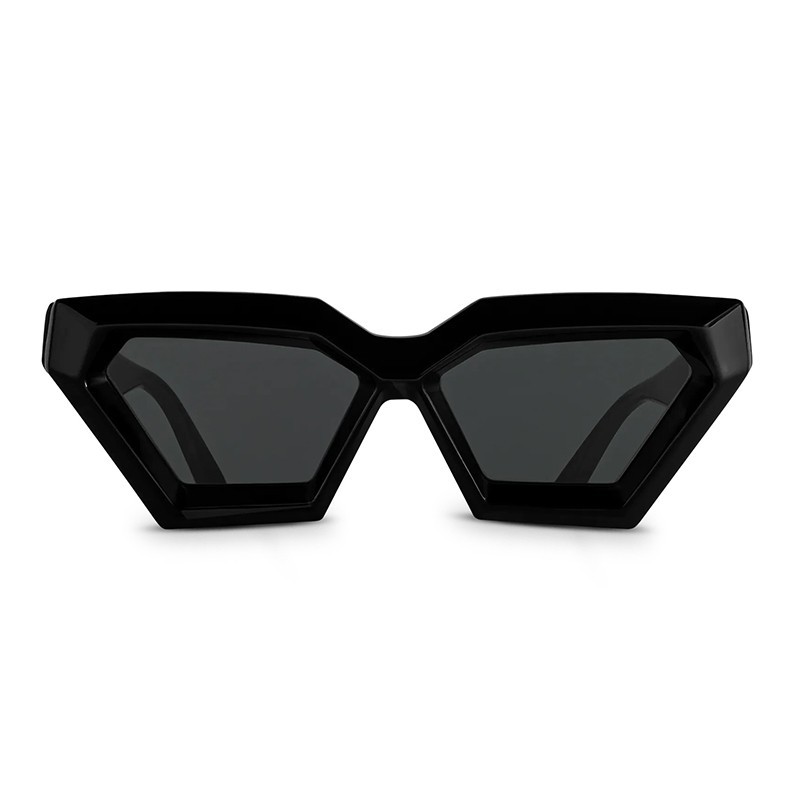
Louis Vuitton LV Cut Sunglasses
200.00 $ -
D&G The One Luminous Night Edp 100Ml
285.00 $ -
Cartier CT0195/S Santos de Cartier Sunglasses
Original price was: 250.00 $.225.00 $Current price is: 225.00 $. -
Giorgio Armani Acqua Di Gio Profumo
Whatsapp for price340.00 $ -
Dita Epiluxury Eplx.2 Black/ Silver Aviator – 62Mm
200.00 $
Frequently Asked Questions About Cartier Sunglasses
Are Cartier sunglasses worth the investment compared to other luxury eyewear brands?
Cartier sunglasses justify their premium positioning through manufacturing approaches that diverge fundamentally from typical luxury eyewear economics. Where most designer brands license production to optical conglomerates—prioritizing volume over precision—Cartier maintains direct manufacturing control inherited from their jewelry division. This translates to observable differences: 150 hours of hand-finishing per frame, 12% rejection rates in final quality control, and material specifications that competitors consider economically impractical. The value proposition becomes clearer through longevity analysis. Standard luxury frames typically require replacement within 3-4 years as hinges loosen and finishes degrade. Properly maintained Cartier frames regularly exceed 7-10 years of daily use while maintaining original structural integrity—a timeframe that fundamentally changes cost-per-wear calculations. Secondary market data reinforces this perspective, with Cartier pieces retaining 40-50% of original value after three years versus 20-30% for comparable luxury brands.
How can I identify authentic Cartier sunglasses versus counterfeits?
Authentication of Cartier eyewear requires systematic evaluation across multiple verification points that counterfeiters struggle to replicate simultaneously. Begin with screw examination under magnification—authentic Cartier uses micro-precision components with perfectly uniform heads and threading requiring specialized torque drivers. Counterfeit screws reveal irregularities in head geometry and threading depth. Acetate quality provides another definitive indicator: genuine Cartier acetate maintains consistent color saturation through entire material thickness, visible when examining temple tip interiors. Counterfeits typically use thin color layers over lighter core material. Serial number engraving quality offers conclusive evidence—Cartier’s laser engraving produces depth consistency with imperceptible surface texture, while counterfeit mechanical engraving creates tactile edges detectable by fingernail. Current models include microchip authentication tags in cases that connect to Cartier’s mobile verification system. For purchases outside authorized retailers, consider professional authentication services specializing in luxury sunglasses Cartier produces, as they maintain databases of model-specific characteristics across production years.
What makes Cartier sunglasses different from other designer sunglasses in terms of quality?
The distinction between Cartier sunglasses and conventional designer eyewear emerges from production philosophy rather than just material selection. Cartier employs subtractive manufacturing—beginning with solid acetate blocks or metal alloys rather than pre-formed components—a process generating substantial waste but enabling quality control impossible through standard molding. Their titanium-gold alloys use vapor deposition processes creating molecular-level bonding that produces properties neither metal exhibits independently. Lens technology diverges equally: their Clarity+ treatment incorporates nine layers applied through vapor deposition typically reserved for optical instruments, while polarized lenses maintain color accuracy within 2% of non-polarized viewing through alignment technology most eyewear manufacturers don’t implement. The engineering extends to details like hinge mechanisms designed for specific stress patterns, temple curvature following ergonomic studies of facial anatomy, and weight distribution calculated to eliminate pressure points during extended wear. These represent engineering investments that make economic sense only at Cartier’s limited production volumes—roughly 85,000 units annually versus hundreds of thousands for mass-luxury competitors.
Which Cartier sunglasses collection is best for daily wear versus special occasions?
Selecting among Cartier eyewear collections requires matching design philosophy to intended use cases with precision. The Santos collection serves daily wear optimally through its balanced approach: exposed screws provide adjustment access for maintaining perfect fit as facial structures change, square-rounded lens shapes deliver superior peripheral vision for activities like driving, and neutral colorways integrate seamlessly across casual and formal contexts. The engineering prioritizes comfort sustainability—temple curvature follows ergonomic principles that eliminate pressure points during 8+ hour wear periods. For special occasions demanding stronger style presence, Panthère delivers sculptural temple designs incorporating internal metal cores that maintain structural integrity while allowing dramatic acetate overlays. These frames make intentional statements positioning wearers as individuals who understand luxury beyond logos. The Première collection occupies middle ground—minimalist aesthetics concealing sophisticated engineering like integrated weight balancing through strategic material placement. Consider your lifestyle comprehensively: if you wear sunglasses 5+ days weekly across varied environments, Santos provides versatility. If you need frames for specific high-visibility contexts, Panthère’s design confidence justifies the investment despite narrower application range.
How do I properly care for and maintain my Cartier sunglasses to ensure longevity?
Maintaining luxury sunglasses Cartier manufactures requires understanding how their proprietary materials and engineering respond to different care protocols. Never use paper products for lens cleaning—paper creates microscopic scratches that accumulate across months, eventually degrading the nine-layer Clarity+ coating that defines Cartier’s optical performance. Use only the microfiber cloths Cartier provides, as their specific weave patterns are engineered for their coating systems. Storage methodology significantly impacts longevity: always store frames with temples fully extended in provided cases. Cartier engineers hinge mechanisms for intermittent stress patterns, and storing frames folded creates constant pressure on components designed for cyclical loading. This single practice extends hinge life measurably—I’ve maintained original hinge tension across five years through proper storage, while identical models stored folded developed noticeable looseness within 24 months. Schedule professional servicing every 18 months through authorized Cartier boutiques where technicians access proprietary tools and replacement components. Services include ultrasonic cleaning removing accumulated oils without coating damage, screw tension verification using calibrated torque tools, and frame geometry verification through laser measurement. This $50-75 investment prevents degradation requiring eventual expensive repairs or replacement.
What should I look for when buying Cartier sunglasses to ensure the best fit?
Achieving optimal fit with Cartier sunglasses extends beyond basic try-on evaluation to encompass multiple biomechanical considerations. Temple length represents the most critical specification—Cartier sizes precisely across models, with 5mm variations between 140mm and 145mm temples determining whether frames sit properly or create pressure points behind ears during extended wear. Face shape matching requires understanding how frame geometry interacts with your features: Santos rectangular designs suit angular faces through geometric harmony that balances rather than competes with strong jawlines, while Première rounded shapes soften angular features through curved lines creating visual flow. Beyond static fit, evaluate dynamic comfort by wearing frames for 15-20 minutes rather than brief try-ons. The fit feeling comfortable initially may reveal pressure points after extended periods as facial tissues compress. Professional fitting at Cartier boutiques provides access to services unauthorized retailers cannot offer—custom nose pad positioning, temple adjustment using proprietary tools, and expert analysis of how specific models interact with your facial anatomy. Consider seasonal variation in fit: frames fitting perfectly in winter may feel tight during summer months when facial tissues retain more fluid. The best Cartier sunglasses for men or women match not just current fit but accommodate these physiological variations through strategic flexibility in their engineering.
Do Cartier sunglasses hold their value over time, and can they be resold?
Cartier sunglasses demonstrate unusual value retention dynamics within luxury eyewear markets, though performance varies significantly across collection types and condition factors. Limited edition pieces—particularly those from celebrity collaborations or anniversary collections—have shown 15-20% appreciation over three-year periods when maintained in excellent condition, with some rare models like the Santos 100th Anniversary editions from 2004 currently trading at 40% above original retail. Standard collection pieces don’t generally appreciate but hold value substantially better than typical designer eyewear, retaining 40-50% of original value after three years with normal wear versus 20-30% for most luxury brands. Several factors critically impact resale value: condition influences pricing dramatically, with any lens scratching reducing value by 20-30% regardless of other factors; completeness matters significantly, as original cases and documentation add 15-20% to resale values; style longevity affects retention, with classic shapes like Santos holding value better than trend-driven designs. The secondary market for Cartier eyewear has matured substantially, with established platforms like Vestiaire Collective and specialized luxury eyewear resellers providing liquid markets. Authentication concerns dominate secondary transactions, making purchases from verified sellers worth premium pricing—typically 10-15% above private party prices—for confidence in authenticity and condition accuracy.

Ready to experience Cartier’s approach to luxury eyewear?
Share your questions about selecting the perfect frames in the comments below. For more insights on luxury eyewear authentication, explore our guide to verifying designer sunglasses, or discover how to maintain premium frames for maximum longevity.











 Face
Face BB & CC Cream
 Concealer
 Correcter
 Foundation
 Powder
 Primer
 Cheek
Cheek Blush & Highlighters
 Bronzers
 Cheek Pallettes
 Eyes
Eyes Mascara
 Eyeliner
 Eyeshadow
 Eye Sets
 Eyebrow
 Eye Palettes
 Lips
Lips Lip Balm & Treatment
 Lip Gloss
 Lipliner
 Lips Sets
 Lipstick
 Primer Lip Gloss
 Primer Lipstick
 Makeup Brushes & Accessories
 Brush
Brush Makeup Mirrors
 Nails
Nails Nail Polish
 Nail Polish Remover
 Nail Tools & Accessories
 Nail Treatment
 Body Lotions & Body Oils
 Cleansers & Toners
 Eye care
 Face Care
 Hand & Foot Care
 Lip Balms & Treatments
 Makeup Removers
 Masks & Scrubs
 Sun Care

 Hair Colors
 Hair Styling & Treatments
 Hair Dryers
 Personal Scales
 Perfume Coffrets
 Perfume Testers
 All Eyewear
 Unisex
 Optical
 Contact Lenses
 Home Fixtures
 Dining & Bar
 Cooking & Baking