


Latest posts
Chanel vs Celine — Which Eyewear Brand Defines Modern Luxury?

In the upper echelons of luxury eyewear comparison, few debates generate more discussion than Chanel vs Celine sunglasses. Both houses command significant cultural authority, yet they approach eyewear design through fundamentally different philosophical lenses. Chanel speaks the language of heritage femininity and recognizable iconography, while Celine articulates modern luxury through architectural minimalism and deliberate brand erasure. Understanding which resonates with your style identity requires examining not just the frames themselves but the worldviews they represent.
The question isn’t which brand produces superior eyewear in absolute terms—both maintain exceptional manufacturing standards and use premium materials. Rather, the choice hinges on how you want your accessories to communicate. Do you value immediate recognition and connection to fashion history, or do you prefer understated codes that reward only informed observers? The answer reveals something meaningful about your relationship with luxury itself.

Table of Contents
Brand DNA: Chanel vs Celine
Chanel’s eyewear division operates as an extension of Gabrielle Chanel’s original vision: luxury as wearable armor that enhances feminine power through deliberate artifice. Every frame carries the weight of nearly a century of fashion mythology—the interlocking Cs, the quilted leather motifs, the camellia flowers, the chain details borrowed from Mademoiselle’s signature handbags. This isn’t accidental nostalgia but calculated brand architecture. When you wear Chanel eyewear, you’re positioning yourself within a specific narrative about femininity, French elegance, and recognizable luxury.
The brand’s approach to eyewear design prioritizes immediate recognition. Those interlocking Cs appear prominently on temples, sometimes embellished with crystals or pearls. Quilted patterns reference the iconic 2.55 handbag. Frame shapes often recall styles from the house’s archival collections, updated with contemporary proportions but maintaining visual continuity with decades past. This creates both strength and limitation—the frames carry instant luxury signaling but also demand wardrobe choices that harmonize with their decorative assertiveness.
Celine’s transformation under Phoebe Philo’s creative direction established a different luxury paradigm entirely. The eyewear collection that emerged prioritized intellectual minimalism over emotional decoration. Logos disappeared or shrank to near-invisibility. Frame shapes became exercises in geometric purity—perfect circles, precise rectangles, architectural cat-eyes stripped of superfluous detail. Colors gravitated toward sophisticated neutrals: black, tortoiseshell, subtle grays, occasional burgundy for contrast rather than decoration.
This minimalist philosophy continued under Hedi Slimane’s direction, though with added rock-and-roll edge. The fundamental principle remained consistent: luxury communicated through material quality and proportion refinement rather than brand announcement. Celine frames function as punctuation marks within carefully considered outfits rather than exclamation points. They assume the wearer’s confidence doesn’t require external validation, that true luxury operates through insider knowledge rather than public broadcast.
The heritage distinction matters because it influences everything downstream. Chanel draws from Parisian couture tradition where luxury meant visible craftsmanship and recognizable codes. Celine references modernist design movements where beauty emerged from functional perfection and decorative restraint. Neither approach is inherently superior, but they appeal to fundamentally different aesthetic sensibilities and self-presentation strategies.
Aesthetic Comparison: Timeless vs Modern Minimalism
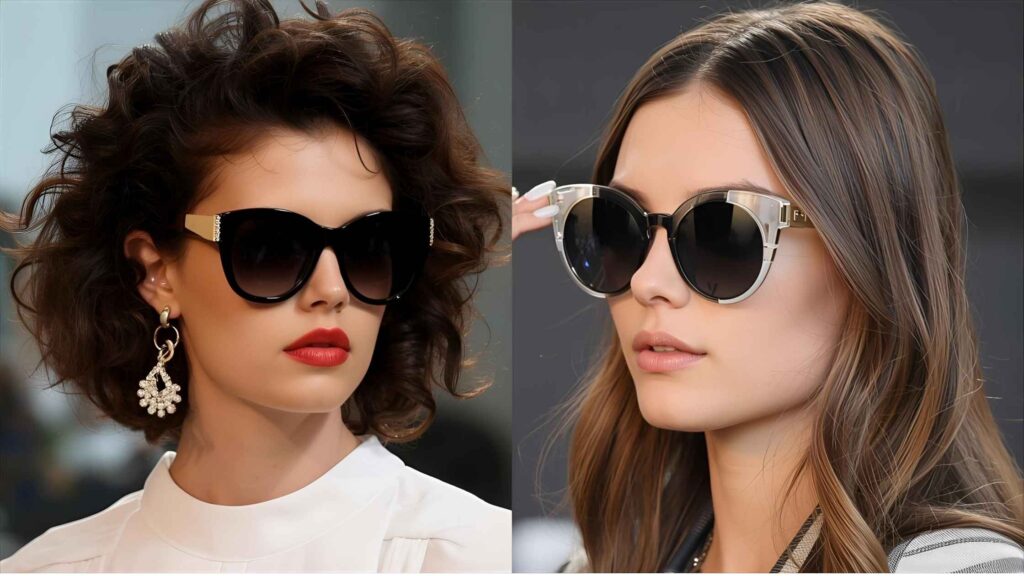
When examining fashion eyewear brands through pure aesthetic analysis, the contrast between Chanel and Celine becomes immediately apparent. Chanel’s frame shapes reference fashion history—oversized squares that recall 1970s glamour, cat-eyes that nod to 1950s femininity, rounded styles that echo 1960s icons. These aren’t merely vintage reproductions but contemporary interpretations that maintain recognizable DNA. The design language speaks to women who appreciate luxury’s theatrical dimension, who understand that fashion communicates through visual storytelling.
The branding visibility on Chanel frames represents a deliberate choice rather than oversight. Those prominent interlocking Cs function as social signals, immediately communicating luxury positioning to observers. Some styles incorporate chain details along the temples, creating literal jewelry out of eyewear. Pearl accents occasionally appear, referencing Coco Chanel’s personal style codes. This maximalist approach to branding creates frames that function as statement pieces—they’re designed to be noticed, discussed, and recognized.
Color palettes in Chanel eyewear span from classic black and tortoiseshell to more expressive options: rich burgundies, deep navies, two-tone combinations, and occasional pastels for spring collections. The variety reflects the brand’s couture heritage, where seasonal color stories drive collection development. This creates both opportunity and challenge—more options for personal expression but also higher risk of frames feeling dated as color trends shift.
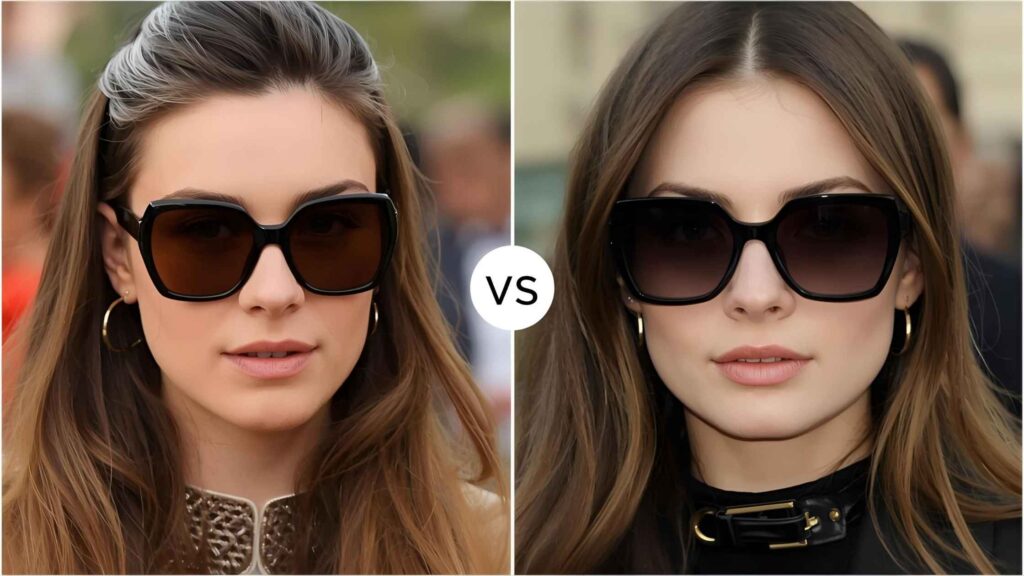
Celine’s aesthetic philosophy operates from opposite principles. Frame shapes prioritize geometric purity over historical reference. The signature styles—the Edge, the Thin Mary, the Catherine—demonstrate how minimalism can create distinctive identity without ornamental excess. Proportions are carefully calibrated: oversized without becoming costume-like, architectural without sacrificing wearability. The shapes photograph exceptionally well, creating strong visual impact through silhouette rather than surface decoration.
Branding on Celine frames approaches invisibility. Small logo engravings appear on temples, often barely noticeable unless examining frames closely. Some styles feature the brand name in minimal sans-serif typography along the temple arms, scaled so small it reads as design element rather than advertisement. This restraint signals a different luxury philosophy—one that assumes informed consumers don’t require logo validation, that quality reveals itself through material and construction rather than external announcement.
The color strategy at Celine demonstrates sophisticated restraint. Black dominates, followed by premium tortoiseshell acetates with dimensional depth. Occasional colors appear but always in sophisticated iterations—not bright red but deep burgundy, not baby blue but steel gray. This limited palette creates frames that integrate seamlessly into considered wardrobes rather than demanding outfit construction around them. The approach reflects minimalist luxury at its most disciplined.

Build Quality & Craftsmanship
When comparing premium sunglasses at this market level, both Chanel and Celine maintain manufacturing standards that justify their luxury positioning, though they achieve quality through slightly different approaches.
Chanel sources acetate primarily from Italian mills, specifically Mazzucchelli, which has supplied luxury eyewear manufacturers for decades. The material quality is exceptional—hand-polished to eliminate tooling marks, layered to create dimensional color depth, and dense enough to maintain structural integrity across years of wear. The metal components employ proprietary alloys that balance strength with flexibility, preventing the permanent deformation that plagues cheaper frames. Hinges use barrel construction with internal springs, allowing thousands of open-close cycles without loosening.
What distinguishes Chanel’s construction is the integration of decorative elements. Those chain details aren’t merely glued-on embellishments but mechanically integrated into the temple structure. Crystal settings employ the same techniques used in the brand’s fine jewelry division. This decorative craftsmanship adds complexity to the manufacturing process, which partially explains the premium pricing. You’re paying not just for basic frame construction but for jewelry-level detailing.
Celine’s manufacturing philosophy prioritizes structural perfection over decorative elaboration. The acetate sourcing follows similar Italian provenance as Chanel, but the finishing emphasizes clean edges and precise angles rather than ornamental surface treatments. The hand-polishing process focuses on creating flawless surfaces that reveal the material’s inherent quality rather than adding visual complexity. Metal frames employ similar barrel hinges but with more aggressive tapering, creating sleeker profiles from side angles.
One subtle but significant difference appears in comfort engineering. Celine frames generally feature more ergonomic nose bridge designs and temple tip geometries, reflecting the brand’s modernist attention to functional performance. The frames sit lighter on the face despite often being oversized, suggesting more sophisticated weight distribution calculations. This matters for all-day wear situations where even small pressure points become problematic.
Lens quality reaches comparable standards in both brands. Both use premium optical-grade materials with multi-layer coatings that reduce glare and scratches. UV protection meets international standards. Polarization options exist across both collections for driving and water contexts. The practical optical performance differences are negligible—both deliver clarity that justifies their designer sunglasses brands positioning.
The longevity consideration tilts slightly toward Celine’s minimalist approach. Frames without decorative elements face fewer potential failure points—no crystals to lose, no chain details to separate, no complex multi-material constructions to degrade differently over time. This doesn’t mean Chanel frames lack durability, but simpler constructions inherently reduce long-term maintenance complexity.

Target Audience & Style Personality
Understanding who gravitates toward each brand reveals the psychological dimensions underlying luxury brand positioning in contemporary fashion.
Chanel eyewear appeals to women who appreciate luxury’s theatrical and social dimensions. These are typically individuals who view fashion as performance art, who understand that accessories communicate social positioning, and who derive genuine pleasure from recognizable codes. The typical Chanel eyewear customer might maintain collections of designer handbags, follow seasonal fashion trends closely, and view luxury purchases as both personal enjoyment and social signaling. This isn’t superficial—it’s a legitimate approach to fashion as cultural participation.
The age demographic skews slightly older, though not exclusively. Chanel attracts women who’ve achieved professional or personal success and want their accessories to reflect that status. There’s also a strong aspirational customer base—younger women purchasing their first luxury eyewear often choose Chanel because the brand carries immediate recognition value. The frames function as accessible entry points into luxury fashion compared to handbags or clothing.
From a lifestyle perspective, Chanel frames suit women whose social and professional contexts reward visible luxury. If your peer group appreciates fashion brands, if your work environment allows personal style expression, if you frequent contexts where luxury signaling enhances social standing—Chanel’s approach makes strategic sense. The frames excel at business lunches, gallery openings, resort vacations, and any context where fashion serves as social currency.
Celine attracts a different psychological profile. The typical customer values intellectual credibility alongside aesthetic sophistication. These are women who might work in creative fields, design-oriented industries, or professional contexts where overt luxury signaling would be inappropriate. They appreciate fashion but resist its more performative dimensions. The decision to wear Celine signals insider knowledge—understanding that true luxury doesn’t require announcement.
The age demographic tends younger and more urban-focused, though with significant purchasing power. Celine’s customer base includes fashion editors, architects, creative directors, and women building personal brands through visual media where subtle sophistication photographs better than obvious luxury. There’s also strong appeal among women transitioning from fast fashion to investment pieces, attracted by Celine’s minimalist aesthetic that integrates easily into existing wardrobes.
From a lifestyle perspective, Celine frames perform exceptionally well in contexts where understated sophistication matters more than brand recognition. If you work in fields valuing intellectual credibility, if you frequent art-world contexts, if your personal aesthetic leans minimalist across all categories—Celine’s philosophy aligns naturally. The frames excel at museum visits, independent coffee shops, design studios, and European city exploration.
Neither profile is more evolved or sophisticated than the other. They simply reflect different relationships with fashion and luxury. Chanel serves women who embrace luxury’s social and emotional dimensions. Celine serves those who prefer luxury as personal standard rather than public statement.
Fashion Positioning & Trend Relevance
Evaluating designer eyewear comparison requires understanding current fashion momentum and cultural positioning rather than merely historical prestige.
Chanel maintains its position as a heritage luxury powerhouse, but the brand faces interesting challenges in contemporary fashion discourse. The recognizable codes that once signaled aspirational luxury increasingly read as conventional to younger, digitally native consumers who’ve grown up seeing interlocking Cs everywhere. This doesn’t diminish Chanel’s quality or heritage but does affect its cultural cachet among trend-conscious audiences. The brand remains highly relevant for its core customer base but has lost some of its fashion-forward edge.
On runways and in editorial contexts, Chanel eyewear appears consistently but predictably. The frames complement the house’s broader aesthetic—tweed suits, chain bags, pearl jewelry—creating coherent brand narratives. However, this coherence can feel formulaic to observers seeking fashion that challenges rather than confirms expectations. Celebrity endorsements skew toward established stars rather than emerging cultural figures, reinforcing Chanel’s position as classic luxury rather than cutting-edge fashion.
The trend cycle consideration matters here. Chanel’s decorative approach—prominent logos, chain details, crystal embellishments—aligns with maximalist moments in fashion but feels less relevant during minimalist cycles. The brand’s recognizability, once pure advantage, now carries complexity in an era where certain luxury consumers actively avoid obvious branding. This creates potential longevity questions for highly branded styles.
Celine occupies different cultural territory entirely. Under Hedi Slimane’s direction, the brand has maintained relevance with fashion insiders while expanding commercial appeal. The minimalist aesthetic that defined Phoebe Philo’s era continues, now inflected with rock-and-roll edge and 1970s references. This evolution demonstrates how minimalism can adapt without abandoning core principles.
In editorial contexts, Celine frames appear in sophisticated, design-focused publications rather than mass-market fashion magazines. The eyewear gets photographed on fashion editors, models off-duty, and cultural figures whose personal style carries authority. This editorial presence creates aspirational value among informed consumers even as it maintains lower general recognition than Chanel. The frames signal insider status rather than mainstream luxury.
Celebrity adoption tilts toward actresses, musicians, and cultural figures known for personal style rather than trend-following. When you see Celine eyewear in paparazzi shots, it’s typically on individuals whose fashion choices get analyzed by style publications. This creates a different kind of desirability—based on taste validation rather than brand recognition.
The minimalist aesthetic positions Celine advantageously for long-term relevance. Frames without decorative excess or prominent branding don’t risk looking dated as fashion cycles shift. A Celine Edge pair purchased today will likely feel contemporary in five years because its appeal derives from proportion and material quality rather than trend alignment. This represents genuine investment value for consumers thinking beyond immediate fashion moments.
From a modern luxury perspective, Celine currently holds stronger momentum. The brand embodies values increasingly prized by luxury consumers: restraint, insider knowledge, quality over signaling, intellectual rather than emotional luxury. This doesn’t make Celine objectively better but does explain its particular resonance with contemporary fashion discourse.
Versatility & Everyday Wear
Practical wearability across varied contexts separates investment-worthy eyewear from frames that sit unused in drawers.
Chanel eyewear’s decorative richness creates both strengths and limitations. The frames make strong style statements, which means they demand outfit coordination rather than seamless integration. If you’re wearing prominent interlocking Cs on your temples, your clothing, accessories, and overall presentation should demonstrate similar consideration. This works beautifully when executed intentionally—Chanel eyewear with structured handbags, classic pumps, and tailored pieces creates cohesive luxury narratives.
For daily commuting and casual contexts, Chanel’s more branded styles can feel excessive. The frames designed for resort wear, special occasions, and fashion-forward contexts don’t necessarily translate to grocery shopping or school drop-offs without appearing costume-like. However, Chanel does produce more subtle styles with minimal branding that perform better for everyday wear, though these aren’t typically the frames driving the brand’s visual identity.
Professional contexts present interesting navigation. In creative industries or fashion-related fields, Chanel eyewear signals appropriate industry participation. In conservative professional environments—law, finance, academia—the frames might read as insufficiently serious, prioritizing fashion over professionalism. Context awareness becomes essential.
Travel contexts favor Chanel’s recognizability in some ways—the frames won’t be confused for drugstore alternatives if lost or stolen, making insurance claims straightforward. However, overt luxury branding can attract unwanted attention in certain destinations or create security concerns. The calculation depends on travel patterns and risk tolerance.
Celine’s minimalist approach delivers superior versatility across contexts. The frames integrate seamlessly into varied outfits without demanding coordination. You can wear Celine eyewear with tailored suiting, casual denim, athleisure-adjacent pieces, or evening wear without style friction. This flexibility matters enormously for women whose daily routines span multiple contexts without time for accessory changes.
Daily wear favors Celine’s comfort-focused engineering and understated aesthetics. The frames don’t fatigue visually—you won’t tire of seeing them in the mirror daily because they don’t rely on decorative novelty for appeal. The neutral colorways work across seasonal wardrobes without requiring strategic matching.
Professional contexts universally accommodate Celine eyewear because the frames communicate sophistication without fashion-forward distraction. Whether you’re presenting to corporate boards, teaching university seminars, or leading creative teams, Celine frames enhance rather than complicate your professional presentation. The understated luxury reads as considered taste rather than trend participation.
Travel strongly favors Celine’s approach. The frames pack efficiently, don’t attract excessive attention, work across cultural contexts, and photograph beautifully for those building visual content during travel. The minimal branding prevents security concerns while still maintaining legitimate luxury value if insurance situations arise.
For women seeking maximum return on eyewear investment, Celine’s versatility delivers more wearing opportunities across life’s varied contexts. For women whose lifestyles center on contexts where fashion serves as social currency, Chanel’s distinctive style creates more appropriate impact.
Price-to-Value Perspective
Both brands occupy similar price brackets in premium eyewear labels, typically ranging from mid-three to low-four figures depending on style complexity and seasonal positioning. The value calculation, however, extends beyond initial purchase price.
Chanel’s pricing reflects both material quality and brand premium. You’re paying for exceptional construction but also for the interlocking Cs and the cultural mythology they carry. This creates value for consumers who prioritize brand recognition alongside product quality. The frames function as luxury signals, which has legitimate utility in contexts where such signaling matters socially or professionally. For aspirational customers, Chanel eyewear provides accessible entry into luxury fashion compared to handbags or clothing.
The longevity consideration with Chanel involves fashion relevance rather than physical durability. Heavily branded or trend-influenced styles risk feeling dated as fashion cycles progress. Classic shapes with subtle branding maintain relevance longer, but these aren’t always the styles generating purchase desire. This creates potential for buyer’s remorse when initial excitement fades and practical wearability becomes priority.
Resale value favors Chanel’s recognizability. The brand name carries sufficient market awareness that secondhand platforms readily accept Chanel eyewear, and buyers exist for well-maintained pieces. This provides some financial cushion if styles no longer suit your needs or aesthetic evolution.
Celine’s pricing similarly reflects material excellence plus brand positioning, though the premium attaches to design sophistication rather than logo recognition. The value proposition assumes customers who appreciate minimalist luxury and understand that quality reveals itself through subtler markers than prominent branding.
The longevity advantage with Celine lies in minimalism’s resistance to dated appearances. Frames purchased today will likely feel contemporary years from now because they don’t rely on trend alignment or decorative elements that risk looking tired. This delivers genuine cost-per-wear value for women thinking long-term.
Resale value presents interesting complexity. Celine’s lower general recognition means fewer potential buyers on secondhand platforms, but those who do recognize the brand typically pay fair prices for quality pieces. The frames won’t necessarily appreciate like rare Chanel vintage pieces might, but they maintain reasonable value given their minimal branding reduces risk of feeling dated.
From pure investment perspective, both brands deliver quality that justifies luxury pricing. The better value depends on your intended use patterns, aesthetic consistency over time, and how you define return on investment—whether through versatility, longevity, recognition value, or personal satisfaction.
Chanel vs Celine: Which One Should You Choose?
The question of which is better Chanel or Celine glasses ultimately resolves through honest self-assessment about your style identity, lifestyle contexts, and relationship with luxury.
Choose Chanel if you genuinely appreciate fashion’s theatrical dimensions and recognizable luxury codes. If you derive pleasure from wearing instantly identifiable brands, if your social or professional contexts reward visible luxury, if you collect fashion pieces for their cultural significance beyond mere utility—Chanel’s approach will satisfy. The frames work beautifully for women who view accessories as conversation pieces, who enjoy the social dynamics of recognizable luxury, and who appreciate connecting to fashion heritage through everyday objects.
Chanel also suits women whose aesthetic leans feminine and decorative across all style categories. If your wardrobe features jewelry, embellished clothing, statement accessories, and classic feminine silhouettes, Chanel eyewear will integrate naturally. The frames complement rather than conflict with maximalist styling approaches.
Choose Celine if you value understated sophistication and insider luxury codes over external recognition. If you prefer accessories that integrate seamlessly rather than demand attention, if your aesthetic philosophy prioritizes minimalism and architectural precision, if you work or socialize in contexts where overt luxury signaling would be inappropriate—Celine’s restraint will resonate. The frames serve women who view fashion as personal standard rather than social performance, who appreciate quality without needing validation from observers.
Celine particularly suits women whose overall aesthetic emphasizes clean lines, neutral palettes, and investment pieces over trendy additions. If your wardrobe features contemporary tailoring, minimalist jewelry, quality basics, and architectural silhouettes, Celine frames will feel like natural extensions rather than stylistic departures.
Consider your existing eyewear collection if building one. If you already own statement frames from other brands, Celine might fill the versatile everyday role that maximalist options can’t. Conversely, if your collection skews minimalist, strategic Chanel pieces could provide occasional impact when contexts call for it.
Think practically about your lifestyle rhythms. Women whose days span multiple contexts—professional meetings, school pickups, evening events—often find Celine’s versatility more valuable than Chanel’s impact. Women whose routines center on contexts where fashion matters socially may extract more satisfaction from Chanel’s recognizable luxury.
The honest answer is that neither brand is universally superior. They serve different aesthetic philosophies and lifestyle patterns. The strongest choice aligns with your authentic style identity rather than aspirational self-concepts or external expectations.
Frequently Asked Questions
Which eyewear brand is better, Chanel or Celine?
Neither brand is objectively better—they excel at different things. Chanel delivers recognizable heritage luxury with decorative sophistication, appealing to women who appreciate fashion’s theatrical dimensions and identifiable codes. Celine offers minimalist modern luxury with architectural precision, resonating with those who prefer understated sophistication and insider knowledge over external recognition. The better choice depends on your personal style philosophy, lifestyle contexts, and how you want your accessories to communicate. Both maintain exceptional build quality and premium materials that justify their luxury positioning.
Is Chanel eyewear more timeless than Celine?
This depends on how you define timelessness. Chanel frames connect to decades of fashion history and heritage codes, creating continuity with the brand’s archive. However, heavily branded or decorative styles can feel dated as fashion cycles shift. Celine’s minimalist approach often proves more resistant to appearing dated because the frames don’t rely on trend-specific details or prominent branding. Architectural shapes and quality materials maintain contemporary relevance longer than decorative elements. For practical longevity, Celine’s restraint generally ages better, though Chanel’s fashion heritage carries different kinds of enduring value.
Are Celine sunglasses good quality?
Yes, Celine maintains exceptional manufacturing standards that justify the brand’s luxury positioning. The frames use premium Italian acetates with dimensional color depth, proprietary metal alloys that balance strength with flexibility, and barrel hinges designed for thousands of use cycles. Lens quality meets high optical standards with multi-layer coatings, UV protection, and polarization options. The minimalist aesthetic shouldn’t be mistaken for simpler construction—Celine frames require precise engineering to achieve their architectural proportions and clean finishing. Build quality matches or exceeds other luxury eyewear brands at comparable price points.
Which brand fits minimalist style better?
Celine definitively aligns better with minimalist style principles. The brand’s entire design philosophy prioritizes geometric purity, restrained branding, and architectural precision over decorative excess. Frame shapes emphasize clean lines and proportional refinement rather than ornamental details. Color palettes favor sophisticated neutrals that integrate seamlessly into minimalist wardrobes. Chanel can produce more subtle styles, but the brand’s identity fundamentally centers on recognizable codes and decorative sophistication that conflicts with strict minimalist principles. For women whose aesthetic consistently emphasizes restraint and architectural design, Celine represents the natural choice.
Is Chanel eyewear worth the investment?
Chanel eyewear justifies its luxury pricing through exceptional material quality, jewelry-level construction detailing, and significant brand heritage. Whether it’s “worth it” depends on what you value in luxury purchases. If you appreciate recognizable branding, connection to fashion history, and accessories that function as social signals, Chanel delivers appropriate value. The frames perform well in contexts where visible luxury matters and provide accessible entry into luxury fashion compared to handbags or clothing. However, heavily branded or trend-influenced styles risk feeling dated faster than minimalist alternatives. The investment makes most sense for women whose lifestyles and aesthetic preferences align with Chanel’s decorative approach to luxury.
Do Celine frames work for professional settings?
Celine frames work exceptionally well across professional contexts because their understated sophistication communicates taste without fashion-forward distraction. The minimal branding and architectural shapes read as considered refinement rather than trend participation, which translates appropriately whether you’re in conservative corporate environments, creative industries, or academic settings. The frames enhance professional presentation without complicating it, unlike more heavily branded or decorative alternatives that might read as prioritizing fashion over credibility. This professional versatility represents one of Celine’s strongest practical advantages for women whose careers demand sophisticated personal presentation without overt luxury signaling.
Conclusion
The debate between Chanel vs Celine sunglasses ultimately reveals more about personal style identity than objective brand superiority. Both houses deliver exceptional craftsmanship, premium materials, and sophisticated design worthy of luxury positioning. The meaningful distinction lies not in quality metrics but in philosophical approach—Chanel’s heritage-driven, recognizable luxury versus Celine’s minimalist, insider-coded sophistication.
Modern luxury increasingly fragments into multiple valid expressions rather than singular hierarchies. Some women find genuine satisfaction in recognizable codes and fashion heritage that Chanel represents. Others resonate more deeply with Celine’s intellectual minimalism and deliberate brand restraint. Neither choice is more evolved or sophisticated—they’re simply different answers to the same question about how luxury should communicate.
The strongest purchasing decision aligns with your authentic aesthetic rather than aspirational concepts or trend pressure. Consider your existing wardrobe, lifestyle contexts, and honest preferences about visibility versus subtlety. Choose the brand whose philosophy resonates with how you already approach style across all categories. When eyewear selection reflects genuine self-knowledge rather than external validation, the frames will deliver satisfaction long after initial purchase excitement fades.
Both Chanel and Celine offer pathways into contemporary designer frames that elevate daily style through exceptional design and materials. The question isn’t which path is better, but which one feels like home.












 Face
Face BB & CC Cream
 Concealer
 Correcter
 Foundation
 Powder
 Primer
 Cheek
Cheek Blush & Highlighters
 Bronzers
 Cheek Pallettes
 Eyes
Eyes Mascara
 Eyeliner
 Eyeshadow
 Eye Sets
 Eyebrow
 Eye Palettes
 Lips
Lips Lip Balm & Treatment
 Lip Gloss
 Lipliner
 Lips Sets
 Lipstick
 Primer Lip Gloss
 Primer Lipstick
 Makeup Brushes & Accessories
 Brush
Brush Makeup Mirrors
 Nails
Nails Nail Polish
 Nail Polish Remover
 Nail Tools & Accessories
 Nail Treatment
 Body Lotions & Body Oils
 Cleansers & Toners
 Eye care
 Face Care
 Hand & Foot Care
 Lip Balms & Treatments
 Makeup Removers
 Masks & Scrubs
 Sun Care

 Hair Colors
 Hair Styling & Treatments
 Hair Dryers
 Personal Scales
 Perfume Coffrets
 Perfume Testers
 All Eyewear
 Unisex
 Optical
 Contact Lenses
 Home Fixtures
 Dining & Bar
 Cooking & Baking