


Latest posts
Elegant Living: How Luxury Home & Kitchen Decor Elevates Your Lifestyle

There is a particular quality of stillness that exists in a beautifully considered home. Not silence — something more deliberate than that. The kind of atmosphere that settles over a space when every object in it has been chosen with care, when the light falls across a surface in a way that feels almost arranged, when the scent in the air and the weight of a glass in your hand and the texture of the linen beneath your fingertips all belong to the same quiet conversation. This is what luxury home decor actually means when it’s working — not a display of expenditure, but a quality of presence that shapes how you feel the moment you cross the threshold.
The most enduring homes are the ones built around that feeling rather than around a visual aesthetic. Aesthetics change. The emotional experience of a space that has been styled with genuine intention — one that reflects the personality of the people living in it and elevates the ordinary rituals of their daily lives — is something that outlasts every trend cycle. This guide is about building that experience, room by room, object by object, from the kitchen counter to the dining table to the quiet corner where a candle burns.
Table of Contents
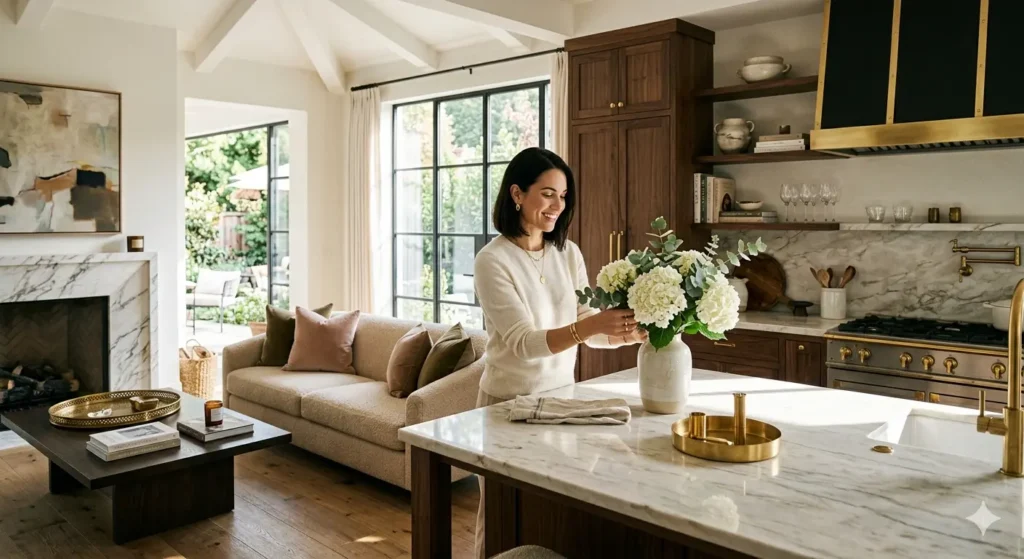
Why Elegant Interiors Influence Everyday Living?
The Emotional Impact of Beautiful Spaces
The relationship between the spaces we inhabit and the way we feel inside them is more direct than most people consciously acknowledge. Environmental psychology has documented what interior designers have always known intuitively: the quality of our surroundings influences mood, cognitive function, stress response, and even generosity toward others. A cluttered, visually noisy environment creates low-grade cognitive fatigue. A considered, harmonious space does the opposite — it creates the conditions for the kind of relaxed attention that makes everything else in life feel more manageable.
Home styling inspiration that operates at this level isn’t about creating rooms that photograph well. It’s about creating rooms that feel right to live in — where the eye rests comfortably, where the proportions make sense, where the materials reward touch as well as sight. The most admired interiors in design publishing share this quality. They look beautiful, but the more important truth is that they feel generous — as though the space itself is offering something to the person inside it.
Creating Calm Through Intentional Decor
Intentionality is the design principle that separates a curated interior from a decorated one. A decorated room has objects in it. An intentional interior has objects chosen for their relationship to each other and to the life lived around them — pieces that serve both a practical and an atmospheric purpose, that age well, and that mean something to the people who selected them.
Practically, this translates into editing as much as acquiring. The impulse in home styling is often toward addition — another accessory, another accent, another layer. The discipline that produces genuinely calm interiors is the opposite: removing everything that doesn’t serve the atmosphere you’re building and allowing what remains to breathe. The space between objects is as important as the objects themselves. This is a principle that every great interior photographer understands and that every aspiring home stylist learns eventually, usually after one too many surfaces have been decorated rather than considered.
Kitchen Aesthetics — Turning Functional Spaces into Luxury Experiences
The Rise of Designer Kitchen Styling
The kitchen has undergone a cultural transformation over the past two decades that has no parallel in any other room in the home. Once understood primarily as a functional space — the domain of utility over beauty — it has become the most designed room in most contemporary homes, the space where architectural investment, material quality, and personal aesthetic converge most visibly. Kitchen aesthetics now drive purchasing decisions at every level of the property market, and the objects that populate the kitchen counter and dining table have become as carefully chosen as any artwork on the wall.
This shift reflects something real about how contemporary life is organized. The kitchen is where the day begins, where meals are prepared with varying degrees of ceremony, where guests congregate regardless of the formal arrangements made elsewhere in the home. It is the room that sees the most daily contact, which means that the quality of its objects — the surface of the chopping board, the weight of the pepper mill, the clarity of the glassware — is registered more frequently and more intimately than almost anything else in the home.
Minimal Elegance in Modern Kitchens
The aesthetic direction that dominates contemporary kitchen styling is a form of restrained luxury — clean lines, natural materials, a limited palette of textures that rewards sustained attention rather than immediate impact. Stone, linen, matte ceramic, aged brass, oiled wood — these are the materials that define the modern luxury kitchen not because they’re expensive (though they are) but because they age beautifully and photograph with a warmth that cooler materials can’t match.
The organizing principle is consistency of material language. A kitchen that mixes oak, marble, linen, and aged brass throughout its surfaces and objects reads as cohesive because the materials share a natural, organic quality. Introduce a hard synthetic or a visually competing accent and the harmony breaks. The restraint required to maintain material consistency is the real design discipline of the minimal luxury kitchen, and it’s more demanding than it appears.
Statement Details That Elevate Everyday Routines
The detail that separates a merely beautiful kitchen from one that is genuinely elevating to inhabit is the quality of the everyday objects — the ones handled multiple times a day, every day, without ceremony. The coffee ritual that begins every morning, the table set for dinner, the water poured from a carafe into a glass worth noticing. When these repeated daily gestures involve objects of genuine quality and beauty, they accumulate into something significant: a life in which even the ordinary moments carry a degree of pleasure.
Luxury Kitchen Accessories That Transform the Home
Designer Tableware and Serving Pieces
Designer tableware is the category where kitchen aesthetics and dining culture converge most directly. The plates, bowls, and serving pieces that appear at the table for every meal are also the objects most visible to guests, most photographed for the moments they hold, and most intimately connected to the experience of eating together — which remains one of the primary social rituals of human life regardless of how much else changes around it.
The qualities that distinguish genuinely great tableware from merely expensive tableware are the ones that reveal themselves over time: the weight distribution of a plate that makes it easy to carry without being heavy, the depth of a glaze color that shifts in different light, the rim profile of a bowl that makes it comfortable to hold rather than simply pleasant to look at. These are not qualities that always correlate with price, but they tend to correlate with manufacturers who have been making ceramics seriously for a long time and understand what the hand expects from a well-made object.
Elegant Glassware and Dining Accents
Glassware is perhaps the most underappreciated category in home entertaining because its qualities are experiential rather than visual — the difference between a well-made glass and a poorly made one is most apparent when drinking from it, not when looking at it. A thin-walled, properly balanced wine glass changes the experience of the wine inside it in ways that are perceptible even to unpracticed palates. The temperature transfer, the visual clarity of the liquid, the way the rim meets the lip — these are design details with immediate sensory consequences.
The dining accents that complete a table setting — the candle holders, the serving spoons, the small ceramics placed at intervals — are where personal aesthetic has the most room to express itself. These are the objects that visitors notice and ask about, the pieces that carry the personality of the host most visibly, and the details that transform a table set for function into a table set with intention.
Decorative Kitchen Accessories With Timeless Appeal
Luxury kitchen accessories with genuine timeless appeal share a common characteristic: they are beautiful and useful simultaneously, with neither quality compromising the other. A hand-thrown ceramic bowl used daily for fruit or bread. A marble pastry board that lives on the counter because removing it would make the surface look less complete. A set of linen napkins in a color that complements the tableware and improves with every wash. These are objects that earn their place through use rather than display, which is the most demanding standard in home design.
Table Setting Ideas for Sophisticated Entertaining
Table setting ideas in the luxury interior tradition operate from a principle that is easier to state than to execute: the table should look considered without looking arranged. The difference is perceptible and important. An arranged table reads as decorative — it communicates effort in a way that makes guests self-conscious about the environment rather than relaxed within it. A considered table reads as natural — as though the objects simply belong together, arrived at their positions organically, and would look exactly this way whether guests were expected or not.
Seasonal styling is the most practical framework for maintaining freshness in table setting without constant acquisition. The same tableware reads differently in winter candlelight with warm linen and branch arrangements than it does in summer light with white cotton and a vase of garden flowers. The core objects remain constant; the atmosphere shifts with what’s available from season to season, which is both more sustainable and more interesting than seasonal replacement of objects.
Minimal luxury table settings — the mode most aligned with contemporary aesthetic direction — rely on material quality rather than abundance. A single runner of washed linen, three ceramic pieces of complementary scale placed asymmetrically, one low arrangement of botanicals, and glassware of genuine quality create more atmosphere than a formally set table with twice the objects. The restraint communicates confidence, and confidence is the foundation of all sophisticated entertaining.
Layering textures and tones is the detail that elevates a minimal setting beyond plainness. Natural linen against glazed ceramic against aged brass against the grain of a wooden table — each material texture creates a visual conversation with the others that makes the whole more interesting than any single element would be alone. Tone matters as much as texture: analogous tones (cream, warm white, soft stone, aged ivory) hold together with a harmony that contrasted colors can’t achieve without significant skill.
Home Fragrance & Atmosphere — The Invisible Layer of Luxury
The most sophisticated element of a beautifully designed interior is the one you cannot see. Home fragrance is the invisible layer of luxury — the atmospheric detail that registers before the eye has processed the visual environment, that lingers in memory after the space itself has been forgotten, and that communicates more about the sensibility of a home than almost any object within it.
Great interior designers have always understood scent as a design material. The candle burning on a dining table is not merely decorative — it is contributing warmth, movement, and fragrance simultaneously to the atmosphere of the meal. The diffuser in a hallway establishes the character of the home before a guest has reached the living room. The linen spray on bedding is the last sensory detail of a guest bedroom that has been styled with genuine care.
The selection of home fragrance deserves the same deliberateness applied to visual design elements. Fragrance families — woody, floral, resinous, green, aquatic — have distinct atmospheric qualities that suit different spaces and different uses. Woody and resinous notes (sandalwood, cedar, amber, oud) create warmth and intimacy appropriate for living and dining spaces. Lighter floral and green notes work better in bedrooms and bathrooms where heaviness would be intrusive. The layering of fragrance across a home — with different notes in different rooms that share a common character — creates an olfactory narrative as coherent as a visual one.
Decor Tips for a Refined Home Aesthetic
The most useful decor tips for building a refined home aesthetic are the ones that operate as principles rather than instructions — frameworks that can be applied across different spaces, budgets, and personal styles rather than specific prescriptions that produce identical results regardless of context.
Mixing textures and materials is the single most effective way to add depth to an interior without adding visual complexity. A room furnished entirely in one material — all smooth, all matte, all rough — reads as flat regardless of how expensive the individual elements are. The introduction of a contrasting texture — a rough linen cushion against a smooth plaster wall, a matte ceramic vessel against a polished marble surface — creates the kind of visual interest that sustains attention over time.
Choosing timeless over trendy pieces is the investment principle that most home stylists arrive at after several rounds of trend-chasing have produced objects that feel dated within three years. Timeless design has specific characteristics: it references historical forms without being period-specific, it uses natural materials that age rather than deteriorate, and it solves a functional problem elegantly rather than decoratively. Objects that meet these criteria tend to look better after five years of living with them than they did on the day of purchase.
Creating visual harmony room by room requires a degree of cross-room awareness that most home styling guides underemphasize. The rooms of a home are not independent environments — they are experienced as a sequence, and the transitions between them read as either harmonious or jarring depending on how the visual languages relate to each other. A shared material palette across rooms (the same stone appearing in kitchen and bathroom, the same wood tone in living room and dining room) creates the feeling of a home that has been considered as a whole rather than decorated room by room.
How Luxury Decor Reflects Personal Identity
Elegant hosting culture — the tradition of creating a beautiful environment for the people you invite into your home — is one of the most personal expressions of aesthetic identity available to most people. The table set for a dinner party, the candles lit before guests arrive, the glassware chosen with the evening’s menu in mind — these gestures communicate something about the host’s values, attention, and relationship to beauty that no amount of direct self-description could convey as clearly.
Quiet luxury living — the interior philosophy that prioritizes quality of experience over visibility of expenditure — is the mode that produces the most enduring home environments. The quietly luxurious home is not decorated to impress visitors. It is designed to feel genuinely good to live in, for the people who live there, in the ordinary moments between social occasions. It holds its quality when no one is watching, which is the most demanding standard a home can be held to.
The psychology of elevated spaces is ultimately the psychology of self-regard — the decision that one’s everyday environment is worth the effort of genuine consideration, that the objects handled daily deserve to be objects of quality and beauty, that the rituals of domestic life are worth conducting with care. This is not an argument for expenditure. It is an argument for intention — for the deliberate construction of an environment that makes daily life feel meaningful rather than merely functional.
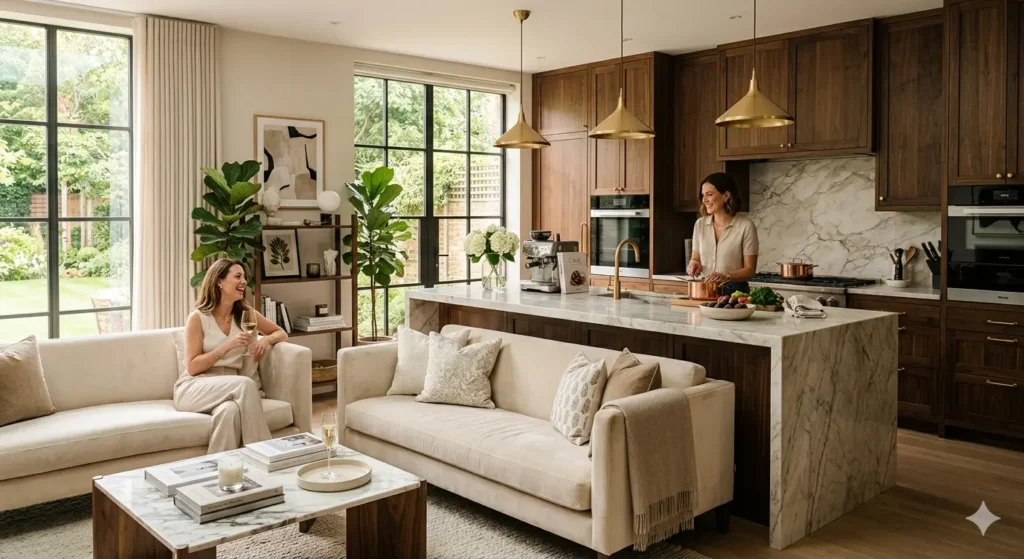
Frequently Asked Questions About Luxury Home Decor
What defines luxury home decor?
Luxury home decor is defined by the quality of materials, the integrity of craftsmanship, and the intentionality of curation rather than by price alone. A genuinely luxurious interior uses objects chosen for their relationship to each other and to the life lived around them — pieces that serve both practical and atmospheric purposes, that age beautifully, and that create an environment that feels genuinely good to inhabit rather than merely impressive to observe.
How can kitchen aesthetics improve a home?
The kitchen is the room with the most daily contact in most homes, which means the quality of its objects — their material, weight, finish, and design — is experienced more frequently than anything else in the interior. Investing in kitchen aesthetics through considered material choices, quality functional objects, and deliberate styling creates a cumulative improvement in the quality of daily experience that more occasional spaces can’t match.
What are the best luxury kitchen accessories?
The most valuable luxury kitchen accessories are the ones that combine genuine functionality with lasting aesthetic quality — designer tableware used daily rather than reserved for occasions, artisan glassware that improves the drinking experience as well as the table appearance, serving pieces in natural materials that age gracefully, and decorative kitchen objects that hold visual space while earning their place through use. Timeless material choices — ceramic, marble, aged brass, linen — consistently outperform trend-specific alternatives over time.
How do you create elegant table settings at home?
Elegant table settings rely on material quality and restraint rather than abundance. Begin with a foundation of quality linen in a neutral tone, layer one set of considered tableware in a complementary ceramic finish, add glassware of genuine weight and clarity, and complete with a single low arrangement and candles at appropriate height. The goal is a table that looks considered without looking arranged — one where the quality of the individual objects creates atmosphere without the setting appearing effortful.
Why is home fragrance important in luxury interiors?
Home fragrance is the atmospheric layer of interior design — the sensory element that registers before the visual environment is consciously processed and that persists in memory after other details have faded. A well-chosen fragrance reinforces the character of a space, creates a consistent sensory identity for the home, and elevates the everyday rituals conducted within it. In the complete luxury interior, scent is treated as a design material with the same intentionality applied to furniture, textiles, and decorative objects.
The most beautiful homes are not the largest or the most expensively furnished. They are the ones where every choice, from the weight of the cutlery to the fragrance in the hallway to the quality of the light falling across the dining table in the evening, has been made with the same quality of attention. That attention is what transforms a space from somewhere you live into somewhere you genuinely want to be — a home that holds you well in the ordinary moments, and holds your guests beautifully in the ones that matter.
Luxury home decor at its best is not a category of objects. It is a practice of living — one built around the conviction that the daily environment deserves genuine care, that the rituals of domestic life are worth conducting with beautiful things, and that the investment of attention in the spaces you inhabit returns itself quietly, consistently, and over a very long time.

 Brush
Brush Makeup Mirrors
 Body Lotions & Body Oils

 Personal Scales
 Perfume Coffrets
 Perfume Testers
 All Eyewear
 Unisex
 Optical
 Contact Lenses
 Home Fixtures
 Dining & Bar