


Latest posts
Balenciaga vs Gucci — Which Designer Eyewear Reigns Supreme?

Few debates in luxury fashion generate stronger opinions than this one. Balenciaga vs Gucci isn’t simply a comparison of two designer labels — it’s a collision of two entirely different philosophies about what fashion is for, what luxury means, and what a pair of sunglasses should communicate about the person wearing them. One house builds on maximalist Italian heritage and romantic excess. The other deconstructs fashion’s conventions with deliberate provocation, turning tension and irony into its own form of luxury language.
Both produce exceptional eyewear. Both command serious price points and serious cultural attention. But they are not interchangeable, and the buyer who chooses between them based purely on price or aesthetics is missing the more important question — which of these houses actually speaks to who you are?
This designer sunglasses comparison examines both brands honestly: design philosophy, build quality, price positioning, audience fit, and the frames that define each house’s eyewear identity. By the end, you’ll know exactly which side of this luxury brand duel belongs to you.
Table of Contents
The Philosophy Gap — What Each House Actually Believes?
Before comparing specific frames or price points, it’s worth being direct about something: Balenciaga and Gucci don’t just look different. They think differently. Understanding that gap makes every subsequent comparison more meaningful.
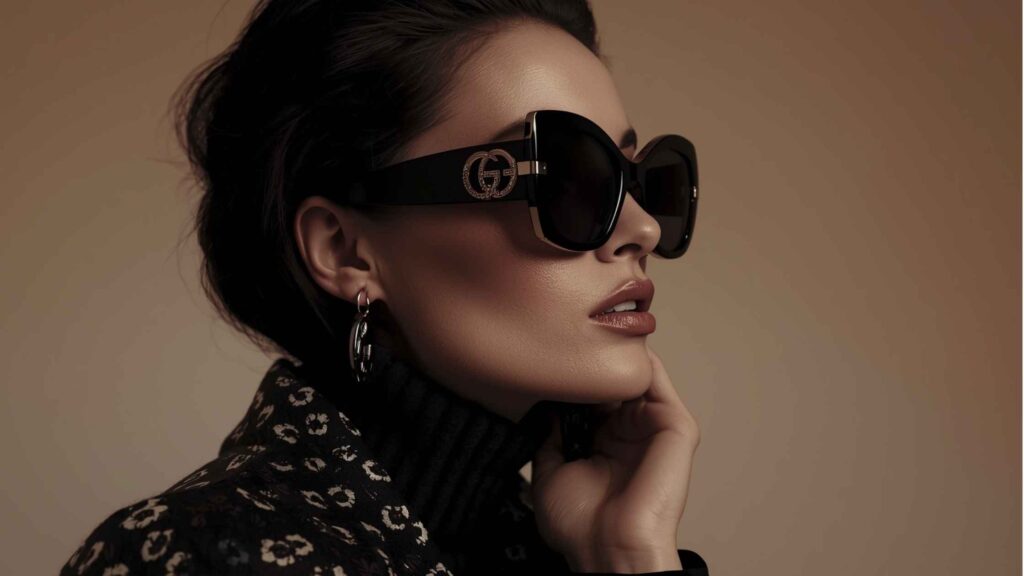
Gucci under creative director Sabato De Sarno has shifted toward a cleaner, more restrained Italian elegance — but the house’s DNA remains rooted in romantic maximalism, eclectic cultural references, and the kind of lush visual richness that has defined it since the Alessandro Michele era redefined the brand for a new generation. Gucci eyewear reflects this — it tends toward expressive shapes, bold colorways, prominent double-G hardware, and a design language that celebrates rather than questions the traditions of Italian luxury fashion.
Balenciaga operates in an entirely different register. Under Demna’s creative direction, the house has built a global following by treating fashion as intellectual territory — deconstructing silhouettes, embracing deliberate ugliness alongside unexpected beauty, and producing pieces that provoke a reaction rather than simply seeking approval. Balenciaga eyewear carries that same confrontational intelligence. The frames are often oversized, deliberately bold, and structured around a design language that references sportswear, futurism, and corporate anonymity with equal comfort.
This is the essential truth of the Balenciaga vs Gucci debate: you’re not just choosing a frame. You’re choosing a perspective.
Design Language — How Each Brand Builds a Frame
Gucci’s Visual Identity in Eyewear
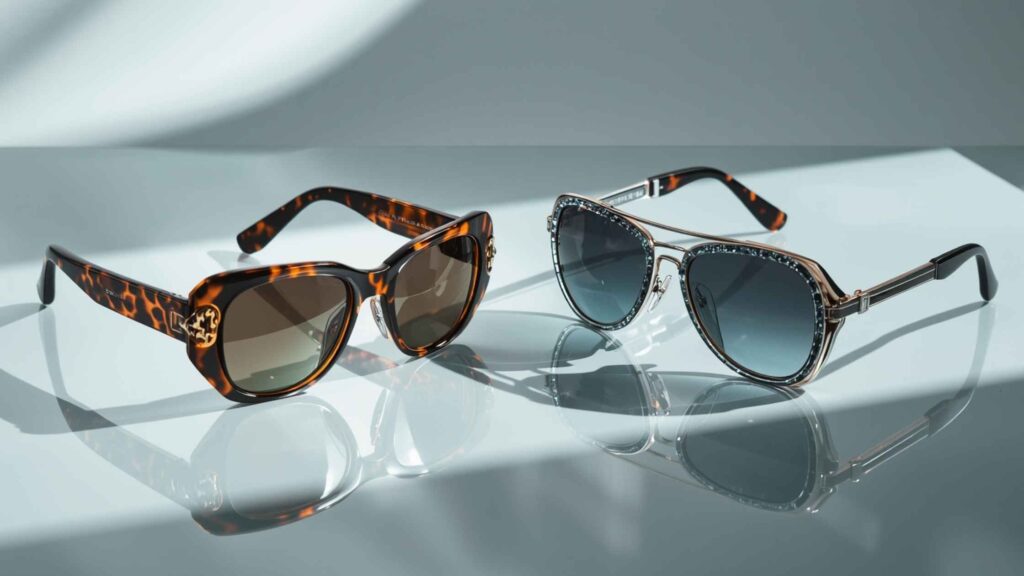
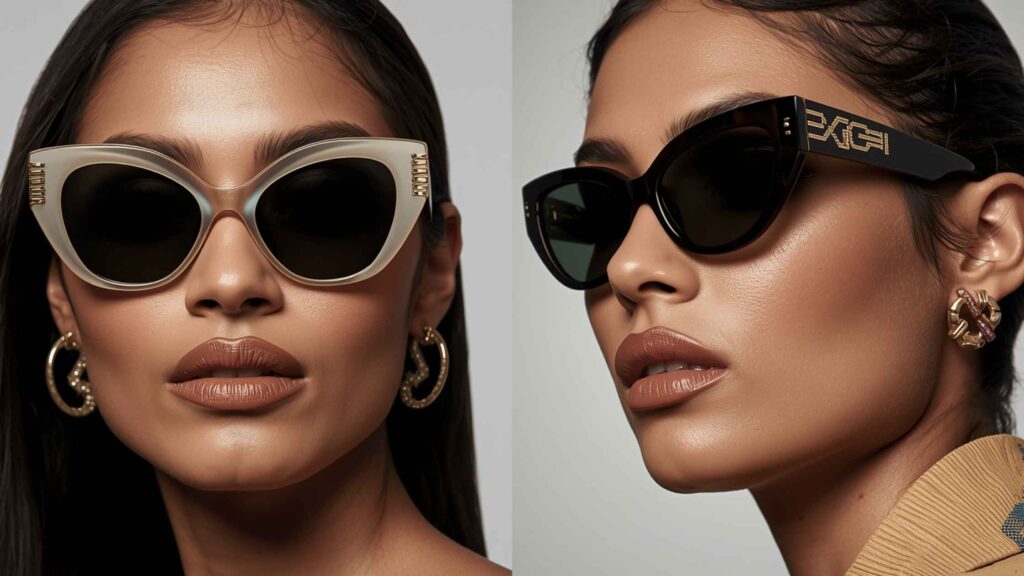
Gucci frames are unmistakably Italian in their design sensibility — warm, expressive, and constructed around the kind of decorative richness that the house has always excelled at. The double-G logo appears consistently across the collection, at temples, hinges, and occasionally across the lens bridge itself. The brand’s acetate work is among the best in designer eyewear — deep tortoiseshells, rich burgundies, layered havana tones — and its use of color has always been a genuine design strength rather than an afterthought.
Silhouette-wise, Gucci offers remarkable range. The GG1084S delivers a refined oval with light metal detailing; the GG0396S pushes into more theatrical cat-eye territory; the GG0061S square model offers a cleaner, more masculine expression of the brand’s identity. The connecting thread across all of them is a design warmth — these are frames that embrace rather than challenge, that seduce rather than provoke.

Balenciaga’s Visual Identity in Eyewear
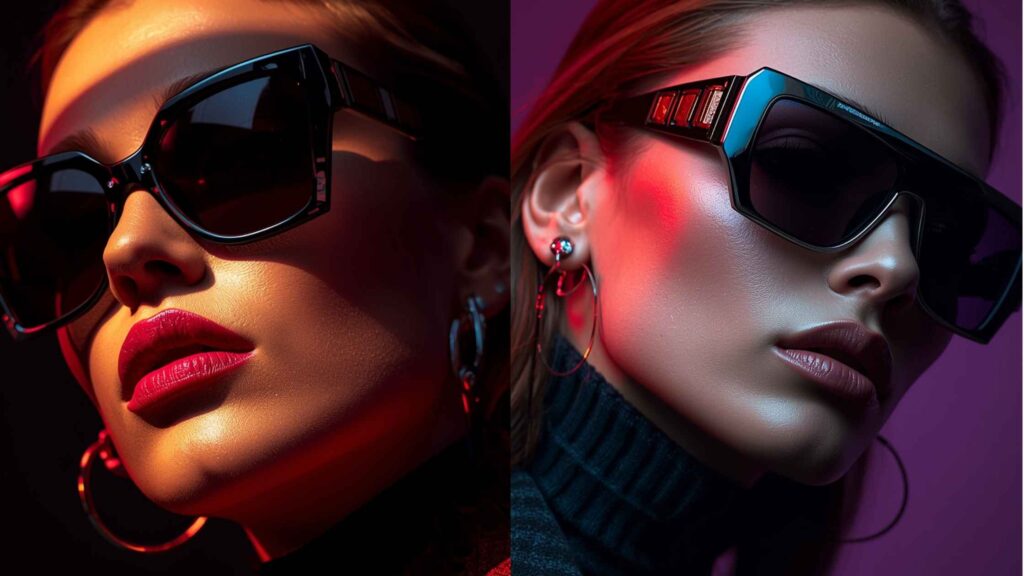
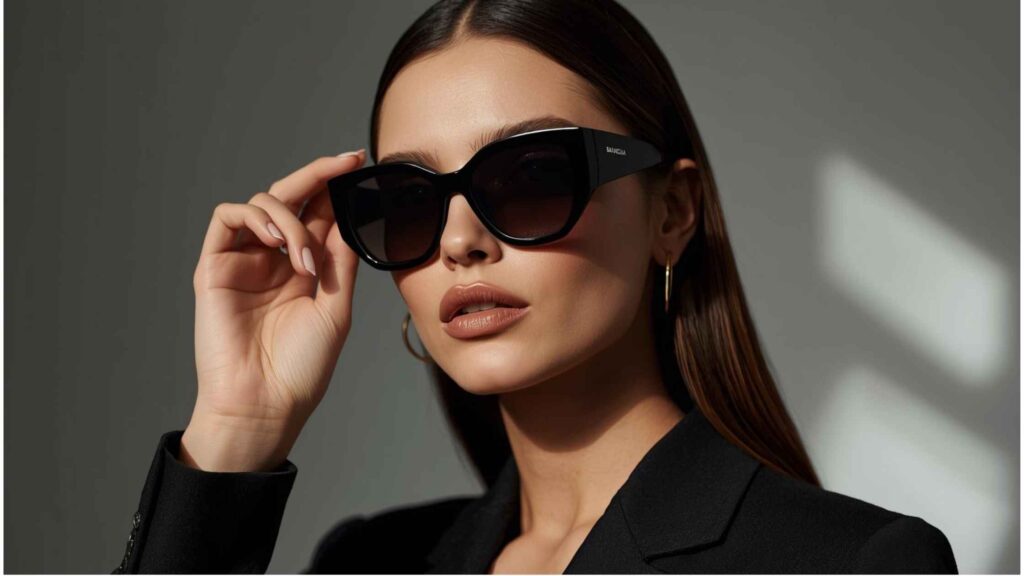
Balenciaga frames carry an entirely different energy. The house’s signature BB0011S shield frame — a single-lens wraparound construction that references both sportswear and corporate anonymity — became one of the most photographed pieces of luxury eyewear in recent memory precisely because it refused to look like a traditional luxury frame at all. The BB0002S oversized rectangle pushes lens dimensions to near-architectural scale. The BB0096S goggle-adjacent construction brings the house’s futurist instincts into full expression.
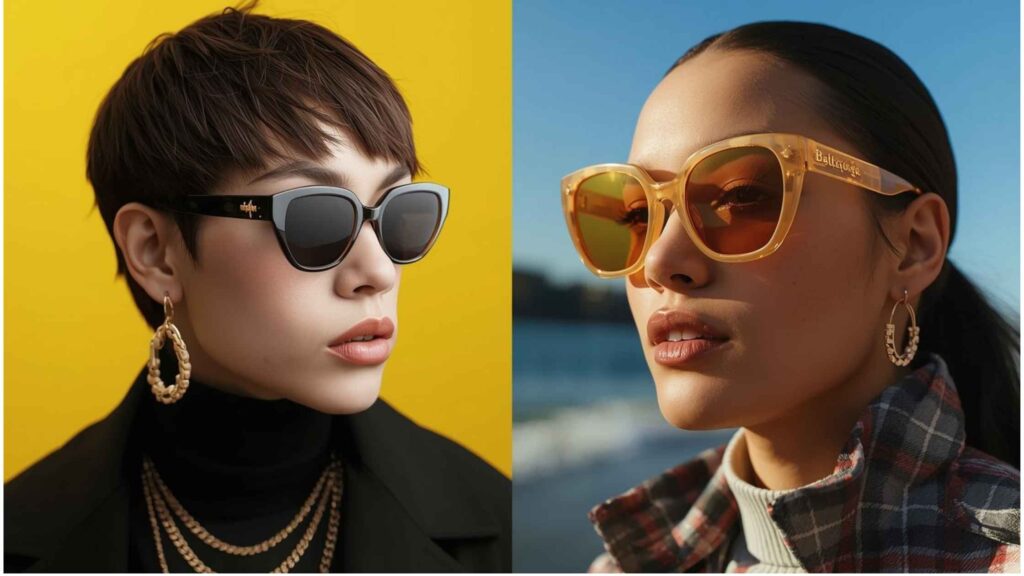
Where Gucci embraces warmth and decorative richness, Balenciaga favors cool precision — matte blacks, stark whites, metallic silvers, and the kind of tonal restraint that functions as its own form of statement. The BB logo appears across the collection but is deployed more sparingly than Gucci’s double-G, often integrated into the frame architecture itself rather than applied as surface decoration.

Build Quality and Materials — An Honest Assessment
Both houses source premium materials and maintain quality standards consistent with their price positioning, but they approach construction from different directions.
Gucci’s acetate quality is genuinely excellent — thick, richly pigmented, and finished with the kind of surface polish that holds up well through daily wear. The brand’s metal frames use high-grade alloys with quality plating, and the hinge construction across most models is tight and durable. Where Gucci occasionally draws criticism is in its heavier logo hardware — the double-G metal detailing, while visually impressive, can add weight to certain frames in ways that affect extended comfort.
Balenciaga’s construction priorities align with its design priorities — structural integrity and material innovation. The brand’s shield and wraparound frames require more complex engineering than conventional two-lens constructions, and Balenciaga executes this with genuine technical capability. Injection-molded frames are finished to tight tolerances; the brand’s oversized acetate models carry their size with less weight than you’d expect, which speaks to smart material selection. Build quality across both core and experimental models is consistently high.
The honest verdict on luxury brand construction: both houses build frames that justify their price points. The quality gap between them is narrow. The more meaningful differences lie in design and identity rather than build integrity.
Price — What the Investment Actually Looks Like
The best luxury eyewear brand debate often begins and ends with price, which is understandable — both Gucci and Balenciaga represent serious financial commitments.
Gucci sunglasses typically range from approximately $300 to $600 USD for core collection frames, with select high-jewelry and limited collaboration pieces pushing beyond that ceiling. For most buyers, the primary Gucci eyewear catalog sits in the $350–$550 range — making it one of the more accessible major luxury eyewear brands at its tier.
Balenciaga frames generally command a modest premium over comparable Gucci models, sitting between $350 and $700 USD across the core collection, with certain more architecturally complex models — the shield frames, the oversized wraparounds — at the higher end of that range. The premium reflects both the brand’s elevated fashion positioning and the more complex engineering some of its signature silhouettes require.
Neither brand represents a bargain. But within the context of luxury fashion eyewear, both offer value propositions that hold — Gucci through design warmth and Italian heritage depth, Balenciaga through design innovation and cultural currency that remains exceptionally strong in the current market.
Which Is Better — Gucci or Balenciaga Sunglasses?
The question of which is better, Gucci or Balenciaga sunglasses, resolves cleanly when you stop asking which brand is objectively superior and start asking which brand is right for a specific kind of person.
Choose Gucci if your wardrobe is rooted in warmth, color, and expressive Italian luxury. If you appreciate decorative richness, the weight of heritage craftsmanship, and frames that communicate a kind of joyful confidence in fashion’s pleasures — Gucci is your house. The double-G hardware, the rich tortoiseshell acetate, the romanticism of the brand’s design history — these are things Gucci does better than almost anyone at this price point. Gucci also tends to attract buyers who want their luxury to feel welcoming rather than confrontational, aspirational rather than disruptive.
Choose Balenciaga if your aesthetic runs cooler, more architectural, more interested in fashion as intellectual territory than as pleasure. If you gravitate toward monochrome dressing, oversized silhouettes, and the kind of frame that generates a reaction rather than simply a compliment — Balenciaga was built for you. The brand’s eyewear rewards confidence in your own aesthetic vision; it doesn’t work as well for buyers who want universal approval, because Balenciaga frames have never been designed to court it.
There’s a third buyer worth naming: the collector who operates across both. Many serious luxury fashion consumers own Gucci for warmth and versatility, and Balenciaga for editorial impact and cultural currency. The two houses complement each other because they occupy genuinely different psychological territories — and a wardrobe that has room for both is a wardrobe that understands what each is actually for.
Cultural Presence — Which Brand Carries More Weight in 2026?
Cultural influence is difficult to quantify, but impossible to ignore in a designer sunglasses comparison at this level.
Gucci’s cultural reach remains extraordinary — the house maintains strong presence across music, film, and global fashion markets, with a brand recognition that transcends fashion insiders and reaches genuinely mass luxury audiences. The double-G logo is understood in markets where most designer brand codes remain niche knowledge. For buyers in whom brand visibility and global recognition carry weight — in business contexts, in travel, in environments where Gucci’s specific iconography communicates a recognized form of success — that matters.
Balenciaga operates with perhaps the highest fashion-insider cultural currency of any major house right now. Its presence in streetwear, in digital culture, in the conversations that set the direction for luxury fashion more broadly — is unmatched by most competitors including Gucci. Among younger luxury buyers and fashion-forward consumers globally, Balenciaga’s cultural position is exceptionally strong. If you operate in or adjacent to creative industries, the Balenciaga signal carries particular weight.
FAQ — Balenciaga vs Gucci Sunglasses
Which is better for everyday wear — Gucci or Balenciaga?
For everyday versatility, Gucci generally has an edge. Its design language is warmer and more broadly accommodating across different wardrobe contexts and social environments. Balenciaga’s more architecturally dramatic frames are exceptional as statement pieces but require more deliberate styling to integrate into daily rotation without visual conflict.
Are Balenciaga sunglasses worth the price premium over Gucci?
Whether the Balenciaga premium is justified depends entirely on what you’re buying it for. If cultural currency, design innovation, and fashion-forward identity are your priorities, yes — Balenciaga delivers on all three. If warmth, Italian heritage craftsmanship, and broader social versatility matter more, Gucci represents comparable or better value at a slightly lower price point.
Which brand has better resale value — Balenciaga or Gucci?
Gucci maintains stronger resale value across a broader range of models due to its wider brand recognition and more consistently legible logo presence. Certain Balenciaga pieces — particularly iconic shield and oversized models — hold resale value well within fashion-forward markets, but Gucci’s resale floor is generally more consistent across geographies.
What face shapes suit Balenciaga frames best?
Balenciaga’s oversized and shield frames are most flattering on oval and oblong face shapes, where the scale of the frame doesn’t overwhelm facial proportion. Rounder face shapes can struggle with the brand’s most extreme silhouettes, though the rectangular models in the range offer more universally accommodating geometry.
Are Gucci sunglasses good quality?
Yes — Gucci sunglasses maintain genuine quality standards consistent with their luxury positioning. Premium acetate, quality metal alloys, and solid hinge construction are consistent across the core collection. The brand’s quality control is reliable, and frames are built to sustain daily luxury wear rather than purely aspirational occasional use.
The Verdict — Two Houses, Two Truths
The Balenciaga vs Gucci debate was never going to have a single winner, because both houses are winning — just at different things, for different people, in different moments.
Gucci gives you the warmth of Italian fashion history, the joy of expressive design, and a brand code recognized and respected in every luxury market on earth. Balenciaga gives you the cool precision of fashion’s most intellectually rigorous house, the cultural currency of a brand operating at the absolute frontier of the industry, and frames that wear your confidence as visibly as you wear them.
The real question was never which is better. The question is which one is more true to you. Answer that honestly, and the right pair of sunglasses picks itself.
Have a position in this luxury brand duel? Share it in the comments — or pass this guide to someone caught between two of fashion’s most compelling houses. And if you’re ready to go deeper, don’t miss our full ranking of the best luxury designer sunglasses worth investing in for 2026.






 Brush
Brush Makeup Mirrors
 Body Lotions & Body Oils

 Personal Scales
 Perfume Coffrets
 Perfume Testers
 All Eyewear
 Unisex
 Optical
 Contact Lenses
 Home Fixtures
 Dining & Bar