


Latest posts
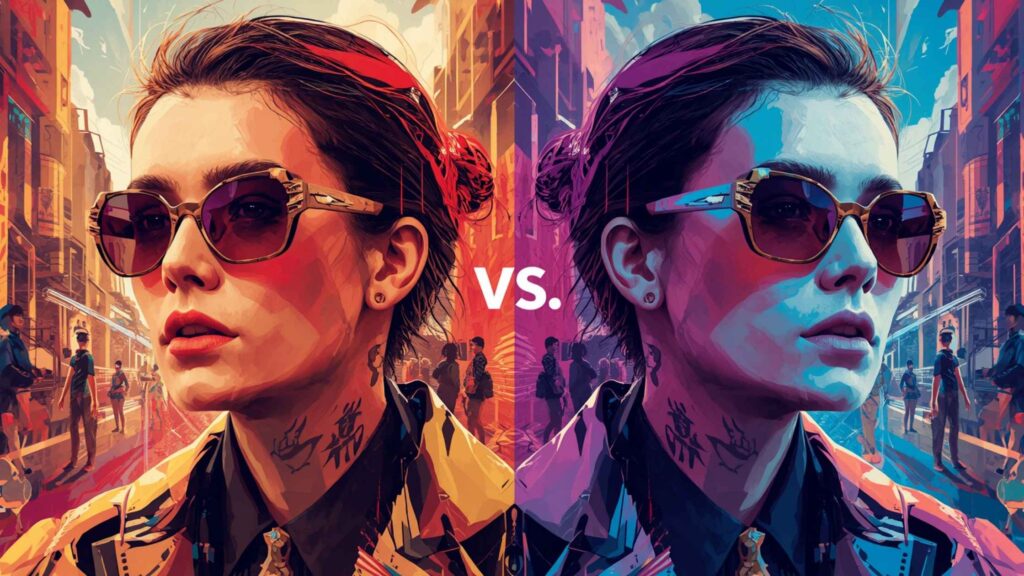
Balenciaga vs Off-White vs Gucci Sunglasses — The Ultimate Guide

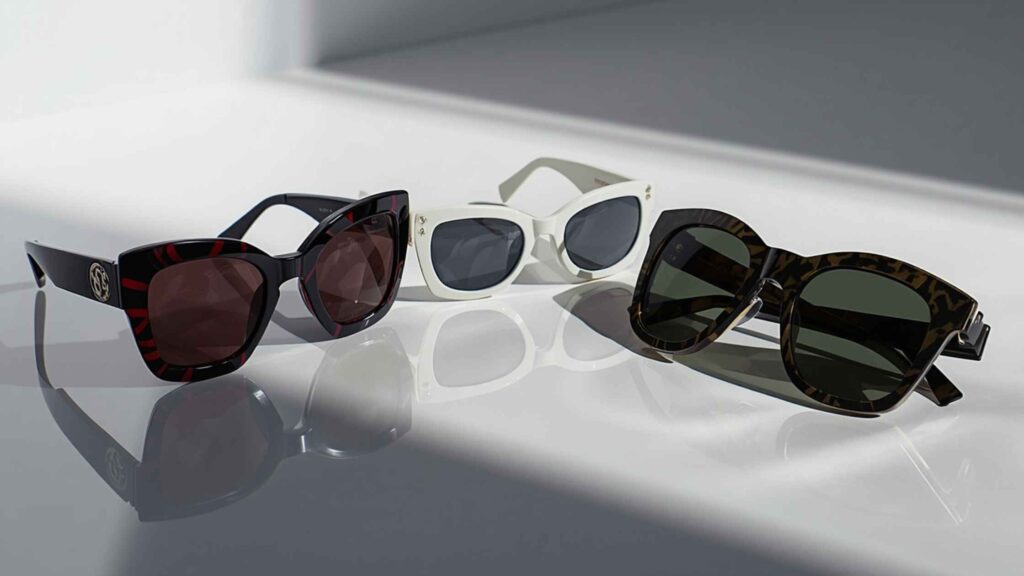
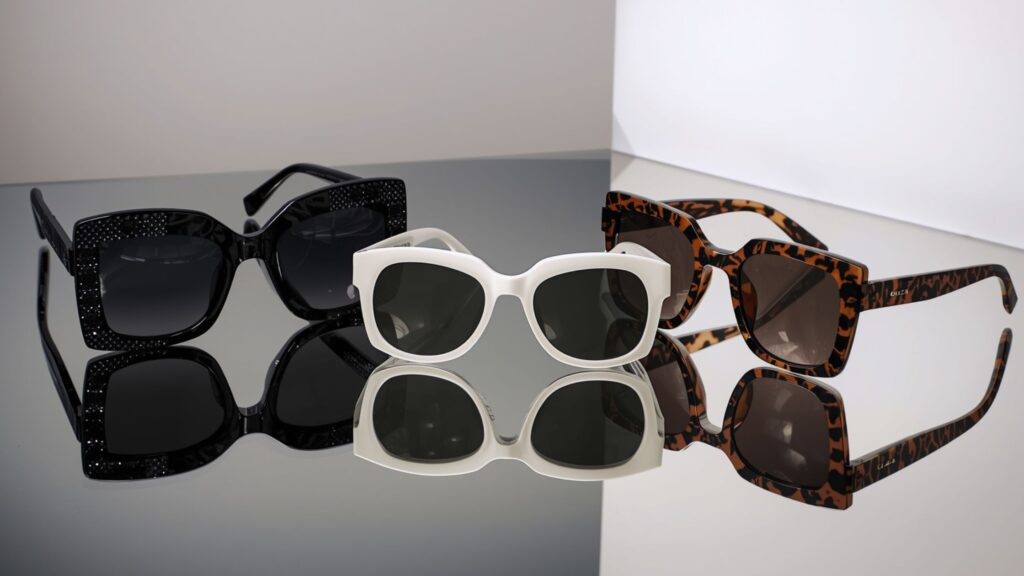
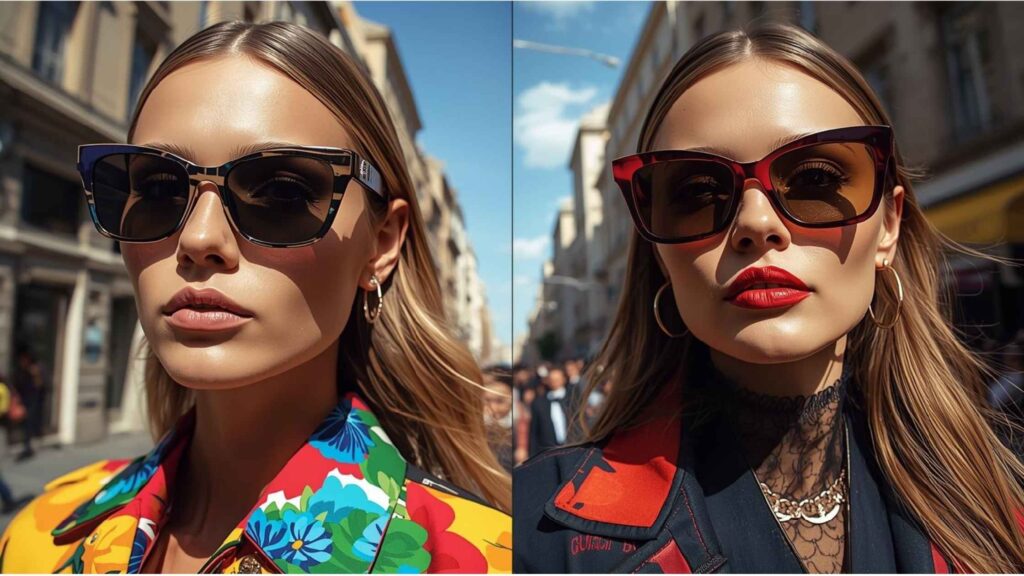
There’s a conversation happening at the intersection of streetwear and luxury that didn’t exist twenty years ago — a conversation about what happens when the most culturally urgent design movements stop being separate from the most materially excellent ones, and start occupying the same objects, the same price points, and the same cultural spaces simultaneously. Balenciaga vs Off-White vs Gucci sunglasses is the most instructive three-way comparison that conversation produces — three houses, three completely different positions on the streetwear-luxury spectrum, and three genuinely compelling answers to the question of what fashion eyewear should be in 2026.
None of these houses is simply a streetwear brand. None is simply a luxury house. All three operate in the territory where those categories blur — where a $400 pair of sunglasses can reference both a Parisian couture tradition and a skate park aesthetic simultaneously, where the cultural currency of a brand mark carries as much design weight as the frame’s material specification, and where the buyer’s relationship with fashion history is as relevant to their purchase decision as their face shape or their wardrobe palette.
This multi-brand eyewear comparison maps all three houses with genuine expert authority — design philosophy, signature frames, cultural positioning, and the honest guidance that positions each brand for the specific buyer who will get the most from what each house genuinely offers. Whether you’re entering this comparison as a streetwear native, a luxury convert, or someone who has already resolved that the distinction between those categories is less interesting than the territory where they overlap, this guide delivers the clarity the decision deserves.
Table of Contents
The Three Positions — Understanding Before Comparing
Balenciaga: Deconstruction as Design Intelligence
Demna’s Balenciaga operates on a creative principle that is simultaneously the most intellectually demanding and most culturally productive position in contemporary luxury fashion: that fashion’s conventions — including its distinctions between luxury and streetwear, between high design and consumer culture, between the aspirational and the ironic — are design materials rather than fixed categories. The house takes these conventions apart, examines their components, and reassembles them in combinations that produce objects with genuine design novelty alongside genuine cultural provocation.
Balenciaga eyewear carries this deconstructive intelligence directly. The shield frames that reference both sportswear performance and corporate anonymity. The oversized rectangles that push conventional proportions to their architectural limits. The goggle-adjacent constructions that occupy the formal territory between safety equipment and couture accessory. Each represents a genuine design question — what happens when this reference meets this material in this proportion? — answered with the manufacturing quality and cultural confidence that makes the answer feel inevitable rather than experimental.
The Balenciaga buyer in 2026 is someone for whom fashion intelligence is the primary luxury value — who finds more satisfaction in wearing something that makes a sophisticated argument about fashion’s conventions than in wearing something that simply demonstrates material quality or heritage prestige.
Off-White: The Bridge House
Virgil Abloh founded Off-White in 2013 with a premise that was simultaneously commercial and philosophical: that the space between streetwear and luxury — the space that the fashion establishment treated as a gap to be managed rather than a territory to be developed — was actually the most culturally productive design territory available. The quotation marks. The diagonal stripes. The “FOR WALKING” on a shoe sole and “SHOELACES” on a lace. These weren’t ironic jokes. They were genuine design propositions about what happens when you make the conventions of objects visible — when you put language on things to make people see the things themselves differently.
Off-White eyewear carries Abloh’s legacy through a design language that continues to develop under the brand’s current creative direction — frames that reference both luxury optical traditions and streetwear aesthetics through the brand’s characteristic visual devices, producing objects that occupy the bridge position between both worlds more completely than any competitor manages. The brand’s designs are legible to both luxury buyers and streetwear natives simultaneously, which is a design achievement that requires more creative intelligence than it might initially appear.
The Off-White buyer in 2026 is someone who finds the bridge position genuinely more interesting than either extreme — who dresses in the specific cultural territory where streetwear and luxury have been negotiating their merger, and who wants eyewear that reflects that cultural position with the same intelligence their clothing brings to it.
Gucci: Heritage Maximalism at Full Power
Gucci’s position in this three-way comparison is the most historically grounded and the most materially confident — a house with over a century of design accumulation deploying that accumulation with the specific energy of a brand that has been culturally dominant across multiple successive generations of fashion leadership. The double-G hardware. The web stripe. The equestrian codes. The romantic maximalism that Alessandro Michele elevated to near-mythological cultural status and that Sabato De Sarno has refined into something simultaneously more restrained and more classically Italian.
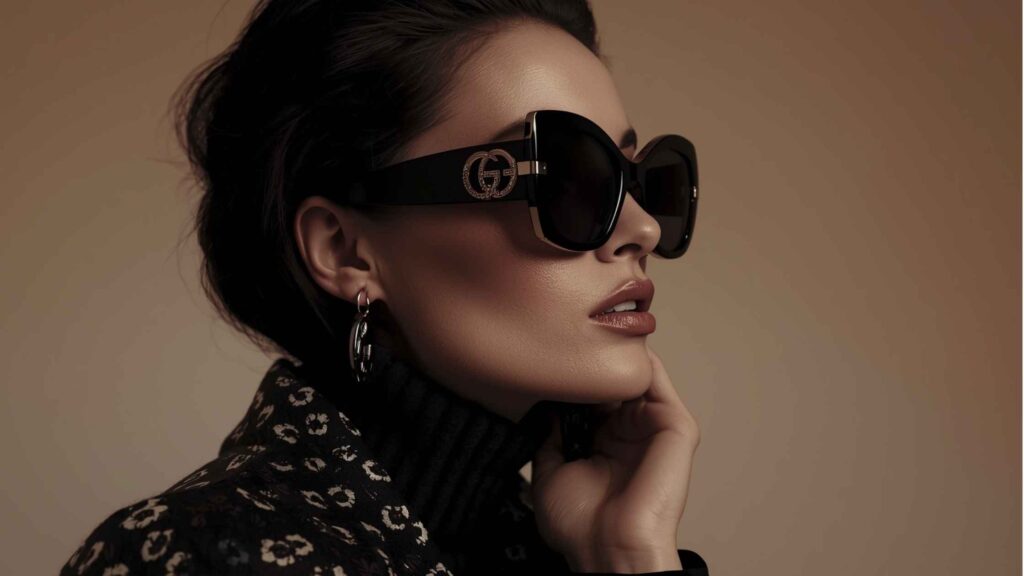
Gucci eyewear in 2026 represents the luxury end of the streetwear luxury spectrum with more confidence and more cultural authority than either Balenciaga or Off-White can claim from their more recently established positions. The house’s streetwear adjacency is not a design strategy adopted to capture a market segment — it is the natural consequence of a brand so culturally dominant that every cultural movement eventually orbits it, including the streetwear movement that seemed most determined to position itself as luxury’s alternative.
The Gucci buyer in this comparison is someone who wants the most culturally legible and most materially warm of the three options — whose relationship with street luxury is expressed through the decorative richness of Italian heritage rather than through the deconstructive intelligence of conceptual design.
Design Language — Three Ways to Make a Frame
Balenciaga’s Architectural Extreme
Balenciaga sunglasses design operates at the limits of what conventional eyewear silhouettes will accommodate — pushing proportions, materials, and formal relationships to points that other brands treat as boundaries rather than starting positions. The BB0011S shield — a single continuous lens construction that eliminates the conventional two-lens frame entirely — is the most radical expression of this approach, but the brand’s entire collection reflects the same willingness to question whether conventional frame architecture is a design requirement or simply a convention that can be replaced.
The design language rewards buyers who engage with it on its own terms rather than evaluating it against conventional eyewear standards. A shield frame is not a large conventional frame — it is a genuinely different design proposition that solves different visual problems and creates different wearing experiences. Understanding this distinction is the prerequisite for appreciating what Balenciaga’s eyewear design is actually achieving.
The brand’s logomark — the BB initials — appears across the collection in varying scales and integrations, used with the same conceptual intelligence that Demna brings to every design decision. It is not applied as conventional branding but deployed as a design element, sometimes integrated into the frame’s architecture, sometimes appearing in scale relationships that comment on conventional logo placement rather than simply replicating it.
Off-White’s Bridge Design Language
Off-White eyewear design operates in the specific visual territory between luxury optical tradition and streetwear’s graphic confidence — frames that are recognizably luxury in their proportions and construction while carrying streetwear’s appetite for visible design language and cultural reference.
The brand’s characteristic design devices — arrow detailing, diagonal stripe references, the quotation mark language that Abloh developed as a deconstructive tool — appear in eyewear through hardware details, temple treatments, and the specific graphic confidence of frames that wear their design intention visibly rather than encoding it in subtle proportion and material choices. These frames communicate to streetwear natives through the brand’s cultural vocabulary while communicating to luxury buyers through the quality of their construction and the sophistication of their proportion.
The bridge position is Off-White’s most significant design achievement — frames that don’t require the buyer to choose between streetwear identity and luxury quality, that carry both simultaneously without the awkward compromise that most attempts at this combination produce.
Gucci’s Maximalist Heritage
Gucci eyewear design draws from the brand’s deepest design archive — the equestrian heritage, the double-G hardware, the web stripe, the romantic maximalism that has defined the house’s visual identity across multiple creative chapters. In the context of this three-way fashion brand comparison guide, Gucci’s design language is the most decoratively rich and the most culturally historically grounded.
The brand’s streetwear adjacency manifests not through graphic devices or deconstructive irony but through cultural dominance — Gucci has been present in streetwear’s cultural references (in music, in art, in the visual language of urban youth culture) for long enough that its heritage codes have been absorbed into the streetwear vocabulary as genuine references rather than simply as luxury signifiers. Wearing Gucci within a streetwear-adjacent wardrobe is not a category violation — it is a cultural acknowledgment of the brand’s genuine influence across both worlds.
Signature Frames — The Pieces That Define Each Brand
Balenciaga’s Defining Eyewear for 2026
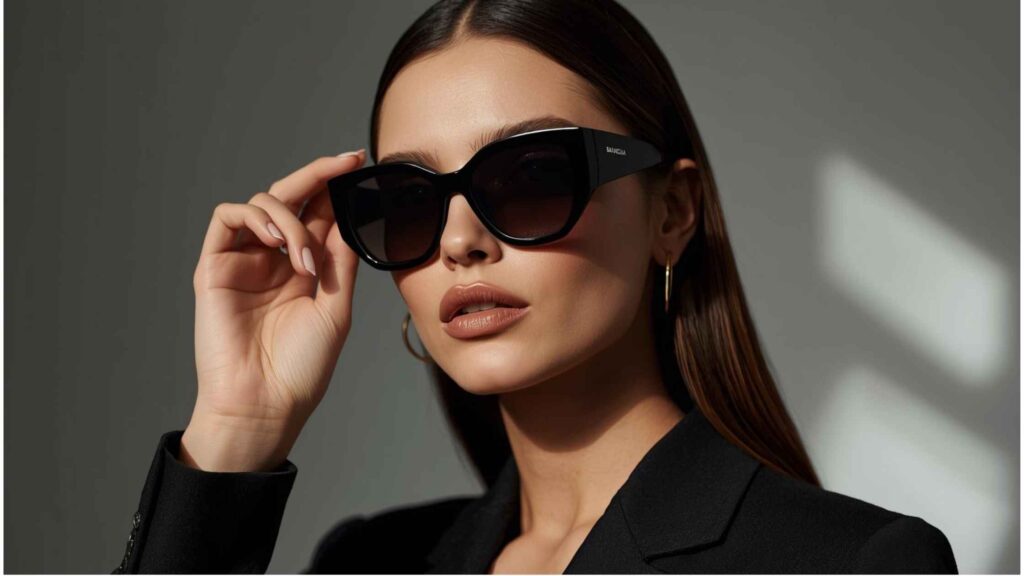
BB0011S Shield — The single most architecturally radical piece in Balenciaga’s eyewear catalog and among the most discussed frames in contemporary luxury fashion. A continuous single-lens construction with the BB logo integrated into the bridge — rejecting conventional two-lens architecture in favor of a visor-adjacent form that references both sportswear and the kind of face-obscuring couture headpiece that Demna deploys on the runway. For best street luxury sunglasses 2026, this frame is the definitive statement piece.
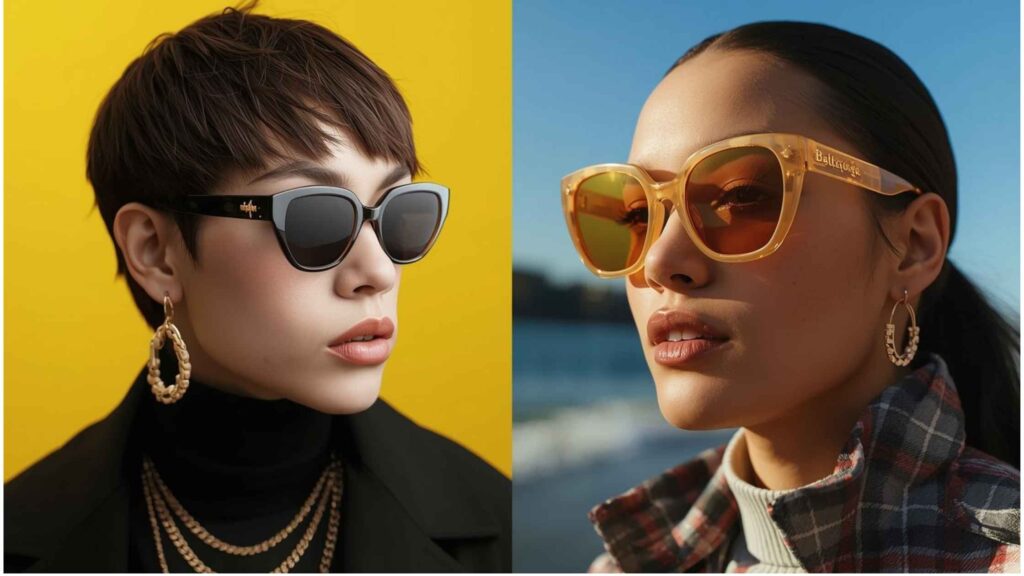
BB0002S Oversized Rectangle — The brand’s most wearable architectural statement. Proportions pushed to the geometric maximum within a conventional two-lens format — wider than expected, taller than standard, with the BB hardware integration providing the brand’s identity signal in its most structurally embedded form. This frame suits buyers who want Balenciaga’s design intelligence within a construction that works more broadly across daily wearing contexts than the shield allows.
BB0096S Goggle Construction — The brand’s most experimental piece for buyers whose relationship with conventional eyewear has already been fully resolved. Goggle-adjacent form language, architectural bridge construction, and the specific formal language of protective equipment translated into luxury fashion object. This frame is for the Balenciaga buyer who has committed fully to the brand’s design philosophy and wants the most complete expression of that philosophy available.
Off-White’s Defining Eyewear for 2026
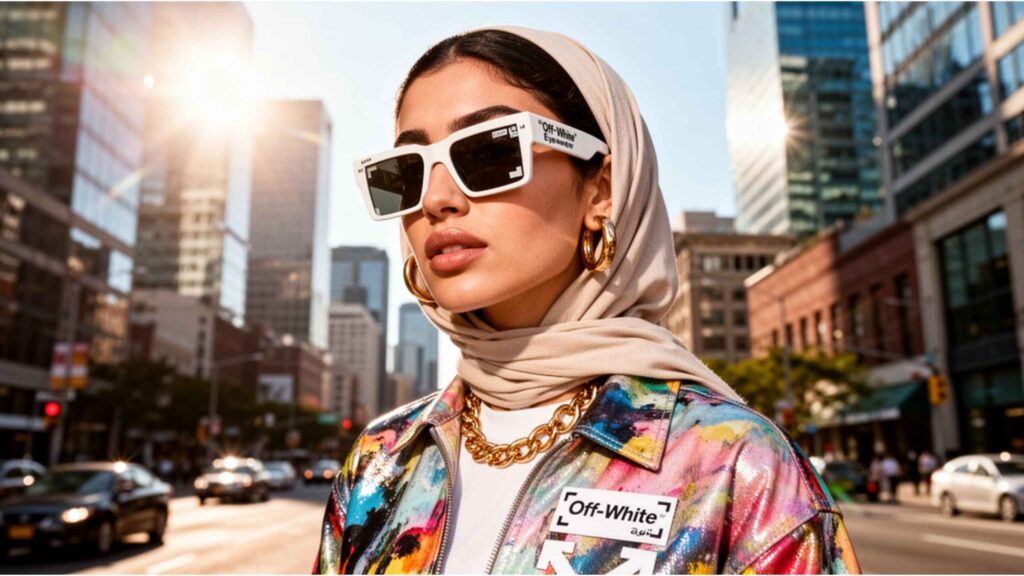
OERI005 Arrow Detail Frame — The Off-White frame that most completely expresses the brand’s bridge position through the deployment of its most recognizable design device. Arrow hardware at the temples, quality construction throughout, and proportions that reference luxury optical tradition while carrying streetwear’s graphic confidence simultaneously. The most genuinely representative Off-White eyewear piece for buyers who want the brand’s specific cultural positioning in its clearest expression.
OERI049 Shield Construction — Off-White’s contribution to the shield frame conversation that Balenciaga has dominated — a wider, more continuous lens format with the brand’s characteristic design language applied to a more athletically-referenced construction. In the context of the multi-brand eyewear comparison, this frame demonstrates how the same formal territory (the shield) produces different design outcomes when different brands’ specific philosophies are applied to it.
OERI034 Rectangular Bridge Frame — The most daily-wear-versatile Off-White construction — a rectangular format with quality acetate and the brand’s arrow or stripe detailing in a scale and position that reads as considered rather than dominant. For buyers who want the brand’s cultural identity in a frame that works across more contexts than the more architecturally extreme pieces accommodate.
Gucci’s Defining Eyewear for 2026
GG1426S Oversized Rectangle — Gucci’s most complete 2026 response to the oversized frame conversation that Balenciaga and Off-White also engage. The brand’s warm acetate palette and characteristic hardware applied to proportions that carry genuine visual scale — a frame that participates in the street luxury aesthetic through the cultural authority of its brand codes rather than through formal deconstruction or graphic bridge vocabulary.
GG0817S Geometric Hexagonal — Gucci’s most architecturally ambitious 2026 frame — engaging with the geometric design territory that Balenciaga owns most completely, executed with Gucci’s characteristic warmth and material richness. This frame demonstrates that Italian maximalism can engage with contemporary geometric design without abandoning the decorative intelligence that distinguishes it from more austerely conceptual competitors.
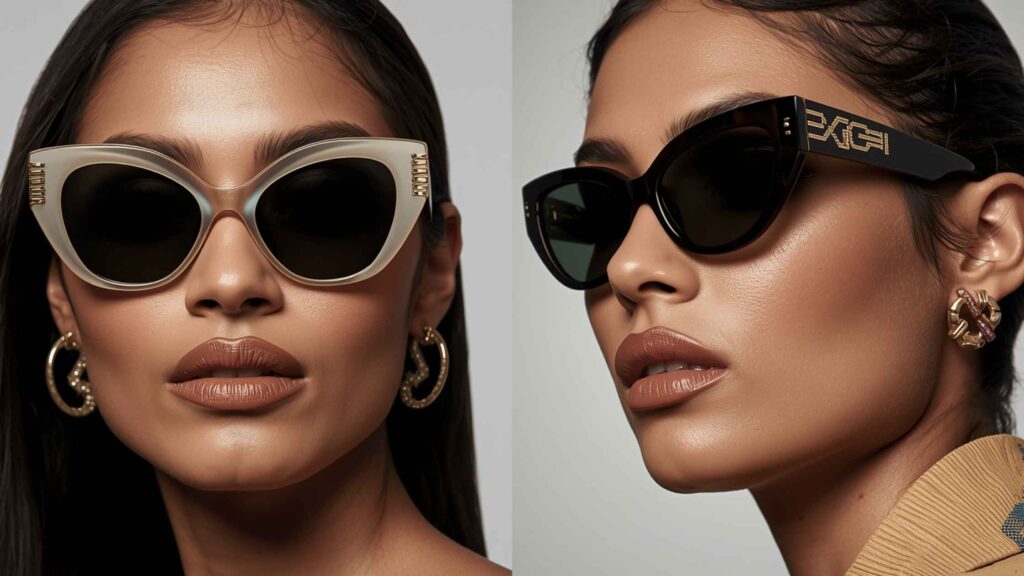
GG0396S Dramatic Cat-Eye — The most culturally dominant women’s piece in this comparison — a frame that has achieved sufficient cultural saturation across music, film, and digital culture to function as a genuine streetwear-luxury crossover object, appearing in the visual references of both worlds simultaneously. For iconic frames in the women’s category specifically, this is the 2026 benchmark.
Cultural Positioning — Where Each Brand Lives in 2026
The streetwear luxury conversation in 2026 has evolved beyond the simple narrative of streetwear brands achieving luxury status — the more interesting and more current story is about how established luxury houses are engaging with streetwear’s cultural energy, and how streetwear-adjacent brands are engaging with luxury’s material standards.
Balenciaga in 2026 occupies the most creatively volatile position — the brand that generates the most cultural discussion, the most polarized reactions, and the most genuine design innovation of the three. Its cultural presence is intense within fashion-forward communities and increasingly mainstream through the kind of celebrity adoption that translates insider credibility into broader cultural recognition. Wearing Balenciaga eyewear in 2026 communicates active participation in fashion’s most intellectually demanding current conversation.
Off-White in 2026 carries the weight of Virgil Abloh’s foundational cultural contribution — the brand that genuinely created the bridge position between streetwear and luxury as a coherent design philosophy rather than a marketing accommodation. The brand’s current cultural position involves navigating the post-founder challenge while maintaining the design integrity and cultural credibility that Abloh’s creative vision established. Wearing Off-White eyewear communicates respect for that foundation alongside engagement with its ongoing evolution.
Gucci in 2026 maintains the most stable and most historically grounded cultural position of the three — the house whose cultural authority is deepest, whose brand recognition is broadest, and whose streetwear adjacency is the result of genuine cultural influence rather than strategic positioning. Wearing Gucci within the street luxury conversation communicates the specific confidence of someone whose fashion references run deep enough to include the house that has been shaping those references across multiple generations.
Materials and Construction — The Honest Assessment
Best street luxury sunglasses 2026 material comparison across the three brands produces genuine differentiation that matters for buyers making significant investment decisions.
Balenciaga construction quality is consistently premium — the brand’s Kering group resources and design ambitions produce frames with genuine material integrity alongside their architectural boldness. The shield constructions in particular require manufacturing precision that standard eyewear production cannot achieve, and Balenciaga meets that requirement with the consistency that serious buyers expect at the brand’s price point.
Off-White construction has improved significantly as the brand’s resources and manufacturing partnerships have developed — the current collection reflects quality standards appropriate to the brand’s luxury price positioning, with acetate and metal constructions that deliver genuine material integrity alongside the brand’s graphic design language.
Gucci maintains the most consistent and most historically reliable construction quality of the three — the brand’s acetate sourcing, hardware finishing, and overall manufacturing standards reflect decades of luxury production investment that produces reliable premium quality across the full collection range.
Price — The Investment Landscape
Balenciaga eyewear typically ranges from $380 to $650 USD across the core collection, with the more architecturally complex shield and goggle constructions at the higher end.
Off-White frames sit between $320 and $550 USD for the core range — the brand’s bridge position producing a price that reflects both its luxury quality standards and its streetwear-accessible positioning philosophy.
Gucci core collection frames range from $320 to $600 USD — the broadest price range of the three, reflecting the catalog’s exceptional variety from the most restrained metal ovals to the most dramatically hardware-forward pieces.
All three brands compete within a comparable investment tier, making the choice between them a philosophical and aesthetic decision rather than a primarily financial one.
Choosing Your Brand — The Direct Guidance
Choose Balenciaga if your fashion identity is organized around intellectual engagement with fashion’s conventions — if you find the deconstructive intelligence of a shield frame or an architectural oversized construction more compelling than the decorative richness of heritage luxury or the bridge vocabulary of streetwear-luxury fusion. Balenciaga is the choice for the buyer whose relationship with fashion is most actively analytical, most interested in what fashion is doing as a cultural practice rather than simply what it looks like.
Choose Off-White if you genuinely inhabit the bridge position — if your wardrobe and your cultural references draw authentically from both streetwear and luxury traditions, and you want eyewear that reflects that double fluency with the specific design intelligence that Abloh developed specifically to serve it. Off-White is the choice for the buyer who has resolved the streetwear-luxury binary by finding it genuinely less interesting than the territory between its poles.
Choose Gucci if you want the most culturally deep and most materially warm of the three options — the brand whose streetwear adjacency is rooted in genuine cultural influence rather than strategic positioning, and whose heritage maximalism provides the richest and most historically grounded form of street luxury available in 2026. Gucci is the choice for the buyer who wants their fashion references to run deepest and their material quality to feel most immediately satisfying.
FAQ — Balenciaga vs Off-White vs Gucci
Which brand offers the best street luxury sunglasses for 2026?
The best street luxury sunglasses 2026 depend entirely on which street luxury position you occupy. Balenciaga leads for deconstructive fashion intelligence and architectural design extremism. Off-White leads for genuine bridge-position cultural fluency. Gucci leads for heritage-grounded cultural authority and material warmth. There is no single winner — only the right answer for the specific buyer.
Are Off-White sunglasses considered luxury eyewear?
Yes — Off-White eyewear occupies a genuine luxury price point with construction quality that justifies it. The brand’s design philosophy bridges streetwear and luxury rather than simply borrowing luxury’s price points, and the current collection’s material standards reflect genuine premium manufacturing investment alongside the brand’s characteristic graphic design language.
Which brand has the strongest cultural credibility in streetwear?
Among the three, Balenciaga currently carries the strongest specific streetwear-fashion credibility through Demna’s design intelligence and the brand’s consistent cultural provocation. Off-White carries the deepest foundational credibility as the house that philosophically bridged streetwear and luxury as a coherent design proposition. Gucci’s credibility is the broadest and most culturally pervasive — present in streetwear references across music, art, and visual culture through genuine cultural influence.
Which is most versatile for daily wear?
For genuine daily wearing versatility across multiple contexts, Gucci has the broadest range — the brand’s catalog includes pieces that work across every daily context from professional to casual. Off-White’s more versatile rectangular and oval constructions serve daily wear well. Balenciaga’s most architectural pieces are stronger as statement frames than as universal daily drivers, though the brand’s more modest constructions accommodate daily rotation effectively.
Which brand is worth the investment in 2026?
All three represent genuine value within the fashion brand comparison guide framework — but for different buyers. Balenciaga’s investment is justified by design originality and cultural currency. Off-White’s by bridge-position authenticity and Abloh’s enduring foundational influence. Gucci’s by material quality, heritage depth, and the most consistent secondary market performance of the three.
Three Houses, One Territory
Balenciaga vs Off-White vs Gucci sunglasses maps the most culturally productive territory in contemporary luxury fashion — the space where streetwear’s energy and luxury’s standards have been negotiating their merger for the past decade, producing the most genuinely interesting eyewear conversation in the market.
Balenciaga argues that fashion intelligence is the highest luxury value — that deconstructing conventions with genuine creative rigor produces objects more compelling than any amount of heritage prestige or decorative richness. Off-White argues that the bridge is the most interesting position — that designing for genuine cultural fluency across streetwear and luxury simultaneously produces objects that serve the most culturally engaged buyer better than either extreme alone. Gucci argues that depth is the highest luxury value — that cultural authority accumulated across a century of genuine design influence produces objects with a richness that newer positions, however intellectually sophisticated, haven’t yet had the time to develop.
All three arguments are correct. All three produce iconic frames that justify the investment they ask for. The right house is the one whose argument resonates most honestly with how you think about fashion, how you dress, and what you want the frame on your face to say about both.
Know which house wins your street luxury vote? Share this guide with someone navigating the same three-way decision — or explore our complete breakdown of the most culturally significant luxury eyewear worth investing in for 2026.





 Brush
Brush Makeup Mirrors
 Body Lotions & Body Oils

 Personal Scales
 Perfume Coffrets
 Perfume Testers
 All Eyewear
 Unisex
 Optical
 Contact Lenses
 Home Fixtures
 Dining & Bar