


Latest posts
Oliver Peoples vs Tom Ford — Which Brand Fits Your Personality?
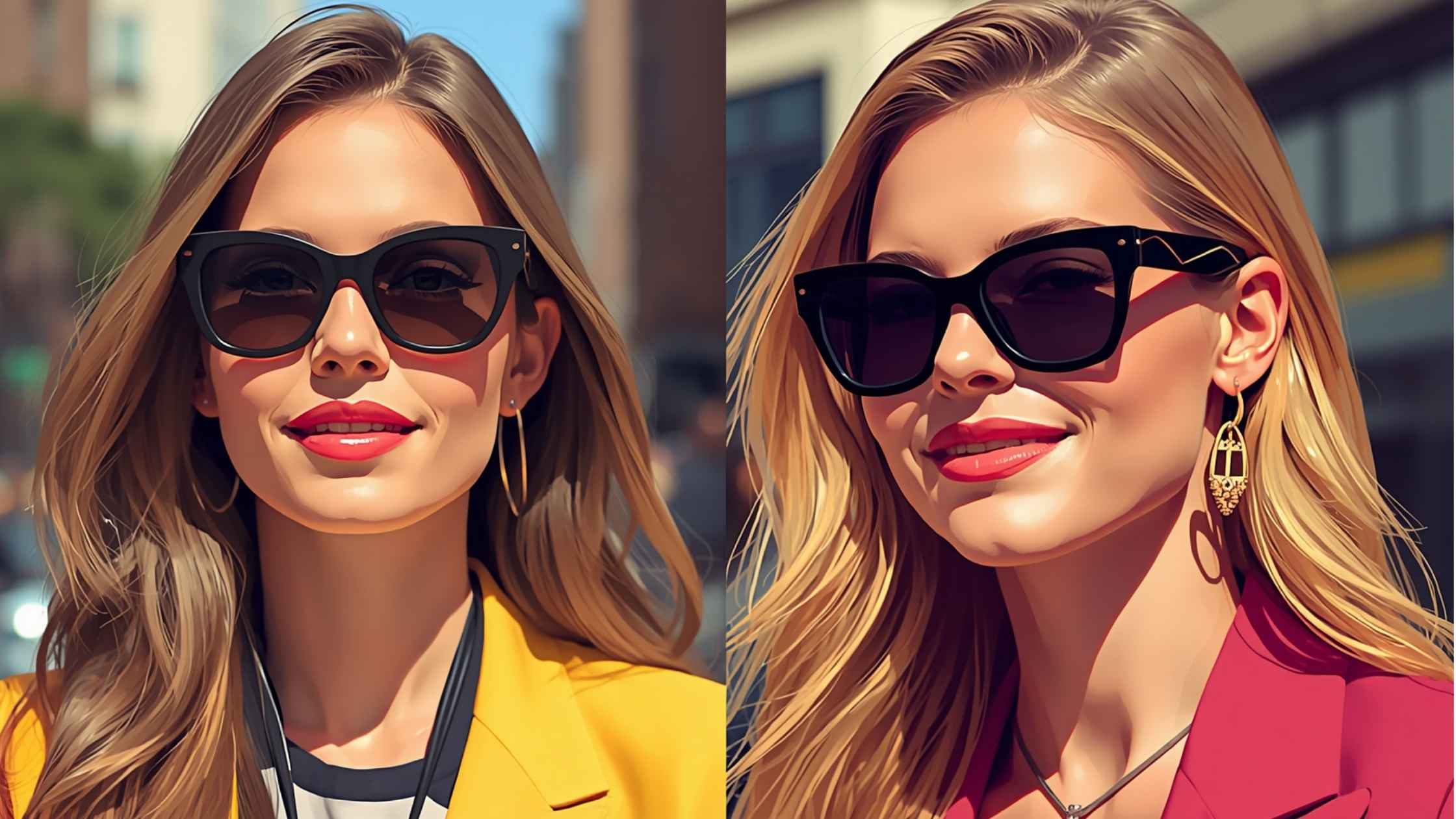
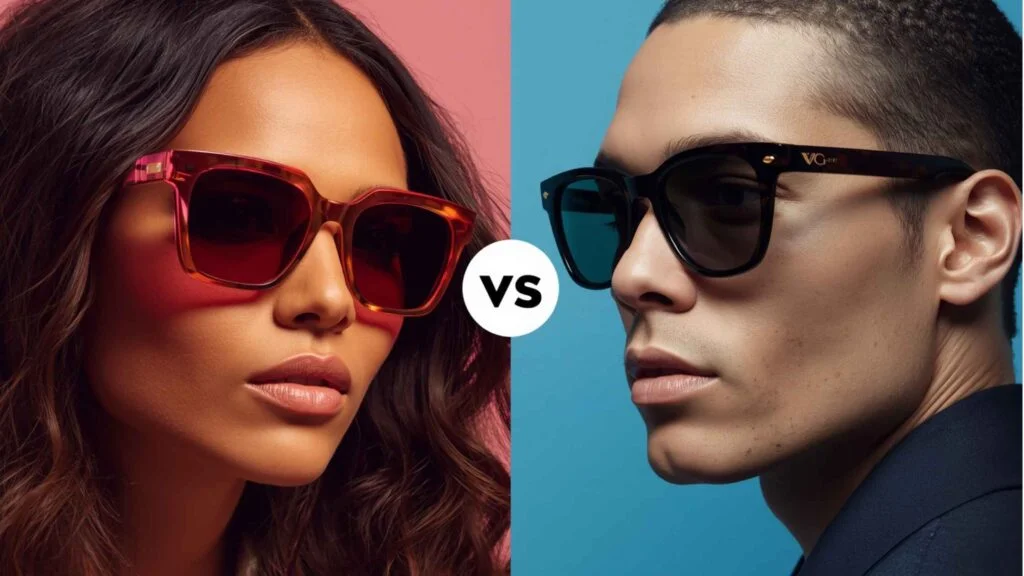
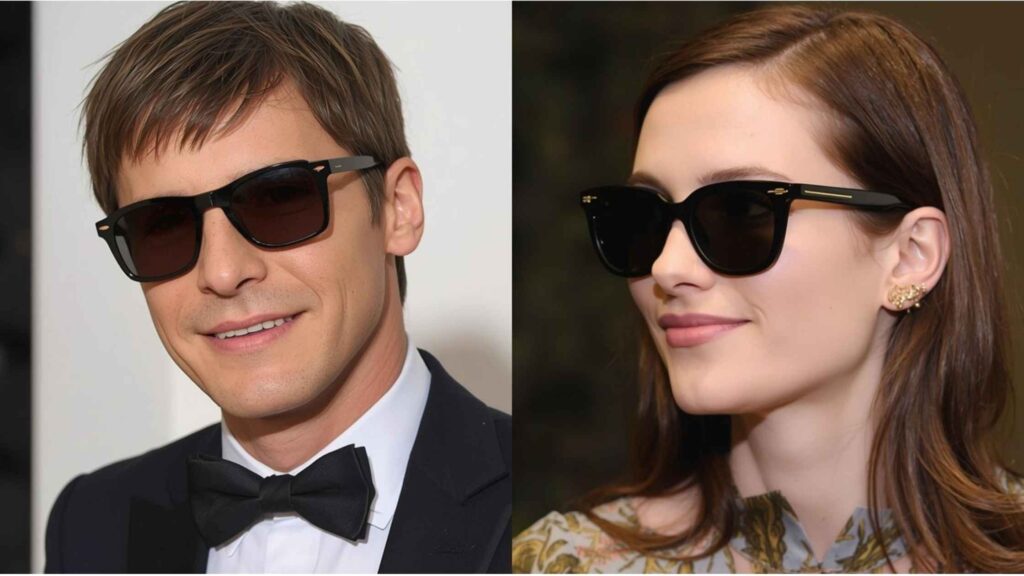
The most useful luxury eyewear comparison isn’t between price points or material specifications or even design aesthetics — it’s between personalities. Between the person who walks into a room and wants the room to notice, and the person who walks into the same room and wants the room to understand. Both desires are legitimate. Both produce extraordinary eyewear when a brand is built specifically to serve them. Oliver Peoples vs Tom Ford sunglasses is the comparison that maps those two desires most clearly onto specific, genuinely excellent luxury products.
This isn’t a competition with a winner. It’s a mirror — two mirrors, actually, held at slightly different angles, each reflecting a different but equally valid vision of what luxury personal style should feel like and communicate. The OP vs TF eyewear comparison that follows is designed to help you recognize yourself in one of those reflections more clearly than in the other — and to understand why that recognition matters more than any objective quality assessment when it comes to the accessories you’ll wear on your face every day.
Table of Contents
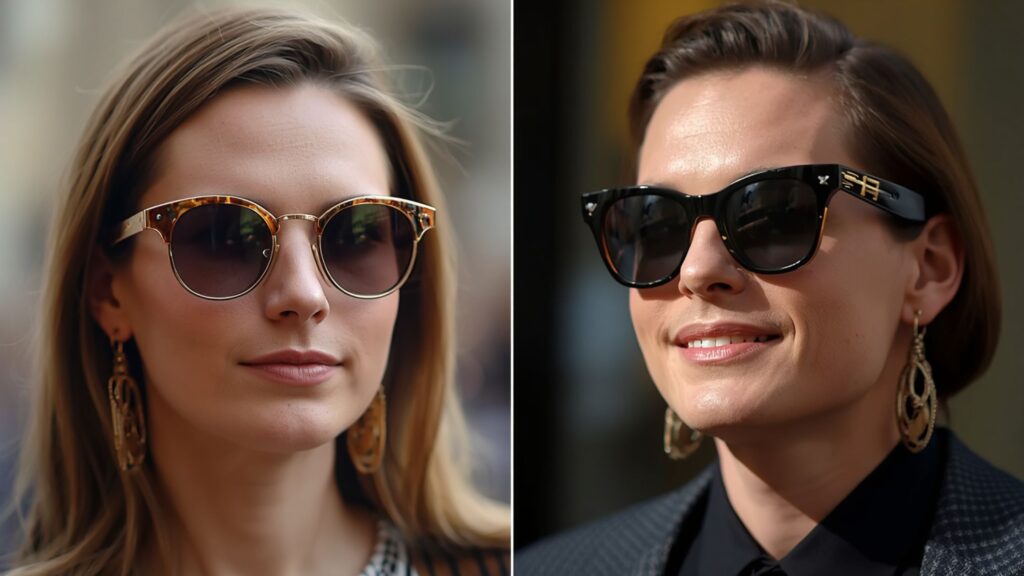
Two Brands, Two Worlds
Before the comparison reaches frames and materials and price points, it needs to establish something more fundamental: the world each brand was built to serve.
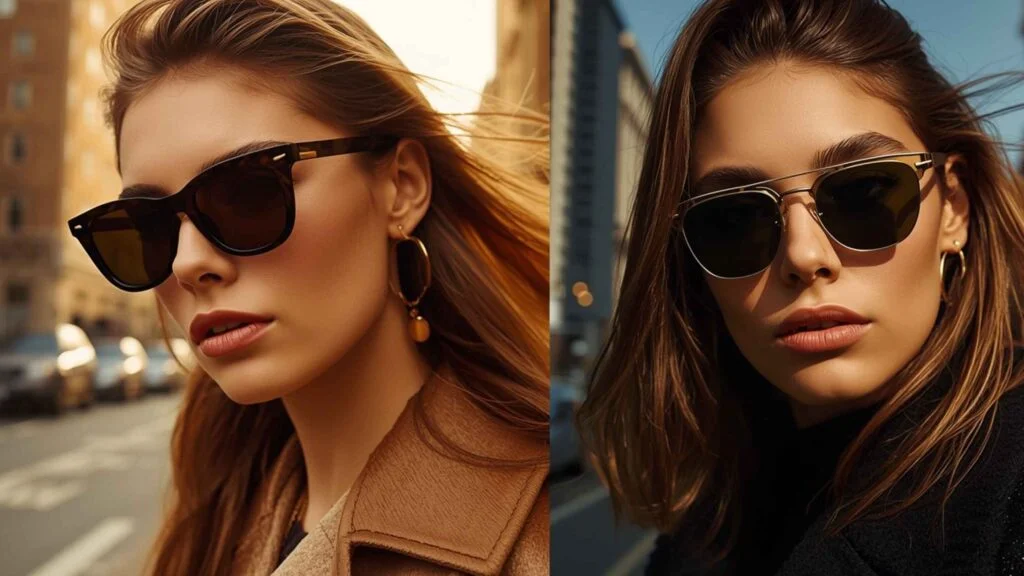
Tom Ford’s world is the world of maximum visual presence — of cinema, of red carpets, of the fashion industry’s most image-conscious imagination operating at full creative power. Ford came to eyewear from Gucci, where he had spent a decade redefining what luxury fashion could look like when it fully committed to overt glamour, confident sensuality, and the kind of bold design authority that photographs beautifully and registers immediately across a crowded room. His eponymous eyewear brand carries all of that ambition directly into the frames — the dramatic proportions, the T-bar hardware, the architectural cat-eyes and oversized squares that communicate bold fashion identity before the wearer has taken a single step.
Oliver Peoples’ world is the world of creative intelligence operating below the surface — of West Hollywood film directors and architects and musicians who have already established their creative authority and no longer need their accessories to announce it. The brand was built in 1987 on the conviction that the most sophisticated luxury is the kind that rewards attention rather than demanding it, that the vintage-informed round or the precisely proportioned rectangle communicates more to the person who understands what they’re looking at than any amount of logo hardware communicates to the general audience. OP’s world is warm, considered, Californian in its ease, and fundamentally rooted in the idea that the best frame makes you look more completely like yourself.
These two worlds are not simply different aesthetic preferences. They are different philosophies about what luxury accessories are for — and understanding which philosophy resonates more honestly with your own is the most important step in this comparison.
The Personality Test — Eight Questions That Reveal Your Brand
Rather than beginning with frames and working toward personality conclusions, this comparison inverts the process — beginning with the personality questions that reveal which brand serves you before examining the products that deliver on that service.
1. When you get dressed, what’s your primary intention?
If your answer is some version of making a statement — projecting a specific image, creating a visual impact, ensuring that your presence is felt before you’ve spoken — Tom Ford was built for you. The brand’s design philosophy is organized entirely around expressive impact, and its frames are the most efficient tools available at the accessible luxury price point for achieving that impact with genuine design intelligence rather than mere volume.
If your answer is some version of feeling right — assembling the specific quality of effortless consideration that makes every element feel inevitable rather than chosen — Oliver Peoples was built for you. The brand’s design philosophy centers on the frame that reveals rather than projects, that serves the wearer’s existing aesthetic identity rather than imposing a new one.
2. How do you feel about being recognized for your brand choices?
Tom Ford wearers tend to be comfortable with — often actively appreciate — the social legibility of their eyewear choice. The T-bar logo communicates across contexts and communities, carrying the cultural signal of a globally recognized luxury brand to audiences who may not know eyewear design but know Tom Ford. This social legibility is not vanity. It is a legitimate form of luxury value that some personalities genuinely benefit from.
Oliver Peoples wearers tend to prefer recognition from the informed rather than the general. The brand’s quieter identity communicates most clearly to people who know eyewear — who recognize a Gregory Peck round or a Sheldrake rectangle by its design intelligence rather than by its logo. This more exclusive form of recognition appeals to personalities who find value in being understood by the right people rather than seen by everyone.
3. What does your wardrobe look like at its best?
Tom Ford frames find their most natural home with deliberately composed, structurally confident dressing — well-cut suits, strong outerwear silhouettes, the kind of wardrobe where each element is chosen to work together toward a specific and powerful visual outcome. If your best outfits are the ones that turn heads — where the clothing, the frame, and the overall composition conspire to create presence — TF is your natural eyewear partner.
Oliver Peoples frames find their most natural home with quality basics chosen with genuine care — premium denim, cashmere knitwear, simple leather footwear, the wardrobe of someone who has resolved every question about what to wear and arrived at the answer of excellent simplicity. If your best outfits are the ones that reveal your taste to the people who notice and pass invisibly for those who don’t — OP is your natural partner.
4. Which compliment would you rather receive about your sunglasses?
“Those are incredible — they make such a statement” is a Tom Ford compliment. It acknowledges visual impact, celebrates expressive boldness, and reflects the appreciation of someone who responds to luxury as presence.
“Those frames are perfect — where did you find them?” is an Oliver Peoples compliment. It acknowledges design intelligence, responds to the quiet authority of something precisely right, and reflects the appreciation of someone who responds to luxury as discovery.
Neither compliment is more valuable. They reflect genuinely different aesthetic experiences and genuinely different relationships with the concept of luxury self-expression.
5. How do you relate to vintage design references?
Oliver Peoples is deeply rooted in vintage optical design — the brand’s silhouettes are developed from mid-century optical archives, its colorways reference the specific warmth of California light in that era, and its overall aesthetic sensibility treats the past as a design resource rather than a limitation. If you respond to vintage references with the recognition of someone who has always known that older designs were often better — if your instinct is toward the enduring rather than the new — OP speaks your design language.
Tom Ford is rooted in contemporary fashion’s most confident present-tense — the brand references cinema and glamour and the modern luxury lifestyle rather than optical history. If your design instinct is forward-facing, more interested in the current expression of luxury than in its historical accumulation — TF serves that orientation with genuine design quality.
6. How important is wardrobe versatility to you?
Honest luxury eyewear match-up assessment requires acknowledging that these brands have meaningfully different wardrobe versatility profiles — and that this difference matters practically for daily wear.
Oliver Peoples frames — particularly the Sheldrake, the O’Malley, and the Gregory Peck — are among the most genuinely versatile pieces in the accessible luxury eyewear market. The warm, restrained design language integrates across professional, casual, and social contexts without friction, adapting to different wardrobe registers without reading as mismatched in any of them.
Tom Ford’s bolder pieces — the dramatic cat-eyes, the oversized constructions, the heavily branded acetate models — require wardrobe contexts strong enough to support their visual weight. They perform brilliantly within their natural territory and less comfortably outside it. For buyers who need one frame that works across every context in their life, OP’s versatility advantage is meaningful and real.
7. What’s your relationship with your own confidence?
This question sounds more psychologically complex than it needs to be — but it cuts to the genuine heart of the which is better OP or Tom Ford sunglasses question for most buyers.
Tom Ford frames express confidence externally — they project it, amplify it, and make it visible in ways that don’t require the wearer to do additional work. For buyers whose confidence benefits from external expression — who feel more fully themselves when their accessories are actively participating in projecting their personality — TF frames do that work with genuine design intelligence.
Oliver Peoples frames assume confidence internally — they presuppose a settled sense of aesthetic identity and serve it without amplification. For buyers whose confidence is already established and doesn’t need projection — who feel most completely themselves when their accessories reveal rather than declare — OP frames honor that settled quality with equal design intelligence.
Both approaches are forms of genuine confidence. The difference is in direction: outward expression versus inward assurance.
8. How long do you want your frames to feel relevant?
Fashion identity questions about longevity matter practically as well as philosophically — because luxury eyewear at these price points is an investment that should be evaluated across years of ownership rather than single-season appeal.
Oliver Peoples frames are among the most demonstrably long-lasting design investments in the accessible luxury market. The Gregory Peck and Sheldrake have been in continuous production for decades without meaningful design revision, because they were developed from design principles rather than trend accommodation. A pair purchased today will look as considered in seven years as it does on the day it’s first worn.
Tom Ford’s core collection — the signature squares, the refined aviators, the cleaner metal constructions — carries comparable design longevity. The brand’s more fashion-forward pieces follow seasonal design direction more closely and may feel more specifically dated over a similar period. For buyers prioritizing long-term design investment, both brands’ core collections perform well; OP’s vintage design foundation gives it a modest edge in demonstrated longevity.
The Frames — Matching Personality to Model
If You’re a Tom Ford Personality
The Tom Ford frames that best serve different expressions of the bold luxury personality:
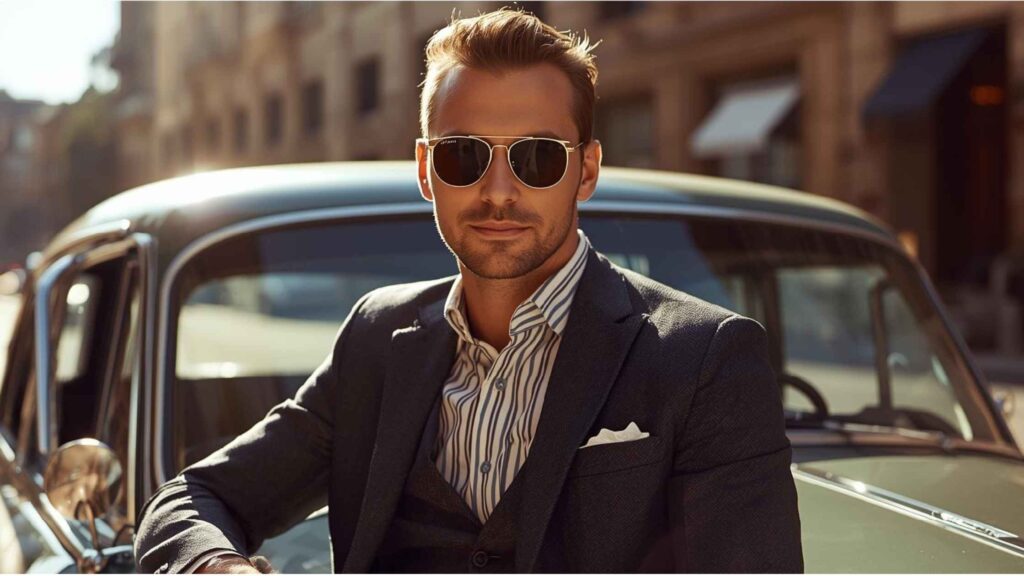
For the commanding professional: The TF0753 square in dark tortoiseshell — geometric authority in a masculine register that suits boardroom contexts as naturally as it suits social ones. The frame projects confidence without theatricality, making it the most professionally versatile TF piece for buyers whose work requires both presence and credibility.
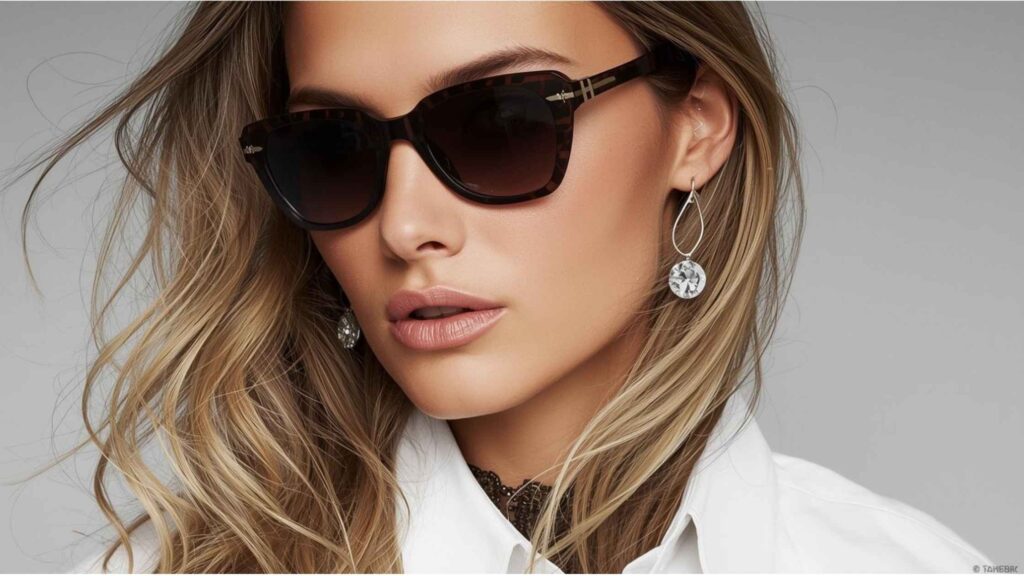
For the cinematic feminine: The TF0539 butterfly or the brand’s dramatic cat-eye constructions — frames built for the woman whose aesthetic is consciously powerful, whose dressing is deliberately expressive, and whose eyewear should match rather than moderate that expressive ambition.
For the confident everyday wearer: The TF0646 slim metal aviator — Tom Ford’s design authority in a lighter, more proportionally accessible construction that carries the brand’s identity within a silhouette universally flattering enough to suit most daily contexts.
If You’re an Oliver Peoples Personality
The Oliver Peoples frames that best serve different expressions of the quiet luxury personality:
For the creative professional: The Gregory Peck in Cocobolo or Dusty Black — the brand’s most canonical expression, serving the buyer who has arrived at the right answer and wears it daily with the ease of someone who stopped worrying about their eyewear choice years ago.
For the versatile minimalist: The Sheldrake in semi-matte tortoiseshell or Matte Black — the most genuinely cross-context OP frame, serving buyers who need their single luxury frame to work across every environment in their life without adjustment or apology.
For the considered aesthete: The Cary Grant in titanium — geometric precision that honors the brand’s California modernist heritage, serving buyers whose aesthetic philosophy centers on the elimination of everything inessential from the objects they choose to own.
Materials — The Same Investment, Different Priorities
Both brands occupy comparable price positions — roughly $350 to $600 USD across their core collections — and both deliver genuine premium quality at those prices. But the material investment is directed toward different ends.
Tom Ford invests in design impact — in the visual authority of bold proportions, the presence of TF logo hardware, and the dramatic acetate colorways that photograph well and register immediately. The acetate quality is genuinely good; the construction is reliable for daily wear; the overall material proposition is honest premium at the accessible luxury tier.
Oliver Peoples invests in material depth — in the proprietary Mazzucchelli acetate colorways that produce Cocobolo and Dusty Black’s specific warmth and light-responsive complexity, in the Japanese hinge mechanisms that maintain precision through years of daily wear, and in the vintage design intelligence that produces proportions so refined they feel inevitable rather than chosen. The investment reveals itself over time rather than immediately — which is precisely the material equivalent of the brand’s broader design philosophy.
For the OP vs TF eyewear comparison from a pure material quality standpoint, Oliver Peoples edges ahead in acetate depth and hinge engineering. For visual impact per dollar, Tom Ford delivers more immediately legible returns. Both assessments are correct simultaneously — they simply measure different things.
Cultural Positioning — What Each Brand Says About You?
The luxury eyewear match-up between OP and TF produces meaningfully different cultural signals — and for buyers who care about what their accessories communicate, those signals are worth understanding specifically.
Tom Ford signals global luxury literacy — the brand is recognized across cultural and geographic contexts as a marker of fashion engagement at a high level. Wearing TF communicates that you participate actively in the contemporary luxury fashion conversation, that you dress with intention and investment, and that you’re comfortable with the visibility that premium branding provides. In business contexts, in social contexts where fashion fluency is valued, and in the many international markets where the Tom Ford name carries strong cultural recognition, this signal has genuine practical value.
Oliver Peoples signals design connoisseurship — the brand communicates most clearly to people who know eyewear, who recognize the Gregory Peck’s proportional intelligence or the Sheldrake’s material warmth as evidence of genuine design engagement rather than simply brand investment. In creative industries, among fashion insiders, and in communities where understated taste carries more currency than visible luxury, the OP signal is precisely calibrated and precisely valuable. Outside those communities, it communicates simply as quality — which is, in its own way, the most durable signal available.
The Overlap — Buyers Who Belong to Both
Honest Oliver Peoples vs Tom Ford sunglasses comparison acknowledges that a meaningful proportion of luxury eyewear buyers don’t belong exclusively to either brand’s world — and that owning both is not indecision but sophistication.
The buyer who owns a pair of Oliver Peoples Gregory Pecks for their daily creative work and a pair of Tom Ford squares for the contexts where presence and legibility are the appropriate register has made two intelligent decisions rather than one compromised one. Both frames are serving specific purposes for which each brand is genuinely optimized. The Gregory Peck serves the contexts where the wearer wants to be understood; the TF serves the contexts where the wearer needs to be seen.
This dual ownership reflects the most sophisticated understanding of what fashion identity actually means in practice — not a single fixed aesthetic position, but a set of considered responses to different contexts, each served by the most appropriate tool available.
FAQ — Oliver Peoples vs Tom Ford
Which is better for everyday wear — Oliver Peoples or Tom Ford?
For genuine everyday versatility across multiple contexts, Oliver Peoples has a practical advantage — the brand’s warm, restrained design language integrates more naturally across professional, casual, and social environments without requiring specific wardrobe support. Tom Ford’s bolder pieces perform most powerfully within wardrobes strong enough to carry their visual weight.
Are Tom Ford sunglasses worth the investment?
Tom Ford sunglasses justify their pricing through consistent construction quality, strong design range across both genders, and the cultural equity of a globally recognized luxury brand. For buyers who want bold design impact and immediate brand legibility, the investment delivers genuine returns.
Which brand suits creative professionals better?
Oliver Peoples is the more natural choice for creative industry professionals — the brand’s specific cultural positioning within the film, architecture, and design communities, combined with its vintage design intelligence and California creative heritage, makes it the eyewear equivalent of the creative establishment’s considered taste.
Do Oliver Peoples sunglasses hold their value better than Tom Ford?
Both brands maintain reasonable secondary market value, but Oliver Peoples demonstrates more consistent value retention across its canonical models — the Gregory Peck and Sheldrake in particular — due to their enduring design status and the consistent demand from buyers who understand the brand’s material and design quality.
Which brand is more recognizable to non-fashion audiences?
Tom Ford carries significantly stronger global brand recognition outside fashion-insider communities — the TF logo communicates luxury across contexts where Oliver Peoples’ quieter identity doesn’t register. For buyers in whom broad brand visibility matters, Tom Ford’s global recognition is a genuine differentiator.
The Reflection That Fits
Oliver Peoples vs Tom Ford sunglasses was never going to resolve into a single correct answer — because the question it’s really asking is not which brand is better but which personality each brand serves, and personalities are not ranked.
Tom Ford serves the personality that expresses itself outward — that finds its fullest realization in bold design, visible luxury, and the specific pleasure of a frame that announces something clearly and confidently to everyone in the room. It is a genuine and sophisticated form of self-expression, and the brand executes it with quality and intelligence that justifies every dollar of its price positioning.
Oliver Peoples serves the personality that expresses itself inward — that finds its fullest realization in design depth, quiet authority, and the specific pleasure of a frame that reveals something precisely to the people worth revealing it to. It is an equally genuine and sophisticated form of self-expression, and the brand executes it with material quality and design intelligence that rewards extended ownership in ways that more immediately impactful frames sometimes don’t.
Which is better, OP or Tom Ford sunglasses? The one that fits the face looking back at you in the mirror — not the frame’s face, but yours. The one that makes you look most completely, most honestly, most unapologetically like yourself.
That frame already exists. This comparison was designed to help you recognize it.
Know which brand fits your personality? Share this guide with someone navigating the same choice — or explore our complete breakdown of the most compelling luxury eyewear worth investing in for 2026.





 Brush
Brush Makeup Mirrors
 Body Lotions & Body Oils

 Personal Scales
 Perfume Coffrets
 Perfume Testers
 All Eyewear
 Unisex
 Optical
 Contact Lenses
 Home Fixtures
 Dining & Bar