


Latest posts
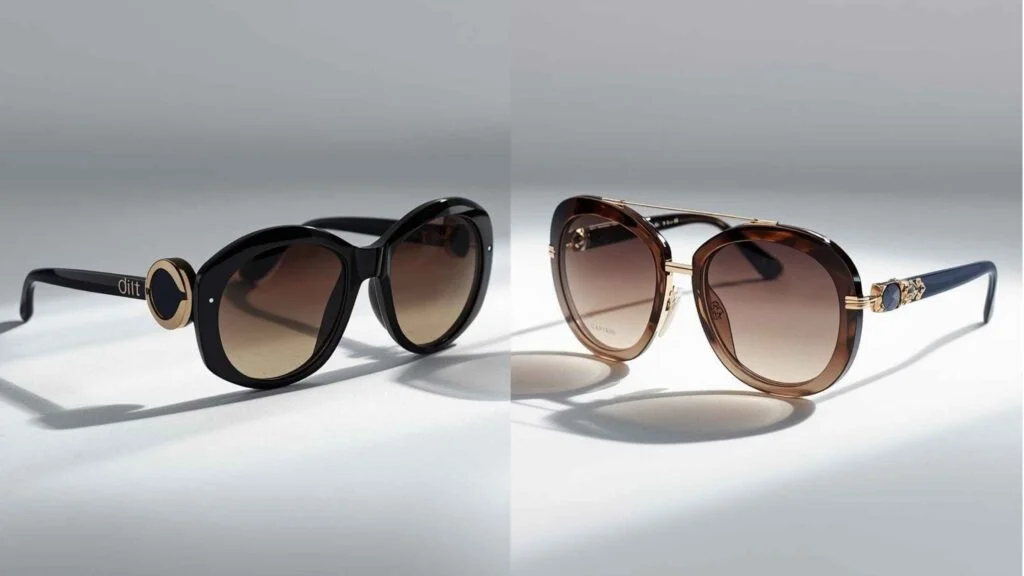
Dita vs Cartier Sunglasses: Battle of the Luxury Titans

There’s a particular kind of silence that falls over a room when someone walks in wearing a pair of Cartier Buffs — or the quiet confidence that comes with slipping on a frame handcrafted in Japan by Dita’s artisans. Both experiences are real. Both are earned. And both cost you the kind of money that demands you think carefully before you spend it.
This Dita vs Cartier sunglasses comparison isn’t about declaring a universal winner. It’s about helping you understand what separates these two houses, what you’re actually paying for, and — most importantly — which one aligns with your priorities. Whether you’re after legacy prestige, engineering precision, or a frame that holds its value over decades, the answer isn’t the same for everyone.
Let’s break it down properly.
Table of Contents
The Legacy Behind the Name
Before we talk materials and price points, it helps to understand what you’re buying into culturally when you choose either brand.
Cartier has been synonymous with French luxury since 1847. The maison built its eyewear reputation on the same foundation as its jewelry — precious metals, aristocratic heritage, and the kind of brand recognition that transcends fashion cycles. The iconic Cartier Santos, Panthère, and Première frames aren’t just accessories; they’re cultural artifacts. Kings, heads of state, and cultural icons from Muhammad Ali to Jay-Z have been photographed in Cartier eyewear. That’s not marketing — that’s 175 years of deliberate positioning.
Dita, by contrast, is a younger story — founded in Los Angeles in 1995 — but it approached luxury eyewear from a completely different angle. Where Cartier leans into heritage, Dita leans into craft. The brand partnered with Japanese artisan workshops in Fukui Prefecture, the epicenter of precision eyewear manufacturing, to create frames that prioritize engineering and material science above all else. In roughly three decades, Dita built a reputation among those who understand eyewear at a technical level — jewelers, watchmakers, craftsmen — as much as among luxury consumers.
These are two legitimate but philosophically different approaches to the concept of premium. Neither is wrong.
Dita vs Cartier Sunglasses — Build Quality and Materials
This is where the luxury eyewear comparison gets technical, and frankly, it’s where the differences become most pronounced.
Dita’s Engineering Philosophy
Dita frames are predominantly manufactured from titanium — aerospace-grade, beta-titanium, and titanium alloy compositions depending on the model. The Dita Mach-One, for instance, uses a dual-bridge construction with seven-barrel Japanese hinges, achieving a level of mechanical refinement that watchmakers would recognize. Titanium offers an extraordinary strength-to-weight ratio, meaning Dita frames are often lighter than comparable luxury frames while being structurally more resilient.
The manufacturing process involves up to 300 individual production steps for certain models. Hand-polished acetate temples are fitted onto titanium cores. Hinges are cold-forged rather than cast, which means tighter tolerances and longer-lasting pivot action. If you care about how something is built — not just what it looks like — Dita is extraordinary.

Cartier’s Precious Metal Tradition
Cartier takes a fundamentally different approach. Its most iconic eyewear uses gold-plated metal — often 18K or 24K gold plating applied over a brass or stainless steel base — combined with signature design elements like the C-decor, panthere motifs, and cabochon-set screws. The Cartier C Décor collection embeds the brand’s signature into the very structure of the frame. It’s jewelry that happens to hold lenses.
Cartier also offers frames with genuine semi-precious stones, buffalo horn temples, and diamond-set detailing on high-jewelry eyewear pieces that can exceed $10,000 or more. The quality of plating is high — significantly better than most mass-market gold frames — but it’s worth noting that gold plating, regardless of quality, will eventually wear with time and friction in ways that titanium simply does not.

The Material Verdict
For pure structural longevity, titanium wins scientifically. It doesn’t corrode, doesn’t tarnish, and maintains its structural integrity under stress. For aesthetic prestige and jewelry-like finish, Cartier’s precious metal construction is unmatched. The choice here depends on whether you treat sunglasses as engineering objects or as wearable art.
Price — What Each House Actually Costs You
Let’s be direct about the premium sunglasses comparison from a financial perspective.
Dita frames typically range from $500 to $1,800 USD for standard collections, with limited edition and collaboration pieces reaching $3,000 to $5,000. The Dita Grand-Evo One and Dita Lancier series sit comfortably in the $700–$1,200 range for what most buyers would consider a flagship piece.
Cartier entry-level optical and sun frames start around $800–$1,000 USD, but the brand’s most recognizable pieces — the Cartier Buffs (C Décor), the Santos de Cartier, the Vendôme — regularly sit between $1,500 and $3,500. High-jewelry and special edition frames climb well beyond that.
What’s interesting about the resale market is telling. Certain Cartier frames — particularly the gold C Décor Buffs — hold or appreciate in value, functioning almost like investment pieces in the secondary luxury market. Dita frames, while holding value better than most designer eyewear, don’t carry the same level of secondary market demand, partly because Cartier’s brand recognition is simply broader globally.
If you’re thinking about value retention, Cartier has a structural advantage driven entirely by brand equity.
Style and Aesthetic — Different Philosophies, Different Wardrobes
This is where personal taste dominates, but there are meaningful observations to make.
Dita’s design language is rooted in restraint and proportion. Frames like the Dita Sequoia, the Mach Six, or the Talon communicate luxury through geometry — precise lines, engineered bridges, and subtle architectural detailing. They’re the kind of frames that earn compliments from people who know, rather than broadcasting a logo to those who don’t. That’s intentional. Dita has historically resisted putting its name in obvious places on the frame itself.
Cartier’s design language is unmistakably branded. The interlocking C logo, the characteristic screw detailing, the panthere-head temples — these are recognition signals, and Cartier wears them confidently. If wearing Cartier is partly about the statement it makes to others, that’s not vanity; it’s simply what the brand has always offered. There’s a cultural currency to Cartier frames that Dita hasn’t replicated and arguably hasn’t tried to.
Versatility Across Contexts
For business and professional settings, both brands perform well, but Dita’s more architectural, logo-restrained aesthetic arguably has broader cross-context versatility. A pair of Dita Epiluxury frames works as well in a boardroom as it does on a yacht.
Cartier’s more signature-heavy pieces read explicitly as luxury fashion statements, which is perfect in some contexts and conspicuous in others. This isn’t a criticism — it’s an honest observation about how each brand positions itself visually.

Which Is Better — Dita or Cartier — and For Whom?
The question “which is better, Dita or Cartier” ultimately resolves into a question about what you value most in luxury eyewear.
Choose Dita if you prioritize craft over cachet, material science over status signaling, and are the kind of buyer who wants to be recognized by those who know rather than everyone in the room. Dita rewards the informed buyer. The brand’s Japanese-engineered titanium frames are objects of genuine technical achievement, and you’ll appreciate them more deeply the more you understand what went into making them.
Choose Cartier if you want legacy prestige, jewelry-grade aesthetics, and a frame that carries genuine cultural weight across generations and geographies. Cartier frames are universally recognized symbols of success, and in markets where brand recognition drives perceived value — from Dubai to New York to Tokyo — Cartier communicates instantly in a way Dita still hasn’t fully achieved.
There’s also a third profile worth naming: the collector who owns both. Many serious luxury buyers treat Dita as their engineering marvel — the watch they appreciate — and Cartier as their statement piece — the watch they’re seen wearing. Both perspectives are valid, and both can coexist in the same wardrobe.
Longevity — What Holds Up Over a Decade
This is where an honest luxury face-off gets uncomfortable for some Cartier fans.
Titanium frames genuinely outlast gold-plated metal in raw durability terms. Dita’s hinges, barrel construction, and material resistance mean that a well-maintained Dita frame will look and function virtually identically in ten years as it does today. There’s no plating to wear, no tarnish to address, no patina that reads as aging rather than character.
Cartier’s gold-plated frames require more active maintenance. High-friction areas — hinges, nose bridge, temple tips — are most vulnerable to plating wear. Cartier does offer replating services through its ateliers, which preserves the aesthetic, but it’s an additional cost and consideration that Dita owners simply don’t face.
If longevity is measured differently — cultural longevity, the ability of a frame to remain relevant and recognizable across decades — Cartier has the clear edge. A pair of 1990s Cartier Buffs still reads as luxury in 2025. Dita’s catalog, while growing in legacy, doesn’t carry the same multigenerational recognition yet.
FAQ: Dita vs Cartier Sunglasses
Are Dita sunglasses worth the price?
Yes — for buyers who value craftsmanship and material quality above brand name recognition, Dita offers exceptional value relative to its price point. The titanium construction, Japanese manufacturing standards, and hinge precision are genuinely superior to most luxury competitors at similar price levels.
Do Cartier sunglasses hold their value?
Certain Cartier models — particularly the gold C Décor collection — hold value well and can appreciate in the resale market. Brand recognition and global prestige contribute to stronger secondary market demand compared to most luxury eyewear brands, including Dita.
What’s the difference between Dita and Cartier quality?
Dita prioritizes technical manufacturing quality — aerospace-grade titanium, multi-step assembly, precision hinges. Cartier prioritizes jewelry-grade aesthetics — gold plating, precious materials, signature design elements. Both are genuinely high quality; they’re optimized for different outcomes.
Which brand is better for everyday wear?
Dita’s titanium frames are arguably more practical for daily wear due to their lightweight construction and material durability. Cartier’s precious metal frames, while high quality, benefit from more careful handling to maintain their plated finish long-term.
Is Dita or Cartier more exclusive?
Both brands are genuinely exclusive, but in different dimensions. Dita’s exclusivity is rooted in craft knowledge and connoisseurship — it’s less universally known. Cartier’s exclusivity is rooted in heritage prestige — universally recognized, aspirationally positioned across global markets.
The Final Word
The Dita vs Cartier sunglasses debate doesn’t have a single correct answer — and any article that tells you otherwise is selling something.
What’s clear is this: Dita builds frames the way watchmakers build movements — obsessively, technically, with materials chosen for performance. Cartier builds frames the way jewelers design rings — with heritage, symbolism, and the weight of generations behind every design decision. Both are legitimate expressions of luxury, just speaking different languages.
If you’ve read this far, you probably care enough about eyewear to invest properly in either direction. The right move is to handle both in person before committing. Try on a pair of Dita Mach-One frames. Then try on a pair of Cartier Premiere. The one that feels like you — not the one that impresses others most — is the one worth buying.
Have a perspective on which house wins the designer duel? Drop it in the comments — or share this with someone who can’t decide. If you’re building out your luxury wardrobe, don’t miss our breakdown of the top titanium vs gold eyewear investments worth making this year.













 Brush
Brush Makeup Mirrors
 Body Lotions & Body Oils

 Personal Scales
 Perfume Coffrets
 Perfume Testers
 All Eyewear
 Unisex
 Optical
 Contact Lenses
 Home Fixtures
 Dining & Bar