


Latest posts
Versace Sunglasses — The Ultimate Guide for 2026

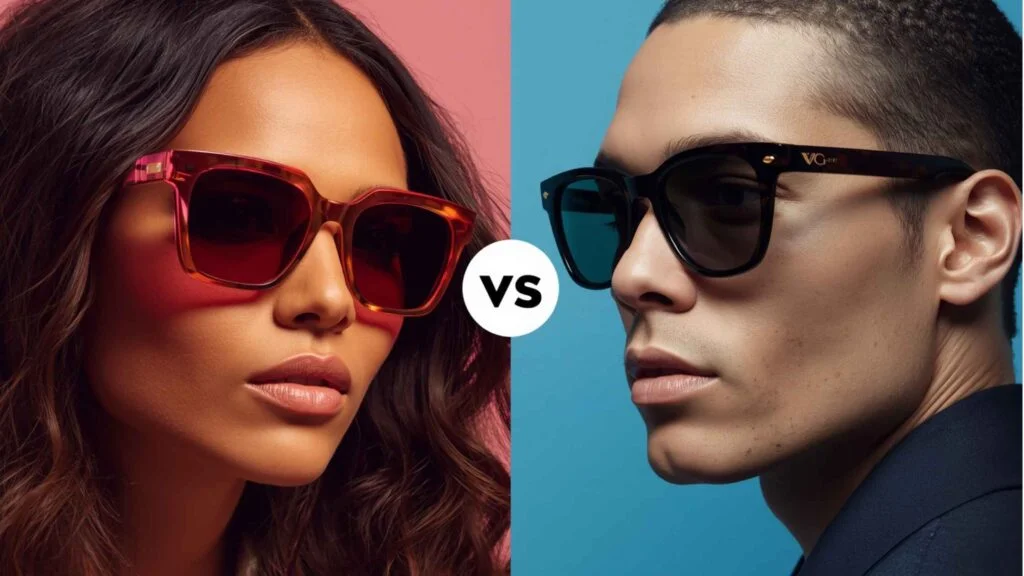
There are sunglasses you wear to protect your eyes. Then there are Versace sunglasses — frames you wear to make a statement so loud it doesn’t need a caption. Since Gianni Versace first fused Greco-Roman mythology with Milanese couture in 1978, the house has operated on a single, uncompromising premise: more is more, and restraint is for someone else’s brand. In 2026 , that philosophy is still intact, still polarizing, and still producing some of the most visually arresting eyewear on the market.
This guide covers everything — design DNA, the best frames of the year, material quality, pricing, and the honest answer to whether Versace eyewear lives up to its reputation or simply charges a premium for a logo.
Table of Contents

Versace Sunglasses: What the Brand Actually Stands For
To understand Versace sunglasses, you have to understand that this house was never interested in the kind of quiet luxury that Cartier built its century on. Versace’s identity has always been theatrical. Gold hardware, baroque print acetates, oversized shields, temples stamped with the Medusa emblem — every design decision at Versace is made with maximum visibility in mind. The customer this brand is speaking to isn’t looking for discretion. They’re looking for presence.
That design philosophy traces directly to Gianni Versace himself, who trained as an architect before pivoting to fashion and brought an architect’s understanding of proportion and drama to everything the house produced. The Medusa head — adopted from the mosaic floors of his childhood home in Reggio Calabria — became the brand’s defining icon because it embodied exactly what Versace wanted his work to do: stop people in their tracks. When that emblem appears on a pair of sunglasses, it isn’t decoration. It’s the point of the entire object.
Donatella Versace, who took creative control following Gianni’s death in 1997, has preserved that maximalism while evolving it for each new decade. The 2026 collection reads as a direct continuation of the house’s founding logic — amplified, polished, and delivered to an audience that has grown significantly younger over the past five years as Italian luxury streetwear crossover has moved from niche to mainstream.
The Medusa Emblem: Understanding Versace’s Most Powerful Design Tool
No conversation about Versace eyewear is complete without a proper accounting of the Medusa. On most luxury frames, temple hardware is functional — a hinge, a brand name, maybe a small logo. On Versace frames, the temple hardware is the design. The Medusa emblem, rendered in polished gold-toned metal and typically seated at the temple-hinge junction, turns the side profile of the frame into a billboard.
What makes the Medusa hardware work as a design element — rather than simply as a brand signal — is the quality of its casting and finishing. On Versace’s mid-to-upper range frames, the Medusa head is three-dimensionally rendered with enough detail to be legible at a distance. The relief on the face, the serpentine hair, the overall scale relative to the temple width — these are considered decisions. The result is hardware that rewards close inspection without needing it to communicate its intent from across a room.
The 2026 collection expands the Medusa motif beyond the temples in several key pieces. The VE4463 Biggie frames integrate the Medusa into an oversized shield silhouette where the emblem anchors each corner of the front face, creating a symmetrical composition that reads almost architecturally. It is, objectively, a lot — and it is entirely intentional.
Best Versace Sunglasses for 2026: Frame by Frame
VE4463 Biggie — Maximum Impact, Minimum Apology
The Biggie is where bold Versace frames reach their logical apex in 2026. An oversized shield with Medusa hardware at four points, in gold and black colorway options that both work in different ways — the black keeps the shape dominant while the gold turns the whole frame into a sculptural object. The lens size is large enough to function as a genuine sun shield, which is a practical virtue inside the maximalist packaging.
This is the frame for someone who has fully committed to the Versace proposition. It does not hedge. It does not offer a quieter version of itself. For buyers in that mindset, it delivers exactly what it promises.
VE2263 — The Versatility Case for Versace
Not every Versace frame requires the wearer to be on their way to a yacht. The VE2263 makes the case that the house can produce something closer to a daily-wear frame without abandoning its DNA. The Medusa hardware is present on the temples, the gold tone is warm rather than blinding, and the lens shape — a modified rectangle with softened corners — works across face shapes in a way that the Biggie doesn’t. For a first Versace purchase, this is the frame that demonstrates range.
VE4439 Rock Icons — Heritage Energy in 2026
The Rock Icons collection has developed its own following within the broader Versace sunglasses catalogue. The frames reference Gianni’s original 1990s archive designs with a level of fidelity that appeals to buyers who came to the brand through that era’s fashion history. The acetate colorways in the 2026 update — a deep Havana brown with gold hardware, and a clear frame with the Medusa picked out in contrasting metal — are among the most wearable options in the entire collection.
VE2198 — Chain Temple Detail
The chain-link temple, which Versace introduced as a wider trend and has since made its own through sheer commitment to the execution, reaches its best expression in the VE2198. The interlocking chain running the full length of the temple is either exactly what you want from a pair of sunglasses or absolutely nothing you want — there is no middle position. For buyers who fall in the former category, the craftsmanship on the chain detail is genuinely impressive. Each link is individually finished, and the weight and movement of the chain when wearing creates a kinetic quality that photographs well and wears better than it sounds on paper.
Versace Sunglasses Review 2026: Material Quality and Build
The honest Versace sunglasses review question that matters most is whether the frames justify their price point on physical grounds, independent of the logo. The answer, at the upper end of the range, is largely yes — with some qualifications.
Versace eyewear is manufactured through Luxottica, the Italian eyewear group that also produces frames for Ray-Ban, Prada, and several other major brands. Luxottica’s manufacturing standards are genuinely high, and Versace benefits from that infrastructure. The acetate used on mid-to-upper range frames is Italian in origin, with color depth and polish that holds up well against direct competitors. The metal hardware — the Medusa emblems, the chain details, the hinge covers — is cast and finished to a standard that is noticeably better than what you find on fashion-brand eyewear at the $150–$200 price point.
Where the brand earns more scrutiny is at the lower end of its range, where frames in the $200–$280 bracket share the Versace name but use materials and construction that feel less differentiated from mid-market alternatives. The Medusa is still there, but the surrounding frame sometimes feels like it’s carrying the hardware rather than complementing it.
The sweet spot for Versace eyewear on a quality basis is the $350–$550 range, where the acetate quality, the metal hardware finishing, and the hinge engineering all arrive at a level that genuinely justifies the price above the logo premium. At those price points, you are buying a well-made Italian luxury frame that happens to have a Medusa on it — rather than a Medusa that happens to have a frame around it.
Lens quality across the range is UV400 as standard, with polarized options available on selected styles. Versace doesn’t compete with Cartier’s mineral glass options at the top of the market, but the standard optical clarity across their core range is solid and appropriate for the price.
Who Actually Wears Versace Sunglasses in 2026?
Italian luxury in eyewear has historically skewed toward a mature buyer who treats frames as investment objects. Versace disrupts that pattern more than almost any other house in its tier. The brand’s crossover appeal — built partly through celebrity alignment with figures like Doja Cat, Cardi B, and a long roster of hip-hop artists who adopted the Medusa as a status symbol well before it became a mainstream luxury marker — has given Versace eyewear a demographic range that most fashion houses would spend a decade trying to engineer.
In 2026, the Versace sunglasses buyer is as likely to be twenty-four and buying their first luxury frame as forty-five and adding to a collection built over years. The brand’s presence in both high fashion and popular culture creates a dual legibility that makes the frames work in contexts — music videos, fashion weeks, pool decks, business-casual offices with relaxed dress codes — that other luxury eyewear can’t navigate with equal fluency.
The maximalist design language also travels well across cultures in a way that more restrained European luxury sometimes doesn’t. The Medusa sunglasses aesthetic resonates strongly in Middle Eastern, East Asian, and Latin American markets where expressive luxury signalling carries particular cultural weight. This isn’t an accident. Versace has understood its global audience for decades and designs for visibility that crosses cultural context.
Pricing Guide: What You Actually Pay for
Versace eyewear spans a wider price range than many buyers expect going in. The most accessible frames begin around $200, while the limited-edition and chain-detail pieces push past $600. Understanding what changes across that range helps calibrate the purchase.
At $200–$280, you’re buying entry-level Versace — the brand name, the Medusa hardware in its most basic form, and acetate or metal construction that is functional but not the house’s finest work. These frames make sense for a buyer who wants the brand signal at the lowest accessible entry point.
At $300–$450, the quality inflection happens. Acetate thickness and color depth improve, the Medusa casting gains definition, and the overall weight and balance of the frame feels more considered. This is the range that represents Versace’s real value proposition for most buyers.
At $500–$650+, you’re into the signature pieces — the chain temples, the oversized Biggie shields, the archive-referencing designs with the highest material specification. These frames are for buyers who want the full Versace experience without compromise and are comfortable paying for it.
Frequently Asked Questions
Are Versace sunglasses worth the price in 2026?
At the $300–$500 range, yes — you’re getting genuinely well-made Italian eyewear with Luxottica’s manufacturing quality behind it and a design identity that no competitor replicates. At the entry level below $250, the value proposition is weaker and more dependent on the brand signal than on the physical object.
How do I authenticate a pair of Versace sunglasses?
Genuine Versace frames carry an engraved model number on the inner temple, a “Made in Italy” stamp, and Medusa hardware with consistent, detailed relief casting. The acetate edges should be smooth and evenly polished with no visible seams. The case should be rigid, with a fully embossed exterior logo and a microfiber cloth. Any frame without a model number engraving is a strong counterfeit indicator.
Do Versace sunglasses suit all face shapes?
The brand’s preference for oversized and bold silhouettes means that Versace frames naturally suit larger and oval face shapes best. That said, the VE2263 and several pieces from the Rock Icons collection offer proportions that work more universally. The Biggie and shield styles are best approached with face shape in mind before purchasing.
How should I care for Versace frames?
The gold-toned metal hardware — particularly the Medusa emblems — is susceptible to wear from perspiration and skin oils over time. Wiping the hardware with a dry microfiber cloth after wearing, storing frames in their case when not in use, and avoiding contact with aerosols and perfumes will significantly extend the finish life. The acetate responds well to occasional conditioning with a specialist acetate polish.
Which 2026 Versace frame is the best first purchase?
The VE2263 for buyers who want versatility and daily wearability, and the VE4439 Rock Icons for buyers who want the full archival Versace energy without the commitment of a shield frame. Both represent the house at its most considered and offer the broadest range of use contexts.
The appeal of Versace sunglasses in 2026 is exactly what it has always been — the unapologetic commitment to a singular, theatrical vision of what luxury looks like when it isn’t trying to whisper. In a market where quiet luxury has dominated the conversation for the past several years, Versace’s refusal to participate in that trend reads not as stubbornness but as confidence. The Medusa emblem was there before the minimalism wave. It will be there after. That, more than any single frame, is the brand’s most enduring design statement.
Found this guide useful? Share it with someone still deciding — or drop your current Versace frame in the comments.





 Brush
Brush Makeup Mirrors
 Body Lotions & Body Oils

 Personal Scales
 Perfume Coffrets
 Perfume Testers
 All Eyewear
 Unisex
 Optical
 Contact Lenses
 Home Fixtures
 Dining & Bar