


Latest posts
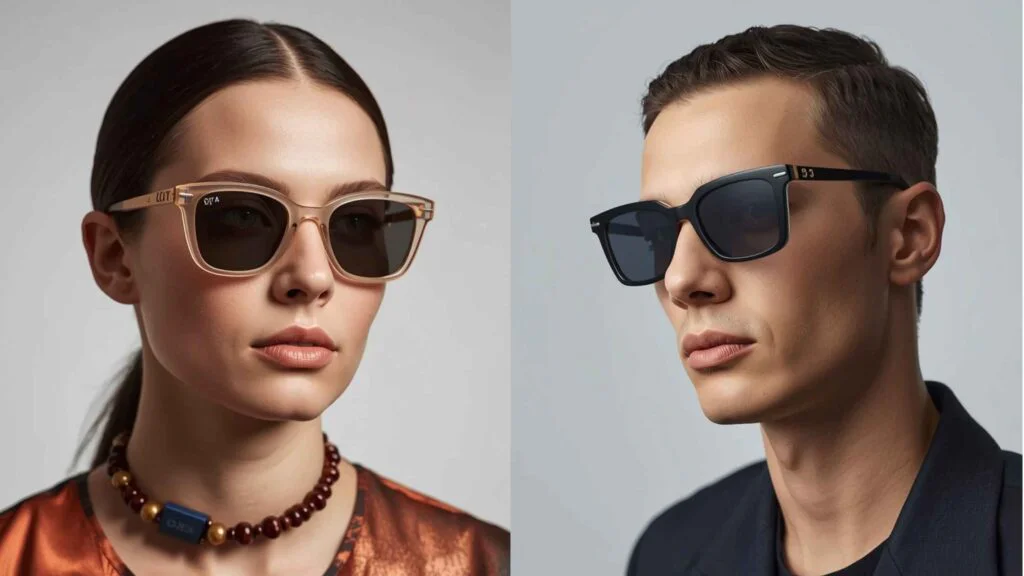
Why Jacques Marie Mage Frames Sell Out? — Behind the Hype

It happens with a regularity that has become almost predictable, and yet somehow never loses its ability to surprise. A new Jacques Marie Mage collection drops — quietly, without the advertising campaigns or influencer seeding that accompany most luxury product launches — and within hours, sometimes minutes, the most sought-after colorways are gone. The secondary market absorbs them immediately, often at premiums that would seem implausible for sunglasses until you understand what’s actually happening. And a certain category of buyer — informed, patient, genuinely invested in what these frames represent — either secures their piece or adds it to the growing list of JMM they wish they’d moved faster on.
Understanding why Jacques Marie Mage is popular requires resisting the temptation to explain it through the conventional luxury goods framework — through brand heritage, marketing spend, celebrity endorsement, or the manufactured scarcity that fashion brands deploy as a commercial strategy. None of those explanations are wrong exactly, but none of them are sufficient. The JMM hype — if that’s even the right word for something that operates so far outside the conventional hype machine — is the product of something more genuine, more specific, and ultimately more interesting than standard luxury demand mechanics.
This is the real story behind why JMM sells out fast, why the secondary market premiums are real rather than inflated, and why luxury eyewear demand of this specific kind is different from almost anything else happening in the accessories market right now.

Table of Contents

The Founding Premise — An Object That Earns Its Price
To understand why JMM sells out fast, you first have to understand what Jerome Mage set out to make — because the commercial dynamics that produce the sell-outs are direct consequences of the creative decisions made at the brand’s founding, not outcomes that were engineered separately.
Mage founded Jacques Marie Mage in Los Angeles in 2014 with a premise that was either commercially naïve or commercially visionary depending on your perspective — and time has settled that question definitively in favor of visionary. The premise was this: eyewear could function as a culturally considered art object rather than as a fashion accessory. That frames could carry genuine narrative content — specific cultural references researched with scholarly depth and translated into design decisions with genuine fidelity — rather than simply reflecting seasonal aesthetics or brand identity codes. That the people who understood this would pay accordingly, and that the people who didn’t understand it weren’t the intended audience.
This founding premise produced two consequences that are inseparable from each other. The first is the production model — because frames conceived as individually considered cultural objects can only be made in limited quantities, with manufacturing processes that prioritize craft over efficiency and that cannot be accelerated without compromising the result. The second is the audience — because frames that reward cultural knowledge and material appreciation attract buyers who engage with luxury as connoisseurship rather than as status signaling, and those buyers, once found, become among the most loyal and most enthusiastic advocates any brand can have.
Both consequences drive JMM hype — the production model creates genuine scarcity, and the audience creates genuine demand. The combination produces the sell-out dynamics that have become one of the brand’s most discussed characteristics.
The Production Reality — Why Genuine Scarcity Is Different From Manufactured Scarcity?
Limited production eyewear value exists on a spectrum from genuine to manufactured — and understanding where JMM sits on that spectrum is essential to understanding why its secondary market premiums are real rather than inflated.
Manufactured scarcity — the deliberate restriction of production below demand to maintain exclusivity — is a well-documented luxury strategy. Hermès does it with Birkin bags. Supreme does it with weekly drops. The mechanism is understood, the commercial logic is sound, and it produces genuine price premiums. But it is, at bottom, a marketing decision rather than a manufacturing necessity.
JMM’s scarcity is different in kind. Jerome Mage produces limited quantities because the manufacturing process he insists upon makes higher volume production genuinely impossible without compromising the result — and compromising the result is not something the brand’s founding premise permits.
Each JMM frame requires custom acetate developed specifically for the collection it belongs to — colorways formulated through a process that Mazzucchelli, the Italian acetate manufacturer, develops in partnership with the brand and that aren’t available to any other eyewear producer. The crystal acetate constructions that have become the brand’s most recognized material signature require processing techniques that produce significant waste and that cannot be reliably scaled — which is a significant manufacturing constraint rather than a marketing choice.
The frame finishing process involves hand-polishing stages that require skilled artisan time measured in hours per frame rather than minutes. The barrel hinges are cold-forged rather than cast — a manufacturing approach that produces tighter tolerances and longer-lasting pivot action but that requires considerably more time and tooling investment per unit. The numbered edition stamping is applied individually rather than through an automated process.
Each of these decisions adds time, cost, and irreducible skill requirements to the production process. The result is a production capacity that genuinely cannot accommodate demand — not because Mage has decided not to expand production, but because expanding production would require accepting the manufacturing compromises that the brand’s founding premise explicitly rejects.
This is handcrafted value in its most literal and most consequential form — not as marketing language applied to conventional manufacture, but as a genuine description of a production reality that creates scarcity as a natural consequence rather than a strategic choice.
The Cultural Narrative — Why Knowledge Creates Desire?
Why Jacques Marie Mage popular extends beyond production scarcity into territory that is less commonly discussed but equally important — the role that cultural depth plays in creating demand among the specific audience the brand was designed to serve.
JMM collections are built around specific cultural worlds — researched, inhabited, and translated into design with a fidelity that transforms the resulting frames from aesthetic objects into cultural artifacts. The Desolation collection’s engagement with spaghetti western cinematography, the Roscoe collection’s specific relationship with mid-century jazz photography, the Yamasaki collection’s architectural tribute to Minoru Yamasaki — these are not loose inspirational references. They are genuine research projects, and the frames that emerge from them carry the evidence of that research in every design decision.
This cultural depth creates a specific kind of desire that conventional luxury goods rarely produce. The buyer who knows Roy DeCarava’s jazz photography doesn’t simply want a Roscoe frame because it’s beautiful — they want it because it references a cultural world they inhabit, because wearing it feels like a form of connection to that world, and because finding a luxury object that takes their specific cultural interests seriously enough to research them this carefully is genuinely rare.
This knowledge-activated desire is what creates the intense demand concentration that characterizes JMM hype. The brand’s audience isn’t simply large luxury buyers — it’s a specific subset of luxury buyers who engage with cultural reference as a primary value, and that audience, once activated by a collection that speaks directly to their cultural world, doesn’t defer purchase. They move immediately, which is why sell-outs happen within hours rather than days.
Celebrity Demand — The Authentic Version
Luxury eyewear demand from celebrity and cultural tastemaker communities operates differently for JMM than for most luxury brands — and the difference matters for understanding why JMM sells out fast.
Most luxury brands pursue celebrity association actively — gifting, seeding, paying for placement, and building the celebrity endorsement infrastructure that generates the social proof that drives broader consumer demand. JMM doesn’t operate this way. The brand doesn’t advertise in conventional channels, doesn’t maintain a celebrity gifting program in the conventional sense, and doesn’t engineer the social media moments that most luxury brands treat as primary marketing infrastructure.
What JMM has instead is organic celebrity adoption — the specific category of culturally influential people who discovered the brand through genuine engagement with its design narrative rather than through brand-engineered exposure. Directors, musicians operating in serious rather than commercial registers, photographers, architects, designers — people whose professional lives are organized around the same cultural references that inform JMM collections, and who recognize in the frames a brand that has done the same research they have.
When these individuals are photographed in JMM frames — which happens with increasing frequency as the brand’s cultural reputation grows — the effect on demand is disproportionate to the number of individuals involved, precisely because the audience that notices those frames is the same audience already predisposed to want them. The cultural information travels through networks of people who understand what they’re looking at, which amplifies its commercial impact well beyond what equivalent celebrity photography would achieve for a more conventionally positioned brand.
This organic celebrity dynamic is both a consequence of why Jacques Marie Mage popular and a cause of accelerating demand — a virtuous cycle built on genuine cultural alignment rather than engineered association.
The Secondary Market as Demand Signal
The secondary market behavior around JMM frames is among the most reliable indicators of genuine rather than manufactured luxury eyewear demand — and it deserves specific examination because it tells a more nuanced story than simple price appreciation suggests.
Certain JMM colorways and specific limited releases trade at secondary market premiums that range from modest (15–30% above original retail for recently sold-out pieces) to substantial (two to three times original retail for the most sought-after limited editions from several seasons back). The Apocalypse Now special editions, certain Desolation crystal acetate colorways, and the most limited collaboration pieces occupy the upper end of this range.
What’s significant about these premiums isn’t simply their existence — manufactured scarcity can produce secondary market premiums without genuine underlying value. What’s significant is their durability. JMM secondary market premiums don’t decay in the way that fashion-driven scarcity premiums typically do. A frame from three seasons ago commands similar or stronger secondary premiums than a recently sold-out piece, which indicates that demand is growing faster than the secondary supply being released by original buyers — a pattern that reflects genuine collector behavior rather than resale arbitrage.
This secondary market durability is the clearest evidence that limited production eyewear value at JMM’s level is genuine rather than manufactured. Collectors who buy with long-term appreciation potential in mind are making rational rather than speculative decisions — and the secondary market data, examined over several years of consistent performance, supports that rationality.
The Connoisseur Effect — Why the Right Audience Amplifies Everything?
One of the least discussed but most consequential dynamics behind why JMM sells out fast is what might be called the connoisseur effect — the specific amplification of demand that occurs when a brand’s audience consists disproportionately of people who are themselves influential within communities that share the brand’s cultural interests.
JMM’s audience includes an unusually high concentration of people who work in creative industries — film, photography, architecture, design, music — and who are influential within the communities that define cultural taste in those fields. When these individuals adopt JMM frames, they don’t simply create demand from the people who see their photographs or follow their social media accounts. They create demand from the specific communities of practice where cultural capital actually circulates — where eyewear is noticed by people who understand what they’re looking at, discussed by people whose opinions carry weight within those communities, and sought after by people who respond to genuine quality rather than to manufactured visibility.
This connoisseur effect is self-reinforcing in a way that conventional celebrity marketing is not. A brand seen on a celebrity creates demand from fans who want to emulate the celebrity. A brand adopted by a community of connoisseurs creates demand from people who want to belong to the community — and belonging to that community requires the kind of genuine cultural engagement that JMM’s design narrative rewards. The demand is therefore more durable, more specific, and less susceptible to the dilution that occurs when a brand becomes too broadly visible to maintain its connoisseur identity.
The Waiting List Psychology — How Scarcity Becomes Anticipation?
The mechanics of JMM hype around new releases deserve specific attention because they operate differently from the conventional luxury hype cycle — and understanding the difference illuminates why the demand is real rather than artificially inflated.
Most luxury brand hype is manufactured through deliberate pre-release information control, influencer seeding, and the orchestrated countdown that creates psychological urgency through information rather than through genuine limitation. The demand is real in the sense that it produces genuine purchase intent, but it’s manufactured in the sense that the psychological mechanisms creating it are engineered rather than organic.
JMM’s release dynamic is quieter and more genuinely anticipatory. The brand communicates through its own channels — its website, its authorized retailers, and the word-of-mouth networks that serious collectors maintain among themselves. New collection information travels through communities of people who are already engaged with the brand’s cultural narrative, creating anticipation based on genuine interest in specific design content rather than on manufactured urgency about limited availability.
When a new Desolation colorway is announced, the demand response comes from people who have been following the cultural development of that collection, who understand what acetate formulation is being used and why, and who have made a considered judgment about whether this specific piece belongs in their collection. This is not impulsive purchase behavior triggered by manufactured scarcity. It is informed collector behavior that happens to produce sell-outs because the supply is genuinely limited and the informed demand concentration is genuinely intense.
The Honest Case — What JMM Actually Offers That Others Don’t?
Rarity in luxury goods is common. Handcrafted value is less common but still claimable by many brands with genuine manufacturing credentials. The combination of rarity, handcrafted quality, and genuine cultural depth that defines JMM’s value proposition is genuinely rare — and that rarity explains more about the brand’s commercial dynamics than any other single factor.
The luxury eyewear market is full of frames that are expensive, well-made, and aesthetically refined. What it is not full of — what it has almost none of — is frames that carry specific cultural narratives researched with genuine scholarly depth, produced in genuinely limited quantities by genuinely skilled artisans, and designed by someone who cares more about the object’s cultural content than about its commercial performance metrics.
Jerome Mage built JMM around a bet that a sufficient number of people in the world would recognize and value this combination — that the audience for culturally serious luxury objects made with uncompromising craft standards was real, even if it was small. The sell-outs, the secondary market premiums, the growing celebrity adoption, and the expanding connoisseur community all constitute the evidence that the bet was correct.

FAQ — Why Jacques Marie Mage Sells Out
Why does Jacques Marie Mage sell out so quickly?
Why JMM sells out fast comes down to the genuine intersection of limited production capacity — created by manufacturing processes that prioritize craft over efficiency and cannot be scaled without compromising the result — and concentrated demand from a highly engaged collector and connoisseur community that responds immediately to new releases in culturally resonant collections.
Is JMM hype genuine or manufactured?
JMM hype is more genuinely organic than most luxury brand demand dynamics. The brand doesn’t advertise in conventional channels, doesn’t operate a celebrity gifting program, and doesn’t engineer the pre-release visibility that manufactured hype requires. The demand concentration is genuine — produced by authentic cultural engagement, real collector behavior, and the organic word-of-mouth networks that develop around objects with genuine intellectual and material substance.
Does limited production eyewear hold its value?
Limited production eyewear value at JMM’s level demonstrates consistent durability in the secondary market — significantly better than most luxury eyewear and comparable to the most desirable limited edition luxury watches and accessories. The most sought-after JMM pieces have demonstrated secondary market premiums of two to three times original retail that have been maintained across multiple years, indicating genuine collector value rather than short-term arbitrage.
Why are JMM frames considered worth the high price?
Handcrafted value at JMM’s level is justified through custom Mazzucchelli acetate in colorways unavailable anywhere else, numbered limited production with verifiable provenance, Fukui Prefecture hand-finishing processes requiring artisan time measured in hours per frame, and cultural narrative depth that transforms each frame from an accessory into a considered cultural artifact. The combination of these factors — genuinely rare in the luxury accessories market — produces objects that justify their pricing through substance rather than through brand premium alone.
How can I buy JMM before it sells out?
The most reliable approach is direct engagement with the brand’s authorized retailer network and regular monitoring of the JMM website for collection announcements. Joining waiting lists at authorized retailers, developing relationships with specific retailers who can provide advance notice of new releases, and staying engaged with the JMM collector community — which shares information about upcoming releases through its own networks — are the most practical strategies for securing pieces before sell-out.
The Answer Behind the Hype
Why Jacques Marie Mage popular ultimately resolves into an answer that is simpler and more honest than the complex commercial dynamics that produce the sell-outs might suggest: because the objects are genuinely extraordinary, and genuinely extraordinary objects that are genuinely difficult to acquire are genuinely worth pursuing.
The JMM hype — if that’s the right word for demand that is built on cultural depth, handcraft quality, and genuine collector engagement rather than on manufactured scarcity and influencer seeding — is the most defensible form of luxury product hype available in the current market. It is built on things that are real: real production limitations, real material quality, real cultural research, real collector value, real secondary market performance.
Jerome Mage built a brand that produces objects worth caring about and made those objects genuinely difficult to acquire. The market’s response — the sell-outs, the premiums, the growing community of serious collectors — is simply the honest reaction of an audience that has found exactly what it was looking for and is willing to move quickly and pay accordingly to secure it.
That is not hype. That is recognition — the most durable and most valuable form of luxury demand that exists.
Want to understand the full JMM universe before the next drop? Share this piece with a fellow collector — or explore our complete guide to the most collectible luxury eyewear worth tracking in 2026.












 Brush
Brush Makeup Mirrors
 Body Lotions & Body Oils

 Personal Scales
 Perfume Coffrets
 Perfume Testers
 All Eyewear
 Unisex
 Optical
 Contact Lenses
 Home Fixtures
 Dining & Bar