


Latest posts
Hublot Sunglasses — Swiss Luxury Meets Modern Fashion

There are brands that make sunglasses, and there are brands that make statements. Hublot sunglasses belong firmly in the second category — and understanding why requires understanding where the brand comes from and what it has always stood for. Hublot didn’t enter the watchmaking world by following conventions. It disrupted them. When founder Carlo Crocco fused a natural rubber strap with an 18-karat gold case in 1980, the Swiss watchmaking establishment was appalled. The watch-buying public was fascinated. The rest, as they say, is horological history.
That same philosophy — the Art of Fusion, as Hublot codified it under CEO Jean-Claude Biver’s transformative leadership — runs directly through every pair of Hublot eyewear the brand produces. These are not sunglasses that borrowed a watchmaker’s name for prestige associations. They are objects built according to the same material innovation philosophy, the same engineering confidence, and the same willingness to combine unexpected elements that turned Hublot into one of the most recognizable luxury watch brands on earth.
For buyers who want Swiss luxury eyewear that carries genuine design authority rather than borrowed prestige, the Hublot eyewear collection in 2026 makes a compelling and increasingly sophisticated case.

Table of Contents

The Art of Fusion — Understanding Hublot’s Design DNA
Before examining specific frames, the philosophical foundation of Hublot eyewear deserves serious attention — because it explains design decisions that might otherwise seem arbitrary and reveals the genuine coherence behind the brand’s aesthetic choices.
The Art of Fusion is not a marketing slogan at Hublot. It is a literal design methodology — the systematic exploration of what happens when materials, techniques, and aesthetic traditions that have no apparent relationship are brought into productive collision. In watchmaking, this produced the Big Bang — a case that fused carbon fiber, ceramic, titanium, and rubber in combinations that Swiss traditionalists considered heretical and that the market considered extraordinary. The Big Bang became one of the most commercially successful luxury watch launches of the past quarter century.
Hublot sunglasses apply this same methodology to eyewear. Frames combine carbon fiber with acetate, titanium with rubber, polycarbonate with metal alloys — material pairings that wouldn’t occur to a conventional eyewear designer but that make complete sense within the Art of Fusion framework. The result is frames that are simultaneously more technically interesting and more visually distinctive than anything the conventional luxury eyewear market produces. For the buyer who already wears a Hublot watch — or who simply responds to the design confidence that the Art of Fusion produces — the eyewear collection is a natural extension of a coherent aesthetic world.
Hublot and Watchmaking — The Design Connection
The most immediate and most important thing to understand about Hublot sunglasses is that they are genuinely watch-inspired — not in the superficial sense of borrowing circular design elements, but in the deeper sense of applying watchmaking design principles to eyewear construction.
The Big Bang watch’s case architecture — with its distinctive six screws securing the bezel, its layered material construction, and its combination of polished and matte surface treatments — translates directly into the eyewear collection. Frames in the Big Bang Unico series carry screw detailing that references the watch’s case construction, not as decoration but as design language. The material layering that defines a Hublot watch case — where different materials with different surface treatments are combined within a single component — appears in the frame bridges, temples, and lens surrounds of the eyewear collection with the same systematic intention.
This connection between watchmaking and eyewear design is what separates Hublot from the broader category of Swiss luxury eyewear. Other Swiss brands produce excellent frames — the Swiss optical manufacturing tradition is strong — but few apply their technical design language to eyewear with the same directness and coherence that Hublot achieves. A Hublot frame and a Hublot watch occupy the same design world in a way that feels genuinely considered rather than commercially opportunistic.
Hublot Sunglasses — Signature Collections Reviewed
Big Bang Unico Sunglasses — The Flagship Collection
The Big Bang Unico eyewear collection is the most direct translation of Hublot’s most iconic watch into frame form — and it executes that translation with enough design intelligence to avoid the trap of literal reproduction that undermines most watch-to-eyewear crossover attempts.
The frame architecture carries the Big Bang’s characteristic screw detailing at the temple connections — six screws, precisely positioned, in the same configuration that defines the watch’s bezel construction. The material language follows the Art of Fusion methodology: carbon fiber frame faces paired with rubber temple inserts, titanium bridges combined with polycarbonate lens surrounds, and surface treatment combinations that alternate between high polish and matte finishing in ways that reference the watch’s case architecture directly.
In terms of silhouette, the Big Bang Unico frames favor a slightly oversized, masculine geometry — substantial without being excessive, with the kind of visual presence that suits the brand’s bold design philosophy without compromising wearability. These are Hublot sporty sunglasses in the sense that they carry athletic energy and technical material vocabulary, but they wear comfortably within luxury fashion contexts as well. The frame that performs best in a business meeting and a yacht deck simultaneously is a specific design achievement, and the Big Bang Unico achieves it.
Spirit of Big Bang Eyewear — A Different Geometry
Where the Big Bang uses a round case architecture, the Spirit of Big Bang introduced a tonneau — barrel-shaped — case geometry that has become one of Hublot’s most distinctive and most photographed designs. The eyewear collection’s Spirit of Big Bang frames translate this geometry into a lens shape that has no direct parallel in conventional sunglasses design — slightly squared with curved sides, somewhere between a rectangle and a cushion shape, carrying an architectural distinctiveness that makes the frames immediately recognizable as Hublot without requiring the brand name to make that identification.
These frames represent Swiss craftsmanship applied to a genuinely novel silhouette — one that rewards the buyer who wants eyewear as distinctive as the watch on their wrist. In carbon and titanium constructions, the Spirit frames are among the most technically sophisticated pieces in the Hublot eyewear catalog, combining lightweight performance materials with a design confidence that justifies the significant investment they represent.
Classic Fusion Eyewear — Refined Accessibility
The Classic Fusion watch line was Hublot’s answer to buyers who wanted the brand’s material innovation and Art of Fusion philosophy in a less aggressively bold package — and the eyewear equivalent follows the same logic. Classic Fusion frames from Hublot offer a more conventionally proportioned silhouette — closer to a refined rectangle or modified oval — built with the brand’s characteristic material quality and construction precision but without the visual aggression of the Big Bang collection.
For buyers approaching Hublot sunglasses for the first time, or for those whose wardrobe context calls for more restrained eyewear than the Big Bang’s bold geometry provides, the Classic Fusion frames represent the most versatile entry point into the brand’s world. The material quality and construction standards are identical to the flagship collection — the differentiation is purely aesthetic, favoring refinement over impact.
Lafleur Collection — Color and Femininity
Hublot’s Lafleur eyewear collection addresses the female buyer with the same material seriousness the brand brings to every other design territory — which is to say, without condescension or simplification. The Lafleur frames use the brand’s Art of Fusion material philosophy within silhouettes that favor a more expressive design language — acetate in rich color combinations, flower-inspired detailing drawn from the collection’s botanical reference, and a palette that moves beyond the carbon and titanium tones that dominate the rest of the catalog.
These frames demonstrate that sporty luxury as a design philosophy doesn’t require masculine aesthetic codes to function effectively. The Lafleur collection carries Hublot’s technical quality within a genuinely feminine design vocabulary — which is a more difficult balance to achieve than it sounds, and which the brand manages with considerable sophistication.
MP Collection Eyewear — Maximum Technical Expression
The MP watch line represents Hublot’s most technically extreme and most experimentally ambitious timepieces — skeletonized movements, unconventional case materials, and horological complications that push watchmaking engineering to its limits. The MP eyewear collection takes that same philosophy to its logical extreme in frame form.
These are Hublot sporty sunglasses in their most ambitious expression — frames that use carbon fiber, titanium, and engineered polymers in constructions that reference industrial design and aerospace engineering as much as conventional eyewear manufacturing. They’re not frames for every buyer or every context, but for the Hublot collector who wants their eyewear to occupy the same technically extreme territory as their most complex timepiece, the MP collection delivers with genuine conviction.
Materials — What Swiss Luxury Actually Means in Frame Form
The material specifications of Hublot eyewear deserve specific examination because they represent one of the clearest ways the brand’s watchmaking heritage translates into genuine eyewear differentiation.
Carbon fiber appears across the Hublot collection in both full carbon constructions and as component material within multi-material frames. The brand uses forged carbon — a technique developed in partnership with aerospace and motorsport engineering suppliers — which produces a distinctive, non-directional carbon pattern that differs visually and structurally from conventional woven carbon. Forged carbon is lighter, stronger, and more visually complex than standard carbon fiber, and its use in eyewear reflects the same material investment philosophy that drives its use in Hublot watch cases.
Titanium constructions in the Hublot collection use grade-5 aerospace titanium — the same specification used in demanding engineering applications — rather than the lower-grade titanium alloys that some luxury eyewear brands use to claim titanium construction without fully committing to the material’s premium properties. The difference is measurable in weight, corrosion resistance, and long-term structural stability.
Natural rubber — the material that began Hublot’s entire design story — appears in the eyewear collection as temple inserts, bridge padding, and structural accents. This is not merely a brand reference; rubber’s natural grip and flexibility make it genuinely functional in eyewear construction, preventing slippage and providing comfortable contact with the skin in ways that harder materials cannot. It is, as with everything in the Art of Fusion, both aesthetically and functionally motivated.
Ceramic features in select Hublot frames — a material that the brand pioneered in watchmaking and that offers extraordinary scratch resistance, color stability, and a surface quality that metal and polymer cannot replicate. Ceramic frames maintain their appearance through daily wear with a consistency that justifies the additional production complexity the material requires.
Hublot Sporty Sunglasses — Performance Meets Luxury
The sporty luxury positioning that defines Hublot’s broader brand identity is expressed most directly in its eyewear through frames designed for active lifestyle contexts — outdoor sports, water activities, and the kind of high-performance leisure that Hublot’s global ambassador partnerships with football clubs, boxing, and motorsport consistently reinforce.
Hublot’s sporting eyewear constructions use polycarbonate lenses with premium optical coatings — anti-reflective, polarized, and UV400 protective treatments that meet the functional requirements of genuine sports use while maintaining the aesthetic standards that luxury buyers require. Frame constructions use flexible hinges and rubber contact points that maintain comfort and security during physical activity without sacrificing the visual refinement that would make them inappropriate for luxury lifestyle contexts.
This dual functionality — genuine performance capability within a luxury aesthetic framework — is one of the most commercially compelling aspects of the Hublot sunglasses proposition. The buyer who wants one pair of frames that works on a ski slope and at a luxury hotel’s terrace restaurant is a real buyer, and Hublot addresses that need with more genuine technical conviction than most competitors.
Hublot Sunglasses 2026 — The Current Market Position
The Hublot sunglasses 2026 catalog reflects a brand that has matured significantly in its approach to eyewear — moving from initial watch-brand extensions toward a more fully developed eyewear design philosophy that stands on its own terms while maintaining its watchmaking DNA.
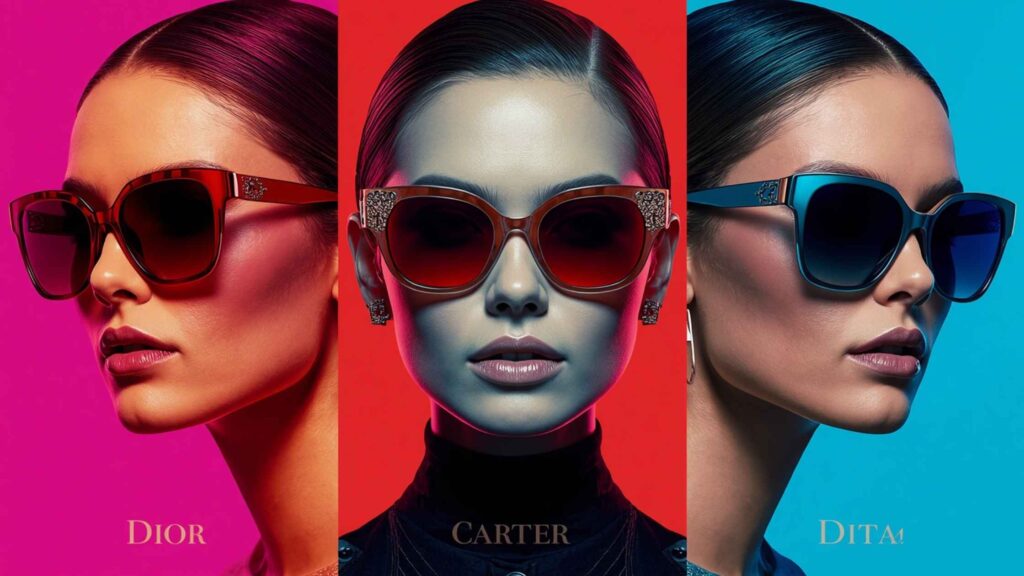
Pricing across the Hublot eyewear collection typically ranges from approximately $600 to $1,500 USD depending on collection and material specification, with the most technically complex MP and Spirit of Big Bang constructions commanding the higher end of the range. This positions Hublot firmly within the upper tier of the luxury eyewear market — above accessible luxury brands like Burberry and Oliver Peoples, comparable with Cartier and high-end Dita models, and below the rarefied collectible territory of Jacques Marie Mage.
Within the Swiss luxury eyewear context, Hublot competes most directly with IWC’s eyewear offerings and the various Richemont group brands that produce watch-adjacent eyewear. Against these competitors, Hublot’s Art of Fusion material philosophy and its more aggressive design confidence give it a distinctive positioning — more technically expressive than most, more willing to prioritize design impact alongside refinement.
Styling Hublot Sunglasses
Hublot eyewear carries its design confidence most naturally within wardrobes that share its aesthetic priorities — technical fabrics, structured contemporary silhouettes, and the kind of high-performance luxury that has migrated from sportswear into mainstream luxury fashion over the past decade.
The Big Bang and Spirit collections pair naturally with contemporary luxury casualwear — technical outerwear, quality jersey constructions, premium sneakers, and the kind of monochromatic dressing that allows the frame’s material complexity to function as the outfit’s primary design statement. For more formal contexts, the Classic Fusion frames integrate smoothly with tailored clothing, carrying Hublot’s material quality within a silhouette that doesn’t disrupt the formality of the surrounding outfit.
The Lafleur collection travels most naturally with feminine luxury dressing — structured dresses, tailored separates, and the kind of considered accessories-forward styling where the frame functions as the composition’s focal point rather than its supporting element.

FAQ — Hublot Sunglasses
What makes Hublot sunglasses different from other luxury eyewear?
Hublot sunglasses are distinguished by the direct application of the brand’s watchmaking Art of Fusion philosophy to eyewear design — using aerospace-grade materials including forged carbon fiber, grade-5 titanium, ceramic, and natural rubber in frame constructions that reference specific watch case architectures. The material innovation and design coherence between the watch and eyewear collections is more direct and more genuine than most luxury watch brands achieve in their eyewear extensions.
Are Hublot sunglasses worth the price in 2026?
For buyers who connect with Hublot’s specific design philosophy and material innovation approach, yes — the Hublot sunglasses 2026 collection justifies its pricing through genuine material quality, Swiss manufacturing standards, and design coherence that builds real value beyond logo recognition. For buyers seeking primarily conventional luxury eyewear aesthetics, the same investment might be more satisfying directed toward a brand whose design language aligns more closely with traditional luxury eyewear conventions.
What are the best Hublot sporty sunglasses?
The best Hublot sporty sunglasses for active lifestyle use are the Big Bang Unico constructions in carbon and titanium, which combine genuine performance material properties with luxury aesthetic standards. The MP collection frames represent the most technically extreme option for buyers who want maximum material innovation in their eyewear.
How does Hublot eyewear connect to its watchmaking heritage?
The connection is structural rather than superficial. Frame architectures reference specific watch case designs — the Big Bang’s screw-secured bezel, the Spirit’s tonneau geometry — while material selections mirror the watchmaking collection’s Art of Fusion philosophy directly. Swiss craftsmanship standards from the watchmaking atelier inform the precision requirements applied to eyewear manufacturing.
Where can I buy authentic Hublot sunglasses?
Authentic Hublot eyewear is available through Hublot boutiques globally, authorized luxury watch and jewelry retailers, and select luxury eyewear specialists. Given the brand’s positioning and price point, purchasing through authorized channels is strongly recommended to ensure genuine material quality and manufacturer warranty coverage.
Engineering Confidence, Worn Daily
Hublot sunglasses make the same argument that Hublot watches have been making since 1980 — that the most interesting luxury objects are the ones willing to challenge convention, to combine the unexpected, and to back bold aesthetic decisions with genuine technical substance.
The Swiss craftsmanship behind every Hublot eyewear frame — the forged carbon, the grade-5 titanium, the ceramic constructions, the natural rubber details that connect every piece back to the brand’s founding moment — represents a design philosophy that doesn’t simply borrow luxury credentials from watchmaking history. It applies watchmaking’s most progressive technical tradition to the specific challenges and opportunities of eyewear design, producing frames that carry the Art of Fusion’s promise in the most wearable form it takes.
For the buyer whose wrist already carries that philosophy — or who has been waiting for eyewear that matches the ambition of what they wear and how they live — Hublot makes a case that’s difficult to argue with and even more difficult to take off.
Wearing Hublot already? Share this guide with a fellow collector — or explore our complete breakdown of the most technically ambitious Swiss luxury eyewear worth investing in for 2026.









 Brush
Brush Makeup Mirrors
 Body Lotions & Body Oils

 Personal Scales
 Perfume Coffrets
 Perfume Testers
 All Eyewear
 Unisex
 Optical
 Contact Lenses
 Home Fixtures
 Dining & Bar