


Latest posts
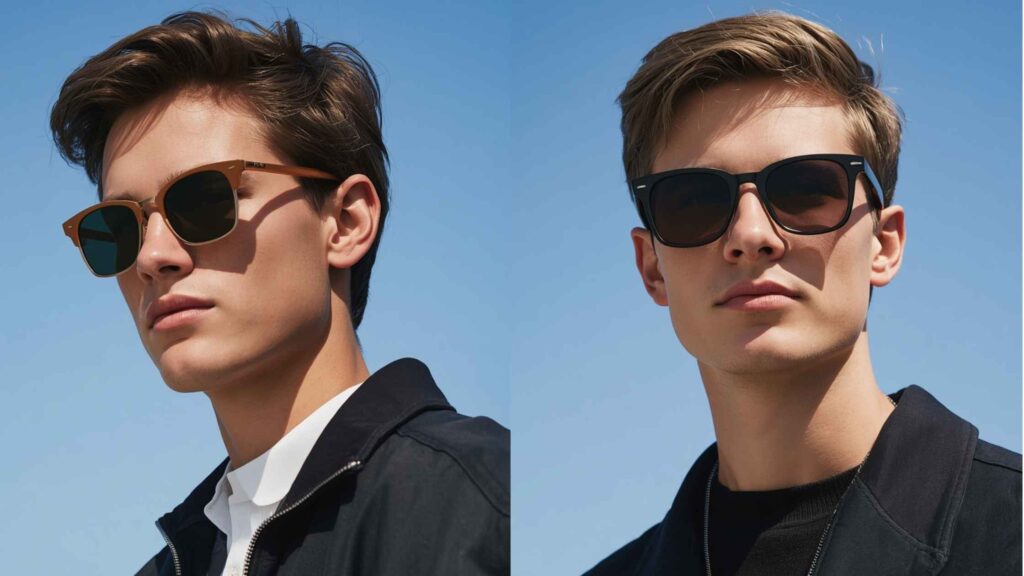
Ray-Ban vs Garrett Leight Sunglasses — Classic vs Modern Minimalism

There’s a particular kind of eyewear decision that doesn’t resolve through specification comparison or price analysis. It resolves through self-understanding — through an honest answer to the question of what you actually want your accessories to communicate, and which design tradition speaks most naturally to the way you already move through the world. Ray-Ban vs Garrett Leight sunglasses is exactly that kind of decision.
Both brands occupy the same general territory — accessible premium eyewear that prioritizes design integrity over luxury pricing — but they arrive at that territory from completely different directions. Ray-Ban comes from eight decades of cultural history, from the cockpits and military bases and rock stages and film sets where its frames earned their universal recognition. Garrett Leight comes from Venice Beach and the specific California design sensibility that treats minimalism not as restraint but as confidence — the conviction that the best frame is the one that has been stripped back to its essential and most honest form.
This designer comparison maps both brands across every relevant dimension — heritage, design philosophy, key models, materials, lifestyle fit, and the honest question of which one serves your specific life better. Neither answer is wrong. But only one of them is right for you.
Table of Contents

The Heritage Divide — Eight Decades vs One Generation
The most immediate and most structurally significant difference between Ray-Ban vs Garrett Leight sunglasses is temporal — and that temporal gap produces everything else that separates them.
Ray-Ban was founded in 1936 by Bausch & Lomb, created specifically to solve a practical problem: American military pilots were developing headaches and nausea from intense high-altitude sunlight, and the Army Air Corps needed a solution. The original Ray-Ban Anti-Glare aviator frames — green-tinted, large-lensed, designed for function before aesthetics — became the template from which modern sunglasses design still draws. The Wayfarer followed in 1956, designed by Raymond Stegeman as the first plastic frame to achieve genuine mass cultural recognition. Then the Clubmaster, the Round, the Erika — each one a design response to a specific cultural moment that ended up transcending the moment it was designed for.
By the time Ray-Ban passed through Luxottica’s ownership transformation in 1999 and emerged as a globally scaled premium lifestyle brand, it had accumulated something that cannot be manufactured or purchased: genuine cultural history. The frames have appeared on faces that shaped the twentieth century — from Douglas MacArthur to James Dean, from Audrey Hepburn to Bob Dylan, from Tom Cruise’s Maverick to the Blues Brothers. This history is embedded in the frames themselves, which is why a pair of Wayfarers reads as culturally legible to virtually every adult on earth regardless of their fashion literacy.
Garrett Leight was founded in 2010 by Garrett Leight — son of Larry Leight, the founder of Oliver Peoples — in Venice Beach, California. The brand arrived with a design philosophy informed by the Oliver Peoples heritage but distinct from it: lighter, more contemporary, more specifically rooted in the visual culture of Venice Beach and the modern California lifestyle aesthetic. Where Oliver Peoples drew from Hollywood’s golden age and mid-century optical craftsmanship, Garrett Leight drew from the clean, sun-bleached minimalism of contemporary California living — the aesthetic of architectural beach houses, handcrafted goods, and the kind of considered simplicity that communicates a specific form of cultural intelligence.
Garrett Leight doesn’t have eight decades of cultural history. It has something different: a precisely calibrated design philosophy applied with extraordinary consistency across fifteen years of production, resulting in a brand whose aesthetic identity is as clear and as immediately recognizable as any heritage brand’s — despite being built in a fraction of the time.
Design Philosophy — The Cultural Classic vs The Modern Minimal
The design tension at the heart of Ray-Ban or Garrett Leight as an eyewear choice is fundamentally a tension between two legitimate approaches to what a frame should be.
Ray-Ban’s design philosophy is rooted in cultural continuity. The brand’s core frames — the Aviator, the Wayfarer, the Clubmaster — are maintained with deliberate design conservatism, because the design’s value is inseparable from its cultural history. A Wayfarer that looks significantly different from the 1956 original is not an improvement — it’s a disruption of the accumulated cultural meaning that makes the frame worth choosing in the first place. Ray-Ban’s innovations are primarily material and technological — new lens coatings, new material constructions, new colorway developments — applied to silhouettes that have earned their canonical status and are maintained accordingly.
Garrett Leight’s design philosophy is rooted in design first principles — the California minimalist conviction that every element should serve the frame’s essential purpose, and that removing anything inessential is an act of design improvement rather than restriction. The brand’s frames are developed through careful material research and proportional refinement, producing silhouettes that feel entirely contemporary without the trend-chasing quality that makes most contemporary eyewear date quickly. The Venice Beach aesthetic that informs the brand isn’t nostalgia — it’s a specific quality of light and life that the frames are designed to inhabit naturally.
Neither philosophy is superior. They are simply designed for different relationships with fashion history — Ray-Ban for buyers who want to participate in a cultural tradition that transcends fashion, Garrett Leight for buyers who want eyewear that reflects a specific and genuinely modern quality of living.
Key Frames — The Models That Define Each Brand
Ray-Ban’s Canonical Collection
The Aviator RB3025 is the frame from which modern sunglasses culture derives its visual grammar. The teardrop lens shape, the thin metal brow bar, the cable temple tips — these are not design choices that Ray-Ban made. They are design choices that Ray-Ban invented and that the entire industry has been responding to ever since. The Aviator in gold with green G-15 lenses is one of the most complete expressions of heritage eyewear available at any price point — a frame that carries seventy years of cultural history in a construction that costs a fraction of what comparable cultural weight demands from luxury brands.
The Wayfarer RB2140 operates differently from the Aviator — where the aviator is universally flattering through its timeless proportion, the Wayfarer is universally recognizable through its cultural saturation. The trapezoidal acetate construction, the keyhole bridge, the slightly chunky temple — these details have appeared on so many culturally significant faces that the frame now carries meaning that transcends any individual wearing it. For classic vs minimal eyewear buyers who want the most immediately legible cultural signal available in accessible premium eyewear, the Wayfarer remains unmatched.
The Clubmaster RB3016 brings a sophistication to the Ray-Ban catalog that neither the Aviator nor the Wayfarer quite achieves — the combination of a metal lower frame and a plastic upper creates a visual complexity that reads as intellectual and considered without demanding fashion literacy to appreciate. The Clubmaster suits faces and wardrobes that the Wayfarer’s more casual register doesn’t serve as naturally, extending Ray-Ban’s range into more formal and professional contexts.
The Round RB2180 represents Ray-Ban’s most direct engagement with the vintage optical tradition that Garrett Leight and Oliver Peoples have made central to their design identities — a full round in acetate that carries the brand’s cultural confidence within a silhouette that feels genuinely timeless rather than trend-adjacent.
Garrett Leight’s Considered Collection
The Clune is Garrett Leight’s most immediately recognizable and most consistently successful frame — a modified round with a flat brow and the kind of proportional precision that reveals genuine design research rather than simply trend adoption. Named for the Venice Beach neighborhood that defines the brand’s geographic and cultural identity, the Clune carries California minimalism in its most concentrated form: warm acetate in proprietary colorways, a bridge that sits naturally on the face, and overall proportions that have been refined through iteration into a balance that works across a genuinely wide range of face shapes.
The Wilson is the frame that most directly demonstrates Garrett Leight’s place in the Oliver Peoples design tradition — a rounded rectangle with softened corners and the brand’s characteristic acetate quality that functions as the most versatile and most genuinely daily-wear piece in the catalog. The Wilson has a design restraint that allows it to disappear into the wardrobe’s overall composition in the best possible way — present, considered, and precisely right without ever demanding attention for itself.
The Kinney brings a slightly more structured round to the Garrett Leight catalog — a keyhole bridge construction that references vintage optical craftsmanship directly, with acetate quality and colorway development that reflect the brand’s material intelligence at its most mature. The Kinney is the frame that most consistently earns the “modern Oliver Peoples” comparison that follows Garrett Leight — not because it copies anything from the parent brand, but because it reflects the same design priorities applied to a slightly different proportional sensibility.
The Venice is the brand’s most Venice-specific design — a metal oval construction that channels the brand’s California minimalist philosophy through a lighter, more contemporary frame format. Thin metal arms, quality lens tints in the warm California palette, and a physical lightness that makes extended daily wearing genuinely comfortable. For buyers seeking modern clean design in metal rather than acetate, the Venice makes the brand’s strongest case.
Materials — What Each Brand Actually Uses
The eyewear choices conversation between Ray-Ban and Garrett Leight requires honest material comparison — because the brands occupy the same general price territory but approach material quality very differently.
Ray-Ban’s material quality is consistent with its mass-premium positioning. Acetate is functional and durable but not sourced from the premium Italian suppliers that more elevated brands use — it provides good service life and reasonable color stability but doesn’t carry the depth and warmth that Mazzucchelli-sourced acetate produces. Metal constructions use quality alloys with plating that holds reasonably well through daily wear. The brand’s G-15 lens — its proprietary green-tinted glass lens that reduces glare while maintaining natural color rendition — is a genuine material achievement, and arguably the single most technically sophisticated component in the Ray-Ban material story.
Garrett Leight’s material quality reflects the brand’s positioning within the premium California design tradition — acetate is sourced from premium Italian suppliers with proprietary colorway development that produces the warm, California-light-responsive tones the brand is recognized for. The bio-acetate and recycled material options in the Garrett Leight catalog reflect the brand’s engagement with sustainable material development — a consideration that resonates with its Venice Beach customer base and that reflects genuine material investment rather than marketing positioning. Hinge construction is Japanese-quality, matching the standard Oliver Peoples established for the California luxury eyewear category.
The material quality gap is meaningful at the premium end of each brand’s range. A Garrett Leight frame in premium acetate with Japanese hinges is a meaningfully more refined object than a standard Ray-Ban acetate construction — the material depth, the surface finish, and the hinge precision all reflect a higher manufacturing investment. This gap is reflected in pricing — Garrett Leight typically ranges from $300 to $500 USD against Ray-Ban’s $180 to $350 — and represents genuine quality differentiation rather than simply brand premium.
Lifestyle Fit — Who Each Brand Was Built For
This is where the Ray-Ban vs Garrett Leight sunglasses comparison resolves most honestly — not through objective quality assessment but through the matching of brand philosophy to personal lifestyle and aesthetic identity.
Ray-Ban belongs to the buyer who wants cultural connection above design refinement. Who wants to reach for a frame in the morning and know that it carries the accumulated meaning of eight decades of cultural presence — that it has been worn by people who changed the world and will continue to be worn by people who are trying to. Ray-Ban is for the person whose wardrobe is built on classics — Levi’s 501s, white sneakers, a leather jacket — and who wants their eyewear to participate in that tradition rather than offer commentary on it. The brand also belongs to buyers discovering quality eyewear for the first time, for whom Ray-Ban’s accessible pricing and universal design recognition make it the most sensible and most satisfying entry point.
Garrett Leight belongs to the buyer who wants design intelligence above cultural recognition. Who has already moved past the question of what their eyewear communicates to others and is now more interested in the quality of what the frame actually is — the material warmth, the proportional precision, the California light that seems embedded in the colorway development. Garrett Leight is for the person whose wardrobe is built on considered basics — premium denim, clean footwear, quality knitwear — and who wants eyewear that reflects the same quality of thinking that goes into those choices. It rewards buyers who understand what they’re looking at and appeals less strongly to those who need external validation of the choice.
There’s a third buyer worth identifying: the person who owns both. Ray-Bans for the beach, the concert, the contexts where cultural legibility is the appropriate register. Garrett Leight for the contexts where design intelligence and material refinement are what the moment calls for. Both frames coexisting in the same wardrobe reflects a sophisticated understanding of what each brand is actually for — and is ultimately the most honest answer to the comparison question.
Price and Value — The Honest Assessment
Ray-Ban frames at $180–$350 USD represent some of the most compelling value in the accessible premium eyewear market — not because the material quality is exceptional, but because the cultural value embedded in the canonical frames is genuine and effectively impossible to replicate at any price. You cannot buy the cultural history of the Aviator or Wayfarer by spending more money on a different brand. The cultural equity is specific to these frames, and the price reflects only manufacturing cost, not the value of the cultural heritage. For buyers who want that heritage, Ray-Ban is genuinely underpriced.
Garrett Leight frames at $300–$500 USD represent premium value relative to the material quality and design intelligence delivered — proprietary acetate colorways, Japanese manufacturing standards, and proportional refinement that produces frames worth the increment over Ray-Ban’s pricing for buyers who prioritize those qualities. The brand doesn’t carry Ray-Ban’s cultural equity, but it delivers meaningfully superior material quality and design sophistication at a price increment that reflects real manufacturing investment rather than brand premium.
FAQ — Ray-Ban vs Garrett Leight
Which is better for everyday wear — Ray-Ban or Garrett Leight?
Both brands produce excellent everyday frames, but for different reasons. Ray-Ban is better for buyers who want universal cultural legibility and durable construction at accessible pricing. Garrett Leight is better for buyers who want material refinement and design sophistication as their primary daily wear qualities. The Wayfarer and Wilson are the respective brands’ strongest everyday candidates.
Is Garrett Leight worth the price premium over Ray-Ban?
For buyers who specifically value premium acetate quality, proprietary colorway development, and Japanese manufacturing standards, yes — the Garrett Leight premium reflects genuine quality differentiation. For buyers whose primary motivation is cultural connection and lifestyle recognition rather than material refinement, Ray-Ban delivers more value at its lower price point.
What face shapes suit Ray-Ban Aviators?
The Aviator’s teardrop lens shape is among the most universally flattering silhouettes in eyewear — it works across most face shapes with particular success on oval, heart, and square faces. The frame’s proportions provide visual balance for wider faces and adequate lens coverage for narrower ones. Very small faces may find the standard Aviator proportions slightly oversized — the brand’s small-fit variants address this.
Are Garrett Leight frames considered luxury eyewear?
Garrett Leight occupies the premium rather than luxury tier — above mass-market design brands and accessible luxury labels like standard Ray-Ban, below the investment luxury of Oliver Peoples, Jacques Marie Mage, or luxury fashion house eyewear. The brand’s material quality and design intelligence justify premium pricing, but the brand doesn’t carry the heritage weight or manufacturing exclusivity that defines genuine luxury eyewear.
Which brand has better lens quality?
Ray-Ban’s G-15 glass lenses are a genuine technical achievement — among the best standard lenses available at the accessible premium price point. Garrett Leight’s premium lens offerings with Italian or Japanese optical glass provide superior optical clarity to Ray-Ban’s standard polycarbonate lenses but are comparable to Ray-Ban’s glass lens options. For buyers prioritizing optical performance, upgrading to glass lenses within either brand is the most impactful choice available.
Classic or Considered — The Choice That’s Already Made
The Ray-Ban vs Garrett Leight sunglasses debate ultimately asks which kind of value you’re actually shopping for when you invest in premium eyewear — the value of cultural connection or the value of design intelligence. Both are legitimate. Both are genuinely worth having. Neither diminishes the other.
Heritage eyewear at Ray-Ban’s level offers something that no amount of design refinement can manufacture: the accumulated meaning of eight decades of cultural presence, embedded in frames that have witnessed and participated in the moments that shaped modern life. When you wear a pair of Aviators, you are wearing history in the most literal and most satisfying sense.
Modern clean design at Garrett Leight’s level offers something different but equally genuine: the satisfaction of owning an object that has been thought about with complete seriousness — where the colorway was developed specifically for California light, where the proportions have been refined through iteration into the best possible version of themselves, where the material quality rewards the attention you give it. When you wear a pair of Cluines, you are wearing contemporary craft at its most considered.
The frame that belongs on your face is the one whose value proposition resonates most honestly with why you buy what you buy — and after reading this, you probably already know which one that is.
Know where you stand? Share this guide with someone caught between these two very different but equally compelling visions of what eyewear should be — or explore our full breakdown of the best premium eyewear across every lifestyle category worth considering in 2026.













 Brush
Brush Makeup Mirrors
 Body Lotions & Body Oils

 Personal Scales
 Perfume Coffrets
 Perfume Testers
 All Eyewear
 Unisex
 Optical
 Contact Lenses
 Home Fixtures
 Dining & Bar