


Latest posts
Burberry vs Bottega Veneta Sunglasses — Classic vs Modern Luxury

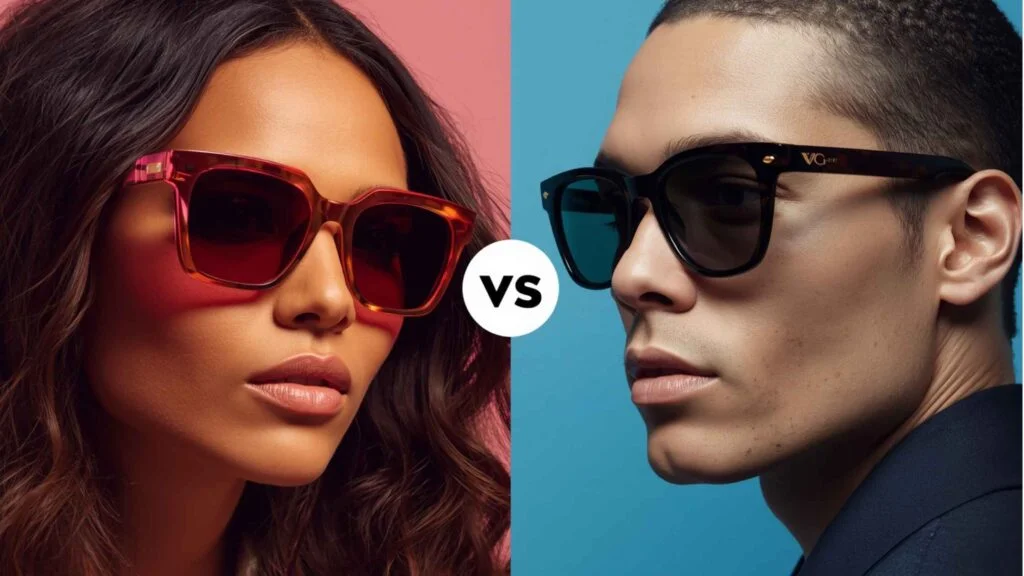
Some fashion comparisons are straightforward. This one isn’t. Burberry vs Bottega Veneta sunglasses places two genuinely distinct visions of luxury in direct conversation — not just different aesthetics, but different definitions of what luxury is supposed to communicate and to whom. One house has spent over a century building one of the most recognizable visual identities in global fashion. The other rebuilt itself from near-irrelevance into perhaps the most critically admired luxury house of the past decade by doing almost the exact opposite — stripping away everything recognizable and betting entirely on the intelligence of the person wearing it.
The result is a luxury brand match-up that rewards serious thought. Both brands produce exceptional eyewear. Both occupy the upper tier of the designer sunglasses market. But they serve fundamentally different psychological needs, and understanding which need you’re actually shopping for makes the decision considerably cleaner than it might initially appear.
This comparison maps both houses honestly — heritage, design philosophy, materials, price, and the frames that define each brand’s eyewear identity — and arrives at a conclusion that’s less about which brand wins and more about which one wins for you.
Table of Contents
The Heritage Contrast — A Century Apart in Philosophy
Before a single frame is discussed, the heritage gap between these two houses deserves direct attention — because it explains almost everything about why their eyewear looks and feels the way it does.
Burberry was founded in 1856 by Thomas Burberry in Basingstoke, England. The house built its earliest reputation on functional outerwear — the trench coat, gabardine fabric, and the kind of practical British engineering that prioritized performance in the English countryside without sacrificing elegance. The iconic Burberry check — developed in the 1920s as a lining detail for those trench coats — became one of the most reproduced and recognized patterns in fashion history. For Burberry, heritage is the product. The brand’s entire identity is rooted in the idea that quality endures, that classic design transcends seasons, and that an English sensibility — restrained, reliable, quietly confident — represents a particular form of luxury that’s worth preserving.
Bottega Veneta arrived considerably later — founded in Vicenza in 1966 — and built its identity on an almost philosophical opposition to the kind of logo-driven luxury that dominated the industry around it. The house’s founding motto, “When your own initials are enough,” remains one of the most elegant positioning statements in luxury fashion history. Bottega’s intrecciato weave — the hand-woven leather technique that became the brand’s signature — was never a logo. It was a craft demonstration, a proof of skill that communicated luxury to those who could recognize it without explaining itself to those who couldn’t. When Daniel Lee took the creative helm in 2018 and reimagined the house for a new generation, he amplified this philosophy rather than replacing it — creating a Bottega that was simultaneously more culturally urgent and more creatively ambitious than it had been in years.
These two founding philosophies — Burberry’s heritage custodianship versus Bottega’s craft-first anti-logo positioning — run directly through every frame each house produces.
Burberry Sunglasses — Design Identity and Signature Frames
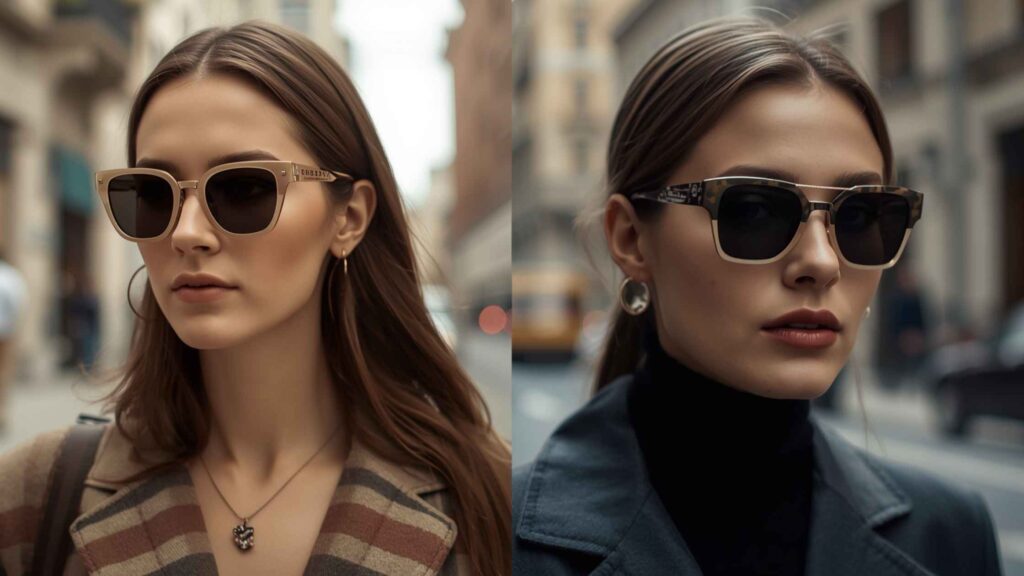
Burberry’s eyewear collection is one of the most cohesive expressions of the brand’s broader identity — consistently anchored in the house’s visual heritage while incorporating enough contemporary design thinking to remain relevant across seasons.
The Check and Its Eyewear Translations
The Burberry check appears across the brand’s eyewear collection in various degrees of prominence — from full check-printed acetate temples to subtler check-engraved metal detailing at hinges and bridge constructions. Models like the BE4291 and the BE3108 demonstrate how the brand integrates its heritage pattern without reducing frames to purely logo-driven products. The check is used as a design element — adding visual texture and brand identity simultaneously — rather than simply applied as surface branding.
This matters for the eyewear comparisons conversation because it demonstrates genuine design intelligence: the check does real work in these frames, contributing to the overall aesthetic rather than sitting on top of it. For buyers who appreciate Burberry’s heritage, it’s a deeply satisfying detail. For buyers who find logo-adjacent branding excessive, it’s the point of friction.
Burberry’s Silhouette Range
Burberry’s frame range favors the classically English — square and rectangular constructions that reference the brand’s preppy, countryside-meets-city aesthetic, alongside refined oval shapes that carry a vintage British elegance. The BE4285 oversized square in dark tortoiseshell is among the brand’s strongest women’s frames; the BE3094 slim rectangular metal model represents the brand’s men’s aesthetic at its most refined. Both feel rooted in design traditions that predate the current season — and that’s a deliberate choice, not a limitation.
The brand’s use of color reflects its heritage positioning: British racing green, deep navy, classic camel and tan tones that reference the trench coat’s original palette, and the warm neutrals that define English country dressing. Burberry eyewear rarely surprises with color — it reassures. That’s a meaningful distinction.
Burberry’s Tone and Audience
Burberry eyewear speaks most naturally to buyers who value heritage continuity, who find comfort in design traditions rather than provocation, and who want their luxury accessories to communicate a form of established, understated confidence. The brand works exceptionally well for professional and business-oriented wardrobes, for classic dressers who want a recognizable luxury reference without the maximalist excess of some Italian competitors, and for buyers who genuinely connect with the romance of British heritage craftsmanship.
Bottega Veneta Sunglasses — Design Identity and Signature Frames
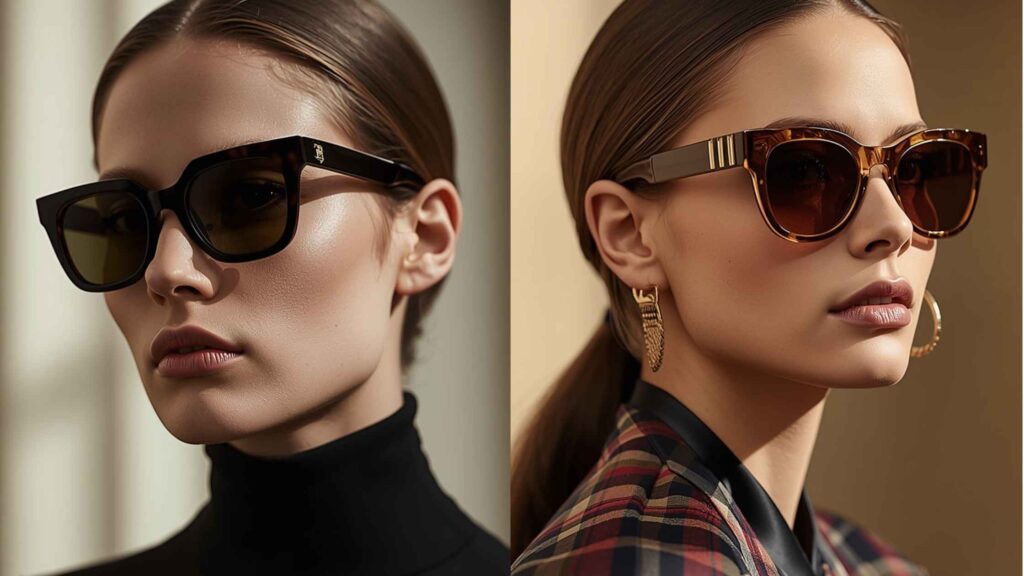
Bottega Veneta’s eyewear represents the brand’s philosophy in its purest wearable form — frames that communicate luxury exclusively through design quality, material intelligence, and geometric confidence, without a logo in sight.
The Intrecciato Reference and Material Philosophy
Bottega’s most direct connection between its leather goods heritage and its eyewear appears in frames that incorporate intrecciato-inspired detailing — woven texture references applied to acetate or used in temple construction. These details are subtle enough that most observers won’t recognize them as brand signals, but refined enough that the frames carry a tactile and visual richness that logo-free construction can sometimes lack.
More broadly, Bottega’s material philosophy in eyewear reflects the same priorities that define its leather goods: depth of finish, weight that feels considered rather than arbitrary, and a surface quality that rewards the kind of close inspection most fast-fashion accessories can’t survive. The brand’s acetate selections favor deep, saturated tones — forest green, cobalt, warm terracotta, classic black with particular richness — that reflect the house’s Italian craft sensibility without relying on pattern or logo for visual interest.
Bottega’s Geometric Confidence
Where Burberry favors classical silhouettes, Bottega Veneta has developed a geometric confidence in its eyewear that reflects the house’s broader design evolution under Daniel Lee and his successor Matthieu Blazy. Frames like the BV1116S and the BV1160S demonstrate a willingness to push silhouette geometry — wider than expected, more architecturally considered than conventionally flattering — that rewards buyers who dress with visual intelligence rather than seeking easy approval.
The oversized rectangular constructions that have become Bottega’s most recognized eyewear silhouettes carry a kind of cool authority that no heritage check pattern or logo could achieve — they communicate luxury through the confidence of their proportion alone. For buyers who understand design at this level, these frames are among the most satisfying pieces in the current luxury brand match-up market.
Bottega’s Logo-Free Luxury
The absence of visible branding is Bottega’s most radical and most powerful design decision — and in the current luxury market, where logo fatigue has become a genuine cultural phenomenon among sophisticated buyers, it’s also one of its strongest commercial advantages. A Bottega frame is recognized by people who know design. It’s invisible to people who only know logos. For buyers who find that distinction appealing — who prefer to be understood by the few rather than recognized by the many — Bottega offers something no logo-forward house can replicate.
Materials and Build — What Each House Prioritizes
Both Burberry and Bottega Veneta maintain premium construction standards, but their material priorities reflect their design philosophies in revealing ways.
Burberry’s construction is solid, reliable, and consistent — exactly the qualities the brand’s heritage identity promises. Acetate quality is genuinely good; metal constructions use quality alloys with reliable plating; hinge construction across the core collection is tight and durable. The brand’s quality control is consistent enough that buyers can purchase with confidence across the range. Where Burberry’s construction occasionally shows its limitations is in material adventurousness — the brand rarely uses materials or construction techniques that push beyond the conventional, which suits its heritage identity but limits its appeal for buyers seeking material innovation.
Bottega’s construction carries the house’s craft obsession into every component. Frame weight is carefully considered — heavy enough to feel substantial, light enough to wear comfortably over extended periods. Surface finishes on both acetate and metal constructions carry a depth and precision that reflects genuine manufacturing investment. The brand’s quality control is among the most consistent in luxury eyewear comparisons at this tier, reflecting a house that has always treated craft quality as its primary value proposition rather than its secondary one.
Price — The Investment Landscape
Burberry sunglasses typically range from approximately $250 to $450 USD across the core collection — making the brand one of the more accessible entry points into genuine luxury eyewear at this design level. The pricing reflects the brand’s positioning as heritage luxury with broad market accessibility rather than exclusive niche luxury.
Bottega Veneta sunglasses command a more significant investment, generally ranging from $400 to $700 USD for core collection pieces, with more architecturally complex or limited models reaching higher. The premium reflects the brand’s elevated positioning within the current luxury market, its strong cultural currency among fashion-forward consumers, and the genuine material and construction quality the house delivers consistently.
The pricing gap between the two brands is meaningful. Burberry offers accessible luxury heritage; Bottega offers premium modern minimalism at a price that reflects both its craft quality and its cultural position. For buyers making a purely financial decision, Burberry delivers genuine luxury at a lower entry point. For buyers for whom Bottega’s specific design philosophy is the point, the premium is justified.
Which Is Better — Burberry or Bottega Veneta Sunglasses?
The answer to which is better, Burberry or Bottega Veneta sunglasses comes down to a single honest question: what does luxury mean to you?
Choose Burberry if heritage continuity, classic English elegance, and the comfort of a globally recognized design tradition matter to your luxury purchasing decisions. Burberry eyewear works best for buyers whose wardrobes are rooted in classic tailoring, traditional color palettes, and the kind of reliable, understated confidence that heritage luxury has always promised. The brand’s check detailing, classical silhouettes, and warm neutral palette suit buyers who dress for longevity rather than cultural currency — people who want their accessories to look as right in ten years as they do today.
Choose Bottega Veneta if you’ve moved beyond logo recognition as a luxury signal and want frames that communicate design intelligence to the people who notice what matters. Bottega eyewear rewards buyers who understand craft, who dress with geometric confidence, and who are comfortable with the idea that their luxury might go unrecognized by people who don’t know enough to recognize it. For the informed buyer, that’s not a limitation — it’s the entire point.
Styling — How Each Brand Moves Through the Wardrobe
Burberry frames carry their heritage confidence most naturally with classic tailoring — a well-cut coat, quality wool trousers, leather Chelsea boots. The brand’s color palette integrates easily with the kinds of wardrobe staples that don’t change season to season, giving Burberry eyewear genuine cross-context versatility for buyers who dress traditionally. Weekend dressing in Burberry frames reads as quietly considered; professional dressing reads as reliably established.
Bottega frames demand and reward a more deliberately constructed wardrobe. The brand’s oversized silhouettes and geometric confidence work most powerfully with modern minimalist dressing — clean lines, tonal layering, quality basics elevated through proportion and material. Bottega eyewear is the finishing element in an outfit where everything else has already been considered; it functions less as an accessory and more as a design decision.
FAQ — Burberry vs Bottega Veneta Sunglasses
Which is better for everyday wear — Burberry or Bottega Veneta?
Both brands produce frames suitable for daily wear, but in different wardrobe contexts. Burberry’s classical silhouettes and heritage color palette integrate more easily across varied daily environments — professional, casual, and social. Bottega’s more architecturally considered frames reward deliberate daily styling and work best as the focal point of a thoughtfully constructed outfit.
Are Bottega Veneta sunglasses worth the higher price?
For buyers who connect specifically with Bottega’s logo-free luxury philosophy and appreciate the brand’s material and craft quality, yes — the premium is justified. The house delivers genuine design intelligence and construction quality that supports its price positioning. For buyers primarily motivated by brand recognition, Burberry offers comparable build quality at a lower entry point with stronger global logo recognition.
Do Burberry sunglasses hold their value?
Burberry frames hold value reasonably well given their accessible price positioning, though the secondary market premium is modest compared to more exclusively positioned luxury brands. The brand’s global recognition supports consistent secondary demand, particularly for classic check-detail models that carry strong visual brand identity.
What face shapes suit Bottega Veneta’s oversized frames?
Bottega’s oversized rectangular and wide-set silhouettes are most flattering on oval and oblong face shapes, where frame scale creates visual balance without overwhelming facial proportion. Longer face shapes benefit particularly from the horizontal emphasis of Bottega’s widest models. Rounder face shapes can find the brand’s more modestly scaled rectangular options more accommodating than its most dramatically oversized constructions.
Which brand has stronger cultural credibility in 2026?
Among fashion-forward and luxury-insider audiences, Bottega Veneta currently carries stronger cultural credibility — the house’s critical standing, its influence on the broader luxury market’s shift away from logo dependency, and its consistent design quality have made it one of the most respected brands in contemporary luxury fashion. Burberry maintains stronger mass luxury recognition globally, which translates to broader social legibility for buyers in whom that matters.
Heritage Meets Modernity — The Final Verdict
Burberry vs Bottega Veneta sunglasses is ultimately a comparison between two legitimate but philosophically opposed answers to the same question: what should luxury communicate?
Burberry answers with continuity — the enduring confidence of English heritage, the warmth of a design tradition built over generations, and the comfort of a visual language recognized and respected globally. Bottega answers with intelligence — the quiet authority of craft excellence, the confidence of design that doesn’t need a logo to justify itself, and the understated power of being recognized only by those who truly understand what they’re looking at.
Neither answer is wrong. Both are worth wearing. The frame that belongs to you is the one whose answer feels most like your own.
Share this comparison with someone caught between classic and modern luxury — or explore our full guide to the most intelligent luxury eyewear investments worth making in 2026.










 Brush
Brush Makeup Mirrors
 Body Lotions & Body Oils

 Personal Scales
 Perfume Coffrets
 Perfume Testers
 All Eyewear
 Unisex
 Optical
 Contact Lenses
 Home Fixtures
 Dining & Bar